


Sublingual supplements are dietary compounds placed beneath the tongue to dissolve and absorb directly into the bloodstream through the oral mucosa. This delivery method bypasses the digestive tract entirely, giving it a clear pharmacokinetic advantage over standard swallowed supplements. Where a capsule or tablet takes 30–90 minutes to reach your bloodstream via digestion, a sublingual drop or tablet can deliver nutrients within minutes. If you’ve ever wondered what are sublingual supplements and whether they’re worth the switch, the answer depends on which nutrients you need and how fast you need them.
What are sublingual supplements and how do they work?
Sublingual absorption works because the tissue beneath your tongue is thin, highly vascularized, and sits directly above a network of veins. Nutrients placed there dissolve into the mucosal lining and pass into the sublingual veins, which feed directly into systemic circulation. No stomach acid. No intestinal enzymes. No liver processing the compound before it reaches your cells.

That last point matters more than most people realize. Bypassing hepatic first-pass metabolism means the liver does not break down the nutrient before it enters circulation. For compounds like vitamin B12, which the digestive system absorbs poorly in many people, this route produces a measurable serum increase in as little as 15–30 minutes. That speed is clinically significant for anyone managing a deficiency.
The sublingual route works best for specific nutrient types:
- Vitamin B12 (methylcobalamin or cyanocobalamin): Poorly absorbed through the gut in people with low intrinsic factor; sublingual delivery sidesteps this bottleneck entirely.
- Melatonin: Rapid onset is the whole point. Sublingual melatonin reaches peak blood levels faster, which matters when you need sleep support within 20–30 minutes.
- Vitamin D3: Some liquid sublingual formulations show good absorption, though standard oral softgels with fat remain effective for most people.
- CBD and botanical extracts: These compounds face significant first-pass degradation. Sublingual delivery preserves more of the active compound.
Pro Tip: Hold the supplement under your tongue for at least 60–90 seconds before swallowing. Swallowing too soon is the single most common reason sublingual supplements underperform.
What are the benefits and limitations of sublingual vs oral supplements?
Speed is the most obvious sublingual supplement benefit. Oral supplements dissolved through the gastrointestinal tract take 30–90 minutes to reach the bloodstream. Sublingual absorption cuts that window to minutes. For nutrients like melatonin or fast-acting botanical extracts, that difference is practical, not just theoretical.
Sublingual delivery also protects fragile nutrients. Sublingual delivery is superior for nutrients prone to digestive degradation, while oral supplements remain cost-effective and sufficient for fat-soluble vitamins like D, E, and minerals like calcium and magnesium. This is a key distinction. Not every supplement needs the sublingual route. Choosing it for a nutrient that absorbs fine through digestion adds cost without adding benefit.
| Attribute | Sublingual supplements | Oral supplements |
|---|---|---|
| Absorption speed | Minutes | 30–90 minutes |
| First-pass metabolism | Bypassed | Full liver processing |
| Best nutrient types | B12, melatonin, fragile compounds | Fat-soluble vitamins, minerals |
| Cost | Generally higher | Generally lower |
| Convenience | Requires hold time under tongue | Swallow and done |
| Dental risk | Possible with acidic formulas | Minimal |
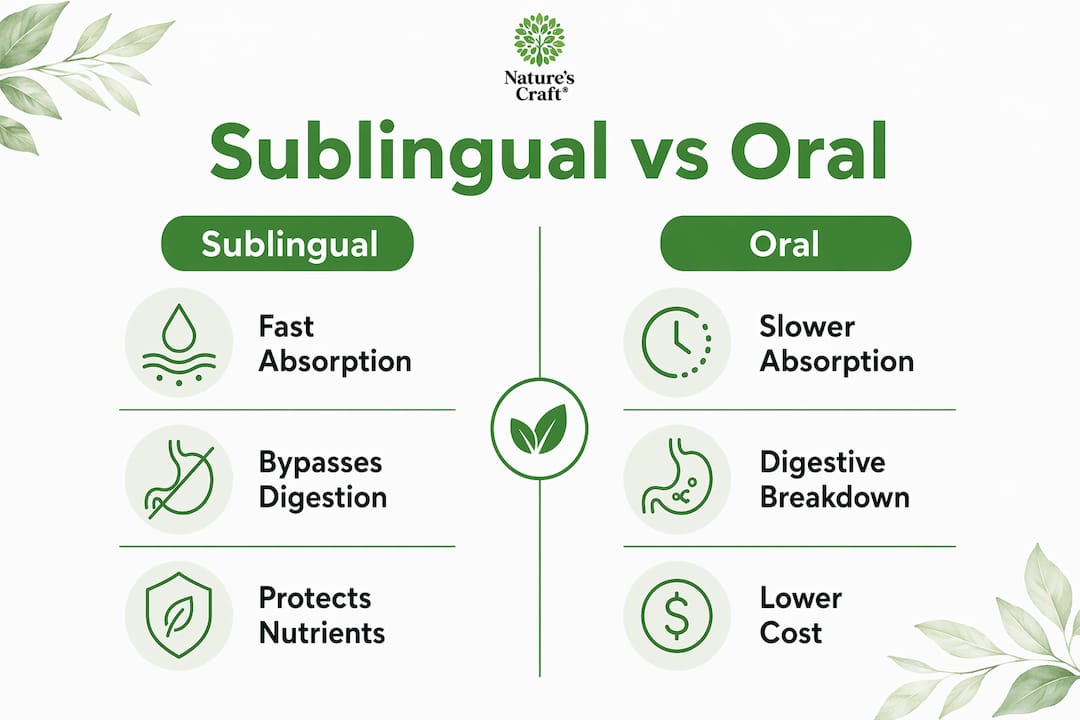
The limitations are real and worth knowing. 30% to 70% of a sublingual dose is often swallowed rather than absorbed through the mucosa, depending on formulation viscosity and your technique. That swallowed portion still absorbs through digestion, so it is not wasted, but it does reduce the pharmacokinetic advantage you were counting on.
Long-term nutrient status over time often matters more than absorption speed for daily health. A well-formulated oral B12 supplement taken consistently may produce the same long-term serum levels as a sublingual version, especially in people without absorption disorders. The choice should depend on your specific nutrient needs and digestive health, not marketing claims about speed alone.
Pro Tip: If you have digestive issues like low stomach acid, Crohn’s disease, or have had gastric surgery, sublingual delivery is worth prioritizing. For everyone else, match the delivery method to the nutrient, not the trend.
What practical considerations should you know about using sublingual supplements?
Getting the most from sublingual supplements comes down to technique and formulation awareness. Follow these steps to use them correctly:
- Place the supplement correctly. Put the tablet, drop, or film directly under your tongue, not on top of it or between your cheek and gum. The sublingual space has the highest concentration of absorptive tissue.
- Hold it long enough. Keep the supplement in place for at least 60–90 seconds. Fast-dissolving films can release actives in as little as 15–30 seconds, but mucoadhesive tablets need more contact time to release their full dose.
- Avoid eating or drinking first. Food and liquid dilute the mucosal surface and reduce absorption efficiency. Take sublingual supplements on a clean, dry mouth.
- Rotate your dosing site. Using the exact same spot repeatedly, especially with acidic formulations, increases the risk of dental discoloration and decay. Alternate sides and rinse your mouth with water after dosing.
- Read the label for polymer type. Formulations using pullulan (a fast-dissolving polymer) release actives quickly. Those using mucoadhesive polymers like Carbopol extend the absorption window. Knowing which type you have told you how long to hold it.
Different sublingual formulations also behave differently. Sprays disperse quickly but require precise aim. Films dissolve fast and are easy to use. Tablets take longer but often deliver a more controlled release. Each format suits different nutrients and lifestyles, so matching the format to your routine improves consistency.
Pro Tip: Check your supplement label for the words “fast-dissolving film” or “mucoadhesive.” These terms tell you exactly how the product is designed to release its active ingredients and how long you need to hold it.
What are the best sublingual vitamins for specific health needs?
Not every nutrient belongs in a sublingual format. The best sublingual vitamins share two traits: they are either poorly absorbed through the digestive tract, or they require a fast onset to be effective. Here is where sublingual delivery genuinely earns its place:
- Vitamin B12: The most researched sublingual supplement. People with pernicious anemia, low intrinsic factor, or age-related absorption decline benefit most. Sublingual B12 is a non-invasive alternative to injections and produces serum increases within 15–30 minutes.
- Melatonin: Sublingual melatonin is ideal for sleep onset issues because speed is the primary goal. A sublingual dose reaches peak levels faster than a standard tablet, which matters when you need to fall asleep within a specific window.
- Vitamin D3 (liquid drops): Liquid sublingual D3 absorbs well, though people without fat absorption issues do equally well with softgels taken with a meal.
- Magnesium (specific forms): Certain magnesium forms like magnesium glycinate absorb reasonably through the gut. Sublingual delivery adds little benefit here for most people.
- Botanical extracts and adaptogens: Compounds like ashwagandha or valerian root face significant digestive breakdown. Sublingual tinctures preserve more of the active compounds.
When digestive health is compromised, the case for sublingual delivery strengthens considerably. People with gut health challenges often find that standard oral supplements produce inconsistent results because absorption varies with gut function. Sublingual delivery removes that variable.
For nutrients where oral forms work well, such as vitamin C, zinc, or fat-soluble vitamins taken with food, sticking with a quality oral supplement is the smarter, more cost-effective choice. Shopnaturescraft offers both formats, giving you the flexibility to take supplements daily in the form that fits your body and your goals. Integrating sublingual supplements into your routine works best when you take them at a consistent time, on an empty mouth, and pair them with a broader supplement plan suited to your health needs.
Key Takeaways
Sublingual supplements deliver nutrients faster than oral forms by bypassing digestion and liver metabolism, but the right delivery method depends on the specific nutrient and your digestive health.
| Point | Details |
|---|---|
| Speed advantage | Sublingual absorption takes minutes vs. 30–90 minutes for swallowed supplements. |
| Best nutrient candidates | Vitamin B12, melatonin, and fragile botanical extracts benefit most from sublingual delivery. |
| Technique matters | Hold supplements under the tongue for 60–90 seconds and rinse after to protect dental health. |
| Oral forms still win for some | Fat-soluble vitamins and minerals absorb well orally and cost less than sublingual versions. |
| Formulation affects performance | Fast-dissolving films and mucoadhesive polymers release actives differently; read your label. |
Why I think most people misunderstand sublingual supplements
The biggest misconception I see is that faster absorption automatically means better results. People switch to sublingual B12 expecting dramatic improvements, then feel disappointed when their energy levels do not change overnight. The truth is that correcting a deficiency takes weeks regardless of delivery method. Speed gets the nutrient into your blood faster. It does not compress the timeline for cellular repair.
The second misconception is that sublingual supplements are always worth the premium price. For someone with healthy digestion taking vitamin D or magnesium, a quality oral softgel or capsule delivers the same long-term outcome at a fraction of the cost. Sublingual delivery is a tool, not a universal upgrade.
What I have found genuinely useful is matching the delivery method to the specific problem. If you have digestive impairment, sublingual B12 is worth every cent. If you struggle with sleep onset, sublingual melatonin makes a real difference. But if you are buying sublingual vitamin C because it sounds more advanced, you are spending more for no measurable gain. Always check supplement quality before worrying about delivery format. A poorly formulated sublingual product will underperform a well-made oral capsule every time.
The technology behind sublingual delivery is genuinely evolving. Polymer science is improving how long actives stay in contact with the mucosa, and new film formats are making dosing more consistent. Consulting a healthcare professional before switching delivery methods remains the most reliable way to match format to your actual physiology.
— SuperNatural
Quality supplements for every delivery method at Shopnaturescraft
Shopnaturescraft has been formulating pure, clean supplements since 2013, and the range covers every delivery format you need, from drops and capsules to gummies.
Whether you are supporting liver health with targeted formulas or looking for heart health supplements backed by quality ingredients, Shopnaturescraft builds each product to meet the standards that matter. Every formula is designed to deliver what the label promises, in the format that works best for the nutrient. Browse the full range and find the supplement that fits your health goals and your daily routine.
FAQ
What are sublingual supplements used for?
Sublingual supplements are used to deliver nutrients rapidly into the bloodstream by dissolving beneath the tongue. They are most commonly used for vitamin B12, melatonin, and botanical extracts that absorb poorly through digestion.
How long should you hold a sublingual supplement under your tongue?
Hold it for at least 60–90 seconds. Fast-dissolving films release actives in 15–30 seconds, but mucoadhesive tablets need more contact time to deliver a full dose.
Are sublingual supplements better than oral supplements?
Sublingual supplements absorb faster and bypass liver metabolism, making them better for specific nutrients like B12 and melatonin. For fat-soluble vitamins and minerals, oral supplements are equally effective and more cost-efficient.
Can sublingual supplements damage your teeth?
Long-term use of acidic sublingual formulations can cause dental discoloration and decay. Rotating your dosing site and rinsing your mouth with water after each dose reduces this risk significantly.
How much of a sublingual supplement actually absorbs sublingually?
Between 30% and 70% of a sublingual dose is typically swallowed rather than absorbed through the mucosa. The swallowed portion still absorbs through digestion, but the pharmacokinetic advantage is reduced when technique is poor or the formulation is low quality.

