


Whole food supplements are dietary products that supply nutrients derived from minimally processed whole foods rather than isolated or synthetic compounds, preserving the natural nutrient matrix that supports absorption and synergistic health benefits. Brands like MegaFood and Garden of Life built their reputations on this approach, and the category has grown significantly as health-conscious consumers question whether synthetic vitamins deliver the same results. Under the Dietary Supplement Health and Education Act (DSHEA) of 1994, these products are regulated as foods, not drugs, which means the term “whole food supplement” is a manufacturing philosophy rather than a legal category. Understanding that distinction is the first step toward making smarter choices about what you put in your body.
What are whole food supplements and how are they defined?
Whole food supplements are products formulated using ingredients sourced from real, minimally processed foods such as fruits, vegetables, nuts, legumes, and whole grains. The goal is to retain the naturally occurring cofactors, enzymes, and phytonutrients that exist alongside vitamins and minerals in their original food state. According to the European Food Safety Authority, food supplements are regulated as foods under Directive 2002/46/EC, covering vitamins, minerals, amino acids, essential fatty acids, fiber, and plant extracts in dose form.
The phrase “whole food supplement” describes a manufacturing approach, not a separate legal category. This is a critical distinction. A product can legally call itself a whole food supplement without meeting any standardized threshold for food-derived content, which means label reading and brand research matter more than the name on the front of the bottle.

How do whole food supplements differ from synthetic supplements?
The core difference comes down to the nutrient matrix. Whole foods contain hundreds of interacting compounds, including fiber, enzymes, antioxidants, and cofactors, that work together to support absorption and biological activity. Synthetic supplements isolate a single nutrient or a small group of nutrients and deliver them in a concentrated chemical form stripped of that surrounding context.
Stanford Medicine notes that isolating nutrients from foods often changes their efficacy and absorption because the food matrix and nutrient interactions influence how well nutrients actually work in the body. Vitamin C from a whole food source, for example, arrives alongside bioflavonoids and other compounds that may enhance its uptake. A synthetic ascorbic acid tablet delivers the molecule alone.
| Feature | Whole food supplements | Synthetic supplements |
|---|---|---|
| Nutrient source | Minimally processed foods | Chemically isolated or lab-synthesized |
| Nutrient matrix | Preserved with cofactors and enzymes | Absent or minimal |
| Absorption potential | Generally better due to synergistic compounds | Variable; some nutrients absorb well, others poorly |
| Dosage per serving | Typically lower, closer to food levels | Often high-dose concentrations |
| Label transparency | Should list actual food sources | Often lists chemical compound names only |
| Cost | Usually higher | Generally lower |
Pro Tip: When reading a supplement label, look for actual food names in the ingredient list, such as “acerola cherry extract” for vitamin C or “spinach powder” for iron. If you only see chemical names like “ascorbic acid” or “ferrous sulfate,” the product is synthetic regardless of what the front label claims.
What are the benefits and limitations of whole food supplements?
The benefits of whole food supplements center on the idea that nutrients work better together than in isolation. Shelley Rael, MS RDN, highlights that nutrients work in complex interactions within whole foods, including fiber, enzymes, and cofactors that isolated supplements cannot replicate. For people with dietary gaps, this approach may offer more biologically relevant nutrition than a standard multivitamin.
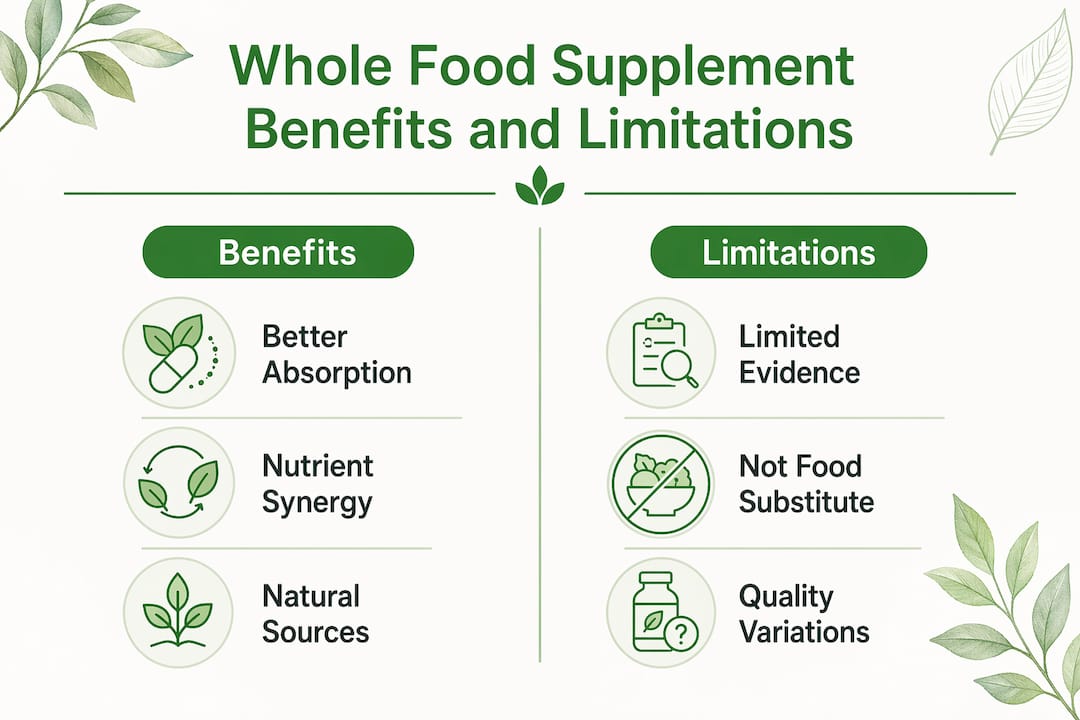
That said, the evidence is nuanced. Stanford Medicine reports that many popular supplements lack strong evidence and show small or negligible effect sizes. Whole food supplements are no exception to this reality. Some specific nutrients, including omega-3 fatty acids, magnesium, and creatine, have demonstrated proven benefits, particularly for individuals with nutritional deficiencies or specific health conditions.
Here is a clear breakdown of what whole food supplements can and cannot do:
Potential benefits:
- Deliver nutrients alongside naturally occurring cofactors that may improve absorption
- Provide a broader spectrum of phytonutrients compared to single-nutrient synthetic pills
- Suit people with sensitivities to synthetic additives, binders, or fillers
- Support specific populations such as vegans, older adults, or those on restricted diets
Key limitations:
- Most whole food supplements do not contain meaningful amounts of dietary fiber, unlike eating actual whole foods
- They cannot fully replicate the complexity of a varied, whole food diet
- Nutrient doses are often lower, which may be insufficient for addressing significant deficiencies
- The “whole food” label is unregulated, so quality varies widely between brands
Stanford Medicine also emphasizes that supplements are not designed to replace whole foods because real foods provide fiber and multiple interacting compounds that no supplement fully captures.
Pro Tip: Avoid the trap of using supplements to compensate for a poor diet. A whole food supplement taken alongside a diet high in processed foods will not deliver the same results as the same supplement taken alongside a genuinely varied, nutrient-rich eating pattern.
How to choose quality whole food supplements wisely
Choosing a quality whole food supplement requires more than picking a recognizable brand. The FDA regulates dietary supplements as foods rather than drugs, which creates variability in purity and dosage across the market. Third-party certifications from organizations like NSF International, USP, or Informed Sport help close that gap by verifying that a product contains what its label claims.
Practitioners recommend examining labels for actual food source names, realistic dosing, and the presence of a comprehensive nutrient matrix when selecting whole food supplements. A product listing “organic kale powder” and “pumpkin seed extract” as vitamin K and zinc sources is more transparent than one listing only the isolated chemical compounds.
Use this checklist when evaluating any whole food supplement:
- Named food sources: The ingredient list should identify the actual food, not just the nutrient name
- Realistic doses: Nutrient amounts should align with what you would reasonably get from food, not megadose levels
- Third-party certification: Look for NSF, USP, or Informed Sport seals on the label
- Minimal fillers: Avoid products with long lists of synthetic binders, artificial colors, or unnecessary additives
- Transparent manufacturing: Reputable brands like those in the Nature’s Craft capsules collection disclose sourcing and testing practices
- Appropriate form: Capsules, gummies, and powders each have different absorption profiles; choose the form that fits your routine
Understanding supplement quality factors before you buy protects both your health and your wallet.
How should whole food supplements fit into your nutrition plan?
Whole food supplements work best as a complement to a varied, balanced diet rather than a substitute for one. The research is consistent: supplements complement rather than replace whole food diets and should be integrated with overall lifestyle and nutrition in mind. Sleep quality, physical activity, stress management, and hydration all influence how well your body uses the nutrients you consume, whether from food or supplements.
Certain populations have a stronger case for supplementation. Vegans and vegetarians often lack sufficient vitamin B12, iron, and omega-3 fatty acids from diet alone. Older adults frequently have reduced absorption of vitamin D, calcium, and B12. People with food allergies, chronic digestive conditions, or highly restricted diets may also benefit from targeted supplementation. For everyone else eating a genuinely varied diet, the evidence for broad supplementation is weaker than the marketing suggests.
Before adding any supplement to your routine, consult a healthcare provider or registered dietitian. Some nutrients interact with medications or become harmful at high doses. Vitamin K, for example, can interfere with blood thinners. Fat-soluble vitamins like A, D, E, and K accumulate in the body and can reach toxic levels with excessive supplementation. Knowing why daily supplementation makes sense for your specific situation is more useful than following a general recommendation.
Key takeaways
Whole food supplements deliver the most value when chosen carefully, used to fill genuine dietary gaps, and treated as one part of a broader nutrition and wellness strategy.
| Point | Details |
|---|---|
| Definition clarity | Whole food supplements use minimally processed food sources to preserve the natural nutrient matrix. |
| Synthetic vs. whole food | Synthetic supplements isolate nutrients; whole food versions retain cofactors that may improve absorption. |
| Evidence is selective | Omega-3s and magnesium have strong support; many other supplements show small or inconsistent effects. |
| Label reading is critical | Look for named food sources, realistic doses, and third-party certification seals before buying. |
| Diet comes first | Supplements fill gaps; they do not replace the fiber, phytonutrients, and complexity of real whole foods. |
My honest take on whole food supplements
I have spent years reading supplement labels, reviewing research, and talking to people who are genuinely trying to improve their health. The most common mistake I see is treating the phrase “whole food supplement” as a quality guarantee. It is not. The term has no legal definition, which means a product can carry that label while containing mostly synthetic nutrients with a token amount of food powder added for marketing purposes.
The second mistake is expecting supplements to do the heavy lifting that diet should handle. Whole food supplements from reputable sources can genuinely support people with specific nutritional gaps, but they are not a shortcut. The research from Stanford Medicine is clear that effect sizes for many supplements are small, and indiscriminate supplementation is discouraged even by nutrition scientists who study this professionally.
What I find genuinely useful is the framework: prioritize diet quality, identify specific gaps through blood work or professional guidance, and then choose a supplement with transparent sourcing, third-party testing, and realistic dosing. That approach works. Buying the most expensive “whole food” multivitamin on the shelf without that foundation does not.
— SuperNatural
Explore Nature’s Craft whole food supplement options
If you are ready to add a quality supplement to your routine, Nature’s Craft has been crafting pure, clean products since 2013 with a focus on real ingredients and transparent sourcing.
The Nature’s Craft capsules collection includes options like Moringa Capsules, which draw on one of the most nutrient-dense plant sources available, alongside a range of targeted formulas designed for different health goals. For those who prefer a more enjoyable format, Nature’s Craft Multivitamin Gummies deliver essential vitamins and minerals in a form that is easy to take consistently. Every product is made with quality assurance in mind, so you can shop with confidence and focus on what matters most: your health.
FAQ
What is the whole food supplement definition?
A whole food supplement is a dietary product that delivers nutrients sourced from minimally processed whole foods, preserving naturally occurring cofactors, enzymes, and phytonutrients. The term describes a manufacturing approach rather than a legally defined product category.
Are whole food supplements more effective than synthetic ones?
Whole food supplements may offer better absorption for some nutrients due to the preserved nutrient matrix, but Stanford Medicine notes that many supplements show small effect sizes regardless of source. Effectiveness depends on the specific nutrient, your individual health status, and overall diet quality.
What should I look for in whole food supplements?
Look for named food sources in the ingredient list, realistic nutrient doses, and third-party certification seals from organizations like NSF International or USP. Avoid products with vague labeling, synthetic fillers, or megadose nutrient levels that exceed typical food intake.
Who benefits most from whole food supplements?
Vegans, older adults, and people with restricted diets or chronic digestive conditions are most likely to benefit from targeted supplementation. For people eating a varied, balanced diet, the evidence for broad supplementation is limited.
Do whole food supplements replace eating whole foods?
No. Supplements cannot replicate the fiber, phytonutrient complexity, and synergistic interactions found in real whole foods. They are designed to complement a healthy diet, not substitute for one.

