


What are fat soluble vitamins?
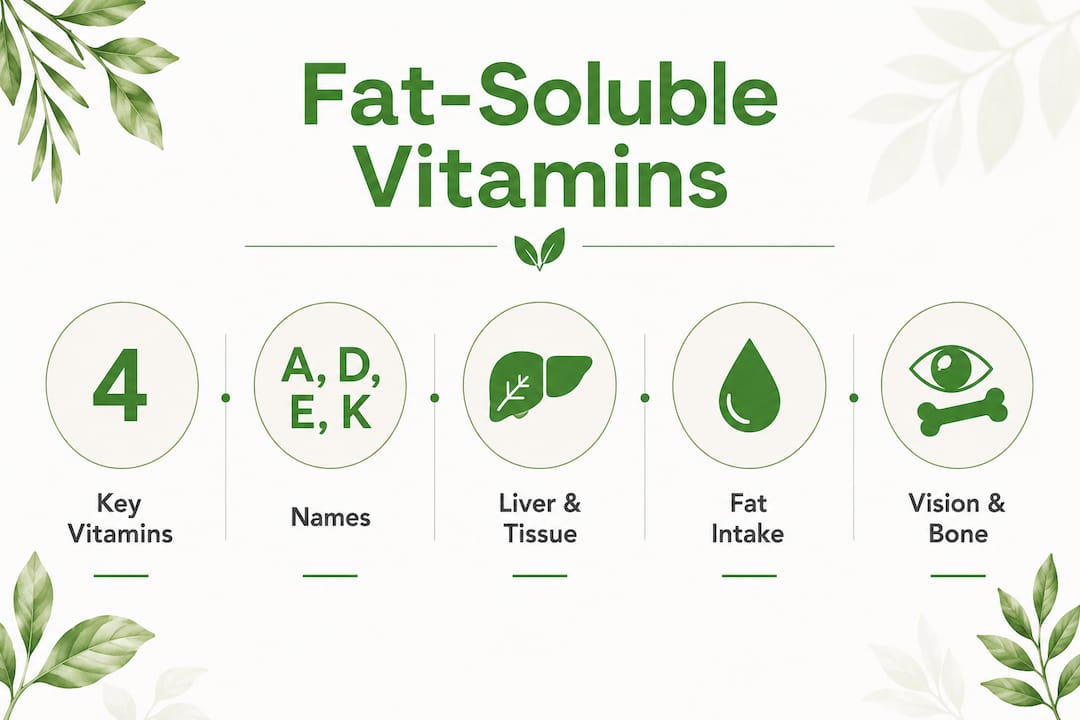
Fat-soluble vitamins are a group of four essential nutrients: vitamin A (retinol and carotenoids), vitamin D (calciferol), vitamin E (tocopherol), and vitamin K (phylloquinone and menaquinone). Unlike most nutrients that pass through your body quickly, these four dissolve in fat rather than water, which means your body stores them in the liver and fatty tissues for later use. That storage capacity is both a benefit and a caution worth understanding.
Here is a quick-reference summary of the four fat-soluble vitamins:
- Vitamin A (retinol/carotenoids): Supports vision, immune function, and skin health
- Vitamin D (calciferol): Regulates calcium absorption and promotes bone strength
- Vitamin E (tocopherol): Acts as an antioxidant, protecting cells from damage
- Vitamin K (phylloquinone/menaquinone): Enables blood clotting and supports bone metabolism
How does your body absorb fat soluble vitamins?

Because these vitamins dissolve in fat, your body cannot absorb them without dietary fat present. The process starts in the small intestine, where bile and pancreatic enzymes help form structures called micelles. Micelles are tiny lipid clusters that carry the vitamins across the intestinal wall into cells called enterocytes. From there, the vitamins get packaged into chylomicrons and released into the lymphatic system before reaching the bloodstream.
Each vitamin has its own absorption style. Vitamins A and K rely on active transport mechanisms, while vitamins D and E use facilitated diffusion. Vitamin K2, uniquely, is absorbed mainly in the colon rather than the upper small intestine. Once in circulation, chylomicrons are broken down by an enzyme called lipoprotein lipase, releasing the vitamins into tissues for use and storage.
| Vitamin | Absorption Mechanism | Primary Storage Site |
|---|---|---|
| Vitamin A | Active transport | Liver |
| Vitamin D | Facilitated diffusion | Liver and fatty tissue |
| Vitamin E | Facilitated diffusion | Fatty tissue |
| Vitamin K | Active transport (K1); colon (K2) | Liver |
Pro Tip: Always pair fat-soluble vitamin supplements or vitamin-rich foods with a small amount of healthy fat, such as avocado, olive oil, or nuts. Without dietary fat present, your body absorbs far less of these vitamins, even from a high-quality source.
Where do fat soluble vitamins come from in your diet?
Food is your most reliable and safest source for all four vitamins. Animal-based foods tend to deliver preformed vitamins (ready for the body to use immediately), while plant-based foods often provide precursors that the body converts. Vitamin D is a special case: your skin produces it when exposed to UVB sunlight, but diet and supplementation still matter, especially in northern climates or for people who spend most of their time indoors.
Key dietary sources at a glance:
- Vitamin A: Beef liver, egg yolks, dairy products, sweet potatoes, carrots, spinach
- Vitamin D: Fatty fish (salmon, mackerel, tuna), fortified milk, fortified orange juice, egg yolks
- Vitamin E: Sunflower seeds, almonds, wheat germ oil, peanut butter, spinach
- Vitamin K: Leafy greens (kale, collards, spinach), broccoli, fermented foods (natto for K2)
| Vitamin | Top Food Source | Notable Plant Source |
|---|---|---|
| Vitamin A | Beef liver | Sweet potato, carrots |
| Vitamin D | Salmon | Fortified plant milks |
| Vitamin E | Sunflower seeds | Almonds, wheat germ oil |
| Vitamin K | Kale | Spinach, broccoli |
Fortification plays a real role in the American diet. Milk, plant-based milks, and some breakfast cereals are commonly fortified with vitamins A and D, making them accessible sources even for people who do not regularly eat liver or fatty fish. If you are following a vegan diet, vitamin D3 from lichen and vitamin K2 from fermented foods are worth paying attention to.
What do fat soluble vitamins actually do in your body?
Each of the four vitamins plays a distinct role, and none of them are interchangeable. Together, they cover some of the most critical functions in the body, from protecting your eyesight to keeping your blood from clotting improperly.
- Vitamin A: Powers the production of rhodopsin, the pigment your eyes need for low-light vision. It also regulates immune cell development and supports healthy skin and mucous membranes.
- Vitamin D: Directs the absorption of calcium and phosphorus in the gut, which is what makes it central to bone density and strength. It also plays a role in muscle function and immune regulation.
- Vitamin E: Neutralizes free radicals before they can damage cell membranes, making it one of the body’s primary antioxidant defenses. It also supports immune response and helps prevent excessive platelet clumping.
- Vitamin K: Activates proteins that control blood clotting (coagulation factors II, VII, IX, and X) and regulates proteins involved in bone mineralization, including osteocalcin.
The benefits of fat soluble vitamins extend across vision, immunity, bone health, and cardiovascular protection. No single supplement replaces the combined effect of getting all four through a balanced diet.
What happens when you don’t get enough of these vitamins?
Deficiencies in fat-soluble vitamins are relatively uncommon in the United States, but they do occur, particularly in people with digestive disorders, liver disease, or conditions that impair fat absorption. Newborns, pregnant women, older adults, and people in intensive care are also at higher risk.
The symptoms differ clearly by vitamin:
- Vitamin A deficiency: Night blindness is often the first sign, followed by increased susceptibility to infections and, in severe cases, complete vision loss (xerophthalmia)
- Vitamin D deficiency: Bone pain, muscle weakness, increased fracture risk, and rickets in children (softening and weakening of bones during growth)
- Vitamin E deficiency: Peripheral neuropathy (nerve damage causing numbness or tingling), impaired balance and coordination, and weakened immune response
- Vitamin K deficiency: Excessive bleeding from minor wounds, easy bruising, and osteopenia (reduced bone density) over time
Catching a deficiency early makes a real difference. A blood test can confirm low levels, and your doctor can recommend whether dietary changes or supplementation is the right path. You can also read more about vitamin deficiency symptoms and their broader health connections.
Can you get too much of a fat soluble vitamin?
Yes, and this is where fat-soluble vitamins differ most sharply from water-soluble ones. Because your body stores them rather than flushing out the excess, too much can build up to harmful levels over time. This condition is called hypervitaminosis, and excess intake causes vitamin-specific damage.
- Vitamin A toxicity: Liver damage, severe headaches, bone pain, and birth defects in pregnancy; the toxicity threshold is at a high level for vitamin A
- Vitamin D toxicity: Hypercalcemia (too much calcium in the blood), which can cause kidney stones, heart rhythm problems, and nausea
- Vitamin E toxicity: Increased bleeding risk, especially in people taking blood thinners, because vitamin E inhibits platelet aggregation
- Vitamin K toxicity: Less common, but high doses can interfere with anticoagulant medications like warfarin, reducing their effectiveness
Vitamins A and D carry the narrowest safety margins of the four. Taking a multivitamin alongside a single-vitamin supplement is a common way people accidentally exceed safe upper limits without realizing it. If you are already eating a varied diet, adding high-dose supplements on top can push levels into a harmful range faster than you might expect.
How do fat soluble vitamins compare to water soluble vitamins?
The core difference comes down to how your body handles what it does not immediately need. Water-soluble vitamins, including the eight B vitamins and vitamin C, dissolve in water and travel freely through the bloodstream. Any excess gets filtered by the kidneys and excreted in urine, which is why vitamin B12 and other water-soluble vitamins rarely cause toxicity even at higher intakes.
Fat-soluble vitamins, by contrast, require fat for transport and accumulate in tissue. That storage is useful when your diet is temporarily low in a particular vitamin, but it also means overdose risk is real and recovery is slow.
| Feature | Fat-soluble vitamins | Water-soluble vitamins |
|---|---|---|
| Dissolves in | Dietary fat | Water |
| Storage in body | Liver and fatty tissue | Minimal (excreted quickly) |
| Toxicity risk | Higher (accumulates) | Lower (excreted in urine) |
| Deficiency onset | Slower (reserves exist) | Faster (no reserves) |
| Examples | A, D, E, K | B vitamins, vitamin C |
This difference has direct implications for supplementation. You can take a high dose of vitamin C and your kidneys will handle the overflow. Take too much vitamin D for several months, and the excess stays in your tissues, potentially causing harm weeks or months after you stop.
Expert advice on supplementing fat soluble vitamins safely
The clearest guidance from nutrition experts is to get these vitamins from food first. Whole foods carry safer nutrient profiles than supplements because they deliver vitamins in naturally balanced amounts alongside fiber, minerals, and other compounds that support absorption. A salmon fillet, a handful of almonds, or a serving of kale gives you meaningful amounts of fat-soluble vitamins without any risk of overdose.
Supplements have a legitimate place, but only when a deficiency is confirmed or a healthcare provider recommends them. Key points to keep in mind:
- Get a blood test before starting any fat-soluble vitamin supplement, especially vitamins A and D
- Avoid combining a multivitamin with a single-vitamin supplement unless a doctor directs you to
- Tell your doctor about all supplements you take, since vitamins E and K interact with blood-thinning medications
- If you take orlistat or similar fat-blocking medications, fat absorption is impaired, which can cause deficiencies even with adequate dietary intake
- Fat-soluble vitamin levels can stay elevated for weeks or months after you stop supplementing, so stopping a supplement does not immediately resolve toxicity
For guidance on choosing the right supplements for your needs, Shopnaturescraft’s daily supplement guide covers evidence-based recommendations in plain language.
Pro Tip: If you are considering a vitamin D supplement for a child, dosing differs significantly from adult recommendations. Check Shopnaturescraft’s kids’ vitamin D guide for age-specific safety information before purchasing.

Getting your fat-soluble vitamins right starts with a solid nutritional foundation, and Shopnaturescraft is here to support every step of that process. From premium vitamins and supplements crafted with clean ingredients to targeted options like calcium gummies that support the bone health vitamin D and K work so hard to protect, there is something for every stage of your wellness routine. Every product is made with the same commitment Nature’s Craft has held since 2013: pure ingredients, clear purpose, and your health at the center.
Key Takeaways
Fat-soluble vitamins A, D, E, and K are stored in the liver and fatty tissues, require dietary fat for absorption, and carry real toxicity risk when taken in excess without medical guidance.
| Point | Details |
|---|---|
| Four vitamins only | Fat-soluble vitamins are A, D, E, and K; vitamin B12 is water-soluble, not fat-soluble. |
| Fat required for absorption | Bile and pancreatic enzymes form micelles that carry these vitamins into the bloodstream. |
| Storage creates toxicity risk | Excess accumulates in liver and fatty tissue and can stay elevated weeks or months after intake stops. |
| Deficiency affects specific systems | Vitamin A affects vision and immunity; D affects bones; E affects nerves; K affects clotting and bone density. |
| Food first, supplements second | Whole foods deliver safer nutrient profiles; supplement only when a deficiency is confirmed by a blood test. |
FAQ
What are the four fat soluble vitamins?
The four fat-soluble vitamins are A (retinol/carotenoids), D (calciferol), E (tocopherol), and K (phylloquinone and menaquinone). They dissolve in fat, are absorbed with dietary fat, and are stored in the liver and fatty tissues.
What happens if you take too many fat soluble vitamins?
Excess fat-soluble vitamins cause hypervitaminosis because the body stores rather than excretes them. Symptoms vary by vitamin: vitamin A can cause liver damage and birth defects, vitamin D can cause kidney and heart problems, vitamin E raises bleeding risk, and vitamin K can interfere with blood-thinning medications.
What are the symptoms of fat soluble vitamin deficiency?
Deficiency symptoms differ by vitamin: vitamin A causes night blindness and impaired immunity, vitamin D causes bone pain and rickets, vitamin E causes neuropathy and balance problems, and vitamin K causes excessive bleeding and osteopenia.
Is vitamin B12 water or fat soluble?
Vitamin B12 is water-soluble, not fat-soluble. The body excretes excess B12 in urine rather than storing it, which is why B12 toxicity is rare compared to fat-soluble vitamins like A and D.
What is the difference between fat soluble and water soluble vitamins?
Fat-soluble vitamins (A, D, E, K) dissolve in fat, are stored in the liver and fatty tissue, and carry higher toxicity risk. Water-soluble vitamins (B vitamins, vitamin C) dissolve in water and are excreted in urine, so they rarely accumulate to harmful levels.

