


The desire to stay mentally sharp isn't a modern invention.
Long before words such as nootropic, neurotransmitter, and cognitive wellness entered everyday vocabulary, cultures around the world were using foods and botanicals as part of traditions surrounding mental and physical well-being.
Modern brain supplements grew from a very different environment.
Today, researchers can study individual nutrients, map chemical messengers in the nervous system, examine cell membranes, and investigate how specific plant compounds interact with human biology.
That shift changed more than the vocabulary.
It changed the supplement bottle.
Plants came long before “brain supplements”
Many ingredients now sold in cognitive formulas have histories that predate the supplement industry by centuries.
Traditional botanical systems used plants according to the medical understanding of their time. Modern science doesn't automatically validate every historical use, but those traditions frequently supplied the starting point for contemporary research.
Ashwagandha and Bacopa monnieri are familiar examples from Ayurveda.
Ginkgo has its own long botanical history.
Green tea was consumed for generations before researchers began isolating and studying its naturally occurring compounds.
The modern question is no longer simply whether a plant has a traditional reputation.
Researchers can now ask which compounds it contains, how much is present, and whether controlled human studies support a particular effect.
Nutrition science widened the picture
The brain isn't powered by herbs alone.
It requires nutrients, energy, healthy cell membranes, amino acids, and an enormous network of chemical signaling.
That realization broadened the brain-supplement category.
B vitamins entered the conversation because of their roles in normal neurological and metabolic processes. Phospholipids such as phosphatidylserine attracted attention because they are components of cell membranes. Amino acids and related compounds became subjects of research involving metabolism and neurotransmitter pathways.
This helps explain why modern cognitive formulas can look so different from traditional herbal preparations.
They aren't necessarily trying to recreate an old botanical recipe.
They're often combining several nutritional ideas within one product.
Then came the language of nootropics
The term nootropic emerged in the twentieth century and eventually expanded into the broad consumer category seen today.
In modern wellness marketing, the word can encompass herbs, nutritional compounds, specialized extracts, and multi-ingredient formulas associated with memory, focus, attention, or other aspects of cognitive performance.
That doesn't mean every ingredient marketed as a nootropic has equally strong evidence.
It does mean consumers now encounter a category built around much more specific goals than simply “brain health.”
The current Life Extension overview, for example, separates ingredients according to goals such as memory support, focus and attention, cognitive performance, and general brain health.
That specialization is a relatively modern development.
How Those Ideas Come Together in One Formula

Nature’s Craft Mind & Memory Matrix reflects this multi-ingredient era.
Rather than centering the product around one botanical, Nature’s Craft describes a blend containing nutritional compounds and botanical extracts. Its current product information specifically identifies ingredients including DMAE bitartrate, L-glutamine, and green tea extract, while positioning the overall formula around memory, focus, recall, and mental clarity.
The product contains 60 veggie capsules.
The official directions are to take two capsules once daily, ideally 20–30 minutes before a meal with an 8-ounce glass of water, or as directed by a healthcare professional.
That combination of botanicals and nutritional compounds is characteristic of how far the category has moved beyond single-ingredient supplementation.
Modern formulas raise a modern problem
More ingredients create more homework.
A long Supplement Facts panel isn't automatically evidence of a better brain supplement.
Each ingredient has its own dose, evidence base, safety considerations, and potential interactions. Some compounds may also duplicate products a person already takes separately.
That's why the development of increasingly elaborate formulas should be accompanied by increasingly careful label reading.
The goal isn't to find the bottle with the longest ingredient list.
It's to understand what the formula contains and whether it makes sense for the person considering it.
A different way to shop the category
The history explains how brain supplements became so varied.
The shopping decision is another matter.
For a closer look at the questions worth asking when comparing several real brain-health formulas, including Nature’s Craft, Jarrow Formulas, and Life Extension, see:
Before I Choose a Brain Supplement, I Ask These Questions
https://medium.com/@itsmeissa/brain-supplements-are-everywhere-heres-what-i-check-first-ebb489cd1405
What hasn't changed
Despite increasingly sophisticated formulations, the fundamentals of brain health remain remarkably ordinary.
The brain benefits from sufficient sleep, regular physical activity, adequate nutrition, social engagement, intellectual stimulation, and appropriate management of cardiovascular and metabolic health.
Even Life Extension's current brain-health guidance emphasizes that supplements sit alongside basics such as sleep, exercise, and a healthy diet rather than replacing them.
A supplement can be part of a wellness routine.
It cannot substitute for the conditions the brain needs every day.
The bottle tells a bigger story than it seems
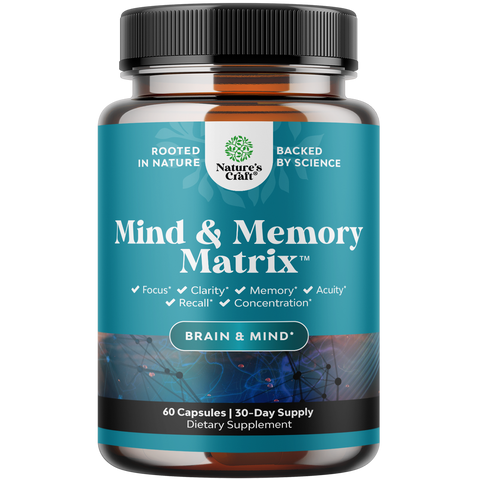
A product such as Nature’s Craft Mind & Memory Matrix represents several chapters of nutritional history at once.
There are botanical traditions behind some ingredients.
There is modern nutrition science behind others.
And there is the contemporary idea of combining multiple compounds into a formula aimed at several dimensions of cognitive wellness.
That doesn't make today's formulas the final word on brain health. Research continues, and some popular ingredients have much stronger evidence than others.
But it does explain why today's brain-supplement aisle looks the way it does.
What began as separate conversations about plants, nutrition, and human cognition has gradually become one very crowded bottle.
