


Men’s supplements for muscle recovery are specialized nutrients and compounds designed to accelerate muscle tissue repair, reduce soreness, and improve workout performance. Creatine monohydrate and whey protein stand as the two most research-backed options available, with creatine showing positive results for lean muscle mass in 64% of studies reviewed. For active men aged 18–45, the gap between a hard training session and a full recovery often comes down to what you put in your body after the workout ends. Getting this right means knowing which supplements work, when to take them, and how to build them around solid nutrition and sleep.
What are the most effective men’s supplements for muscle recovery?
Post-workout muscle repair relies on a specific set of compounds. Each one targets a different part of the recovery process, from energy replenishment to inflammation control.
Creatine monohydrate
Creatine increases lean muscle mass in the majority of controlled studies, making it the most consistently supported muscle recovery supplement for men. It works by replenishing phosphocreatine stores in muscle cells, which fuels short bursts of high-intensity effort and speeds up recovery between sets. A standard loading phase uses 20 grams daily for five to seven days, followed by a maintenance dose of 3–5 grams per day. Shopnaturescraft offers a Creatine Tri-Phase formula designed to support this exact protocol.
Whey protein
Whey protein delivers a fast-absorbing source of all nine essential amino acids directly to damaged muscle fibers after training. It is the most practical protein supplement for men who need to hit daily protein targets without relying entirely on whole food sources. Consuming 20–40 grams within 30–60 minutes after a workout gives your muscles the raw material they need to rebuild.

Branched-chain amino acids (BCAAs)
BCAAs at doses of 2–10 grams around workouts reduce delayed onset muscle soreness safely for up to six weeks. That range gives you flexibility based on training volume. Leucine, isoleucine, and valine are the three BCAAs, and leucine in particular triggers muscle protein synthesis. Shopnaturescraft’s BCAA formula provides these in a balanced ratio suited for men training four or more days per week.
CoQ10 (ubiquinol)
CoQ10 supplementation post-workout significantly reduces delayed onset muscle soreness in both normal-weight and overweight men. This matters because many men assume CoQ10 is only for heart health. At the cellular level, CoQ10 protects mitochondria from oxidative stress caused by intense exercise. Shopnaturescraft’s CoQ10 200mg product delivers a clinically relevant dose per serving.
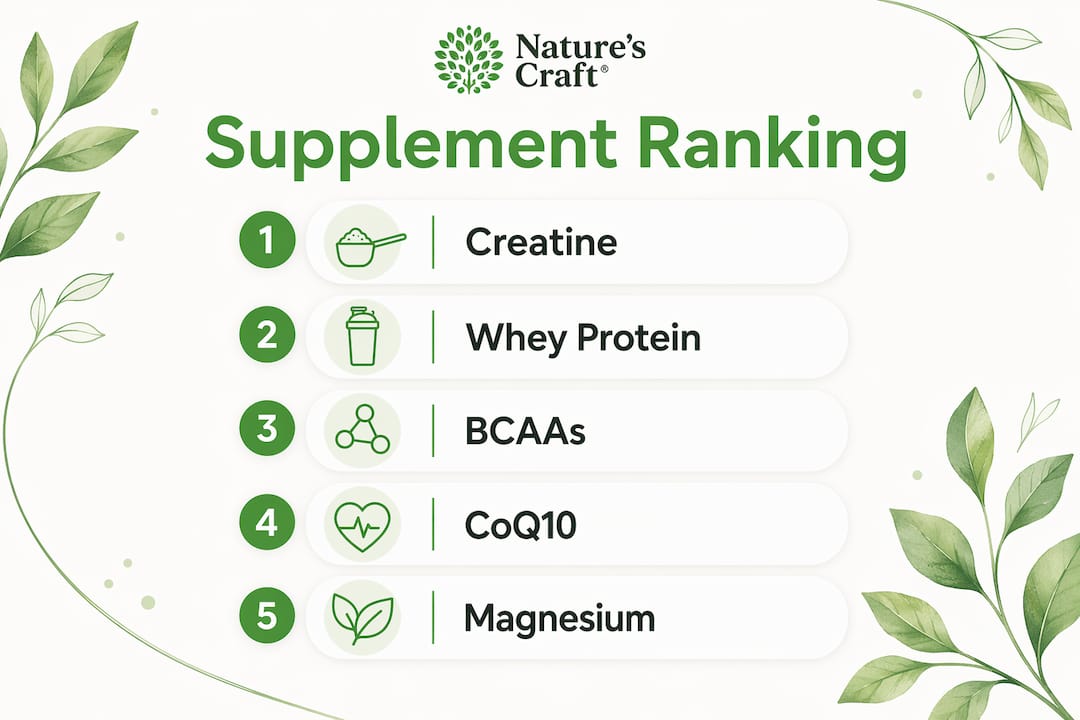
Magnesium
Magnesium supports muscle relaxation and recovery, with a recommended daily allowance of 400–420 mg for adult men. Low magnesium levels are linked to muscle cramps, poor sleep quality, and slower recovery. Most men do not get enough through diet alone, making supplementation a practical gap-filler.
Additional recovery aids
- Vitamin C: 1,000 mg per day improves muscle force recovery and reduces soreness, particularly in men new to structured training.
- Turmeric: The active compound curcumin reduces exercise-induced inflammation. Shopnaturescraft’s Turmeric Gummies offer a convenient delivery format.
- Omega-3 fatty acids: Support cell membrane repair and reduce systemic inflammation after heavy training.
- Tart cherry: Most effective during high-volume training blocks or multi-day athletic events rather than for daily casual use.
Pro Tip: Stack creatine with whey protein post-workout. The combination supports both energy replenishment and muscle tissue repair simultaneously, giving you more benefit than either supplement alone.
How should men use supplements to improve workout recovery?
Timing and dosage matter as much as the supplements themselves. Taking the right compound at the wrong time reduces its effectiveness significantly.
Timing guidelines
- Immediately post-workout: Consume whey protein within 30–60 minutes after training to maximize muscle protein synthesis.
- Pre-workout (2+ hours before activity): Take magnesium at least two hours before exercise to support muscle function without interfering with performance.
- Around workouts: Take BCAAs 15–30 minutes before or immediately after training for soreness reduction.
- Daily consistency: Take creatine at the same time each day. Timing relative to workouts matters less than daily consistency during the maintenance phase.
- With meals: CoQ10 absorbs better with fat-containing meals. Take it with breakfast or your post-workout meal.
Dosage ranges to follow
- Creatine monohydrate: 3–5 grams daily (maintenance)
- Whey protein: 20–40 grams post-workout
- BCAAs: 2–10 grams daily, up to 20 grams safely
- Magnesium: 400–420 mg daily for men
- Vitamin C: up to 1,000 mg daily for recovery support
Building a supplement strategy around your foundation
Supplements work best when your diet, sleep, and hydration are already solid. A protein shake does not compensate for sleeping five hours a night. Micronutrients like vitamin D and magnesium deliver their full benefit only when you are not already deficient from poor eating habits. Think of supplements as precision tools, not a shortcut.
Pro Tip: When buying any supplement, look for NSF Certified for Sport or Informed Sport certification on the label. These third-party certifications verify that the product contains what it claims and is free from banned substances.
What mistakes should men avoid with muscle repair supplements?
Most men who do not see results from supplementation are making one of a handful of predictable errors.
- Taking too much: Exceeding recommended doses does not accelerate recovery. Excess creatine, for example, is simply excreted. Excess fat-soluble vitamins accumulate and can cause harm.
- Skipping the nutritional foundation: Supplements fill gaps in an otherwise solid diet. They do not replace whole food protein, vegetables, or adequate caloric intake.
- Using the wrong supplements for your training level: A man doing three 30-minute gym sessions per week does not need tart cherry extract or high-dose CoQ10. Those compounds are most effective during intense training cycles or competition periods.
- Ignoring sleep and hydration: No supplement overcomes chronic sleep deprivation or dehydration. Both directly impair muscle protein synthesis.
- Trusting marketing over certification: A flashy label is not evidence. Third-party certification is.
“Consistency in sleep, hydration, and daily protein intake has a greater impact on muscle recovery than any single supplement. Supplements are most effective as gap-fillers once these foundational habits are in place.”
Adjusting your supplement plan based on training intensity is the most practical personalization strategy available. A man in a heavy strength-training block needs more creatine and protein support. A man in an active recovery week may only need magnesium and omega-3s. Consult a registered dietitian or sports medicine physician if you are managing a health condition or taking prescription medications alongside supplements.
Pro Tip: Track your recovery markers for four weeks after adding a new supplement. Note sleep quality, soreness levels, and training performance. If nothing changes, the supplement may not be the right fit for your current training phase.
How do the top muscle recovery supplements compare?
| Supplement | Primary benefit | Best timing | Key consideration |
|---|---|---|---|
| Creatine monohydrate | Lean muscle mass and energy | Daily, any time | Requires consistent daily use |
| Whey protein | Muscle tissue repair and growth | Within 60 min post-workout | Choose third-party certified products |
| BCAAs | Soreness reduction | Around workouts | Effective for up to six weeks at a time |
| CoQ10 (ubiquinol) | Reduces muscle damage and DOMS | With a fat-containing meal | Most valuable during high-volume training |
| Magnesium | Muscle relaxation and sleep quality | 2+ hours before activity | RDA for men is 400–420 mg daily |
Third-party certification applies to every category in this table. NSF and Informed Sport are the two most recognized certifying bodies for sports supplements. A product without certification is a product you cannot fully verify.
Pro Tip: Start with creatine and whey protein before adding BCAAs or CoQ10. These two cover the widest range of recovery needs and have the strongest research support behind them.
Key Takeaways
Creatine monohydrate and whey protein form the foundation of any effective men’s post-workout recovery supplement plan, with timing, dosage, and third-party certification determining real-world results.
| Point | Details |
|---|---|
| Creatine and protein first | These two supplements have the strongest research support for muscle repair and lean mass gains. |
| Timing changes outcomes | Take magnesium 2+ hours before activity and whey protein within 60 minutes post-workout. |
| Supplements fill gaps | They work best when sleep, hydration, and whole-food nutrition are already consistent. |
| Certification matters | Look for NSF or Informed Sport labels to verify product safety and accuracy. |
| Personalize by training load | High-volume training phases call for targeted additions like CoQ10 or tart cherry. |
What I’ve learned from years of watching men supplement wrong
Most men I’ve seen struggle with recovery are not under-supplementing. They are over-supplementing in the wrong areas while neglecting the basics. A guy taking six different products but sleeping six hours a night and skipping post-workout meals will not recover well. The supplements are not the problem. The foundation is.
The most consistent result I’ve observed is this: men who nail protein intake, sleep seven to nine hours, and drink enough water recover faster than men who take every supplement on the market but ignore those three things. Once the foundation is solid, creatine and whey protein add a measurable edge. BCAAs help during high-frequency training weeks. CoQ10 earns its place during competition prep or back-to-back training days.
I also think the supplement industry oversells complexity. You do not need a 12-ingredient recovery stack. You need two to four well-chosen, certified products taken consistently at the right times. For most active men aged 18–45, that means creatine, a quality protein source, magnesium, and possibly BCAAs during hard training blocks. Everything else is situational. Check out men’s supplements for healthy aging if you want to see how recovery needs shift as training history grows.
— SuperNatural
Quality recovery supplements from Shopnaturescraft
Shopnaturescraft has been formulating clean, third-party quality-checked supplements since 2013, with a product range built around exactly what active men need for post-workout recovery.

The collection includes creatine, CoQ10, BCAA formulas, and magnesium-based products, all made with high-quality ingredients and no unnecessary fillers. Whether you prefer capsules or gummies, you will find a format that fits your routine. Browse the full premium supplement store to find the right products for your training phase and recovery goals. Every bottle is crafted to support your performance from the inside out.
FAQ
What are muscle recovery supplements for men?
Muscle recovery supplements are nutrients and compounds, such as creatine, whey protein, BCAAs, and magnesium, that support muscle tissue repair and reduce soreness after training. They work best alongside consistent sleep, hydration, and a balanced diet.
How long does it take for recovery supplements to work?
Creatine typically shows measurable results within two to four weeks of consistent daily use. BCAAs can reduce soreness within the first week of use around workouts.
Are BCAAs safe to take daily?
Yes. BCAAs are safe at doses up to 20 grams per day, with effective recovery doses ranging from 2–10 grams daily for up to six weeks.
Should I take creatine or protein first?
Take both. Creatine replenishes cellular energy stores, while whey protein provides the amino acids needed to rebuild muscle fibers. The combination produces better recovery outcomes than either supplement alone.
How do I know if a supplement is safe and effective?
Look for NSF Certified for Sport or Informed Sport certification on the label. These third-party certifications confirm that the product contains what it claims and has been tested for banned substances.

