


Lean muscle supplements for men are products like creatine monohydrate and protein powders that directly support muscle protein synthesis and strength gains when combined with resistance training. The industry term for this category is “ergogenic aids,” though most men searching for lean muscle gain products for men simply want to know what moves the needle. A 2026 meta-analysis found creatine plus resistance training increases fat-free mass by 3.39 kg and lean body mass by 2.70 kg in men aged 18 to 30. Those numbers represent real, measurable change. Omega-3 fatty acids and BCAAs also appear in most supplement stacks, though their roles are more supportive than primary.
What are the key supplements proven to build lean muscle for men?
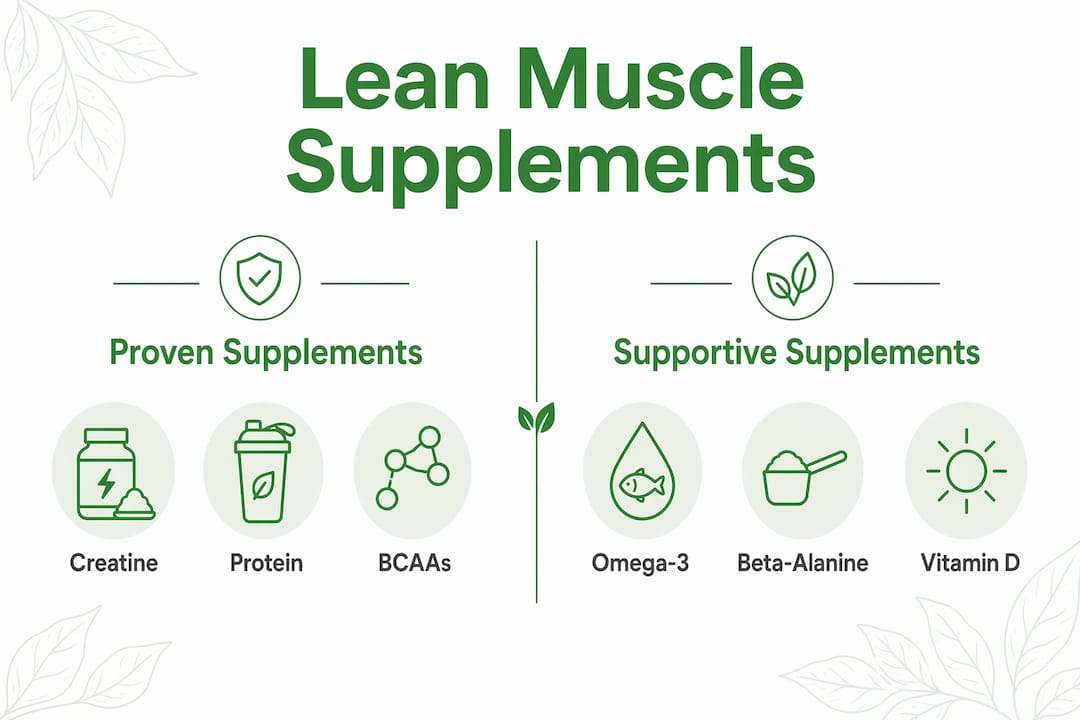
The best supplements for lean muscle fall into two tiers: those with strong, consistent evidence and those with a supporting role. Creatine monohydrate and protein powders sit firmly in the first tier. Everything else is secondary.
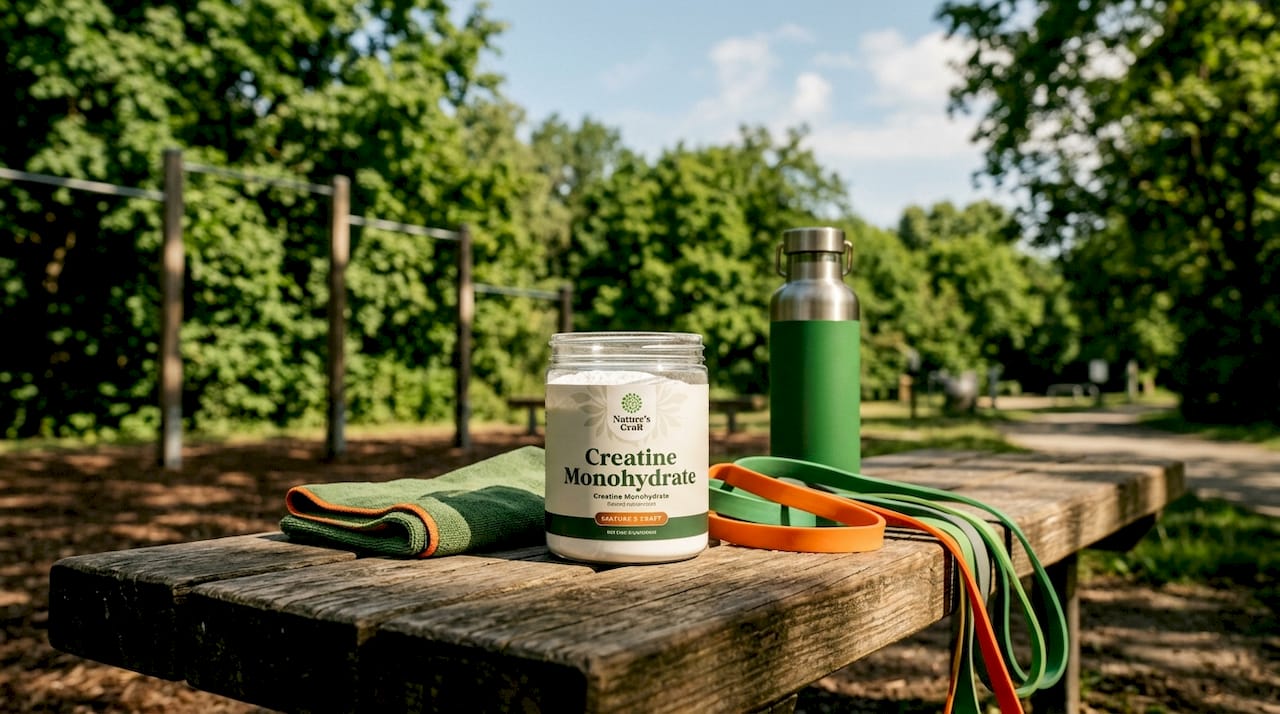
Creatine monohydrate is the most researched performance supplement available. It works by increasing phosphocreatine stores in muscle, which fuels short, intense efforts like heavy sets and sprint intervals. The lean mass gains with creatine documented in clinical trials are not marginal. They are the kind of gains most men spend months chasing through training alone.
Protein powders, including whey, casein, and plant-based options, help you hit daily protein targets when whole food intake falls short. Protein at 1.6 to 2.2 g/kg per day with resistance training is the confirmed range for optimizing muscle protein synthesis. Going above 2.2 g/kg produces diminishing returns, so more is not always better.
Here is how the main lean muscle supplements compare:
| Supplement | Primary benefit | Evidence strength |
|---|---|---|
| Creatine monohydrate | Lean mass and strength gains | Very strong (multiple meta-analyses) |
| Whey or plant protein | Meets daily protein targets | Very strong |
| Omega-3 fatty acids | Reduces inflammation, aids recovery | Moderate (recovery, not mass) |
| BCAAs | Amino acid delivery | Weak vs. total protein intake |
| Beta-alanine | Muscular endurance | Moderate (sport-specific) |
| HMB | Muscle preservation | Mixed results |
BCAAs deserve a closer look because they are heavily marketed as natural supplements for muscle building. The reality is that BCAAs have weaker evidence for muscle growth compared to simply meeting your total daily protein target. If you are already hitting 1.6 g/kg or more through food and protein powder, a separate BCAA supplement adds little. Spend that money on creatine instead.
Pro Tip: If you are new to supplementation, start with creatine monohydrate and a quality protein powder before adding anything else. These two cover the majority of what science actually supports for lean muscle development.
How should men dose creatine and protein for optimal lean muscle gains?
Getting the dose right matters as much as choosing the right supplement. Both creatine and protein have well-defined protocols backed by clinical research, and following them consistently is what separates results from wasted money.
Creatine dosing:
- Loading phase (optional): Take 20 g per day split into four 5 g doses for five to seven days. This saturates muscle creatine stores faster. Loading accelerates saturation but does not improve long-term muscle gains compared to skipping the loading phase entirely.
- Maintenance dose: Take 3 to 5 g per day consistently. This is the standard approach whether you loaded or not.
- Skip loading if needed: If the loading phase causes GI discomfort, start directly at 3 to 5 g per day. You will reach full muscle saturation within three to four weeks.
- Timing is flexible: Creatine does not need to be taken at a specific time. Pre-workout, post-workout, or with a meal all produce the same outcome. Consistency matters more than timing.
- Calorie surplus vs. deficit: During a calorie surplus, creatine supports strength and mass gains directly. During a cut, it helps preserve strength output so you can maintain training intensity.
Protein dosing:
Aim for 1.6 to 2.2 g/kg of body weight per day, distributed across four to five meals with 30 to 50 g per meal. This distribution maximizes muscle protein synthesis throughout the day rather than front-loading all your protein in one or two sittings.
For a 180-pound (82 kg) man, that means roughly 131 to 180 g of protein daily. A protein powder serving after training and one with breakfast covers a significant portion of that target without requiring you to eat chicken at every meal.
During a calorie deficit, protein needs rise toward the upper end of that range. Higher protein intake during cuts preserves lean mass while body fat decreases. This is one of the most practical pieces of lean muscle nutrition for men that gets overlooked when people focus only on calorie counting.
Pro Tip: Weigh yourself and calculate your protein target in grams once. Write it down. Then track your intake for two weeks until hitting that number becomes automatic. Most men discover they were eating far less protein than they assumed.
What role do omega-3 and other supplements play in lean muscle development?
Omega-3 fatty acids are the most popular recovery-focused supplement in most lean muscle stacks, and understanding what they actually do prevents disappointment. They are not direct muscle builders. They are recovery aids, and that distinction matters.
Research on omega-3 and inflammation markers shows consistent changes in immune-related biomarkers after supplementation, but no direct improvement in muscle mass or anaerobic performance. The benefit is real, just different from what the marketing often implies.
Here is what omega-3s and other secondary supplements realistically offer:
- Omega-3 fatty acids (EPA and DHA): Reduce exercise-induced inflammation, support joint health, and may shorten recovery time between sessions. Dose: 2 to 3 g of combined EPA and DHA per day.
- Vitamin D: Supports testosterone production and muscle function. Deficiency is common in men who train indoors and can blunt strength gains.
- Magnesium: Supports sleep quality and muscle relaxation. Poor sleep directly reduces muscle protein synthesis and recovery.
- Zinc: Involved in testosterone regulation and immune function. Often depleted through sweat in men who train frequently.
The pattern across these supplements is consistent. Omega-3 trials show biochemical shifts before any performance or size outcomes appear, which means the benefits are real but operate upstream of the muscle-building process. Think of them as keeping the engine running cleanly rather than adding horsepower.
Managing expectations here is not pessimism. It is accuracy. Men who understand the difference between primary and secondary supplements make better purchasing decisions and stay consistent longer because they are not waiting for results that were never coming.
How do nutrition and resistance training interact with supplements for lean muscle gains?
Supplements do not build muscle. Your body builds muscle in response to training stress, and supplements provide the raw materials and energy that make that process more efficient. This distinction is the most important concept in lean muscle nutrition for men.
Creatine’s body composition benefits appear mainly with resistance training as the stimulus. Without adequate training volume and intensity, creatine improves strength output but does not produce significant lean mass changes. The supplement and the training are a package deal.
Protein works the same way. Whey protein preserves muscle mass during calorie-restricted periods when combined with resistance training, but energy deficits can blunt the anabolic response. This means that during a cut, your training needs to stay intense enough to signal muscle retention even as calories drop.
“The primary driver for lean muscle gain is nutrition plus resistance training. Supplements like creatine and protein provide key metabolic substrates and energy for muscle growth, but they amplify an existing stimulus rather than create one.” Comparative Effects of Dietary Protein, Creatine, and Omega-3 Supplementation on Muscle Strength
Practically, this means your training program needs to include progressive overload, meaning you are consistently adding weight, reps, or sets over time. Three to four resistance training sessions per week, targeting major muscle groups with compound movements like squats, deadlifts, rows, and presses, gives creatine and protein the stimulus they need to produce results.
Calorie intake also shapes outcomes. During a muscle-building phase, a modest surplus of 200 to 300 calories above maintenance gives your body the energy to synthesize new tissue. During a fat-loss phase, keeping protein high and training intensity consistent protects the muscle you have built. Supplements adjust their role depending on which phase you are in, but they never replace the fundamentals.
Key takeaways
Creatine monohydrate and adequate daily protein intake are the two supplements with the strongest evidence for lean muscle gains in men, and both require consistent resistance training to produce results.
| Point | Details |
|---|---|
| Creatine is the top supplement | Creatine monohydrate adds up to 2.70 kg of lean mass when combined with resistance training. |
| Protein targets matter | Aim for 1.6 to 2.2 g/kg per day, distributed across 4 to 5 meals of 30 to 50 g each. |
| Omega-3s support recovery | Omega-3 fatty acids reduce inflammation and aid recovery but do not directly build muscle mass. |
| Training drives results | Supplements amplify training stimulus. Without progressive overload, their impact is limited. |
| BCAAs are overhyped | Meeting total daily protein needs outperforms isolated BCAA supplements for muscle growth. |
What I have learned from watching men chase the wrong supplements
After years of following the research and watching men cycle through supplement after supplement without results, one pattern stands out clearly. Most men treat supplements as the plan rather than as support for the plan. They buy a new pre-workout or amino acid blend every few months, stay inconsistent with creatine, and never actually hit their protein targets. Then they wonder why nothing is working.
The research is not ambiguous. Creatine and protein are the two supplements worth prioritizing. Everything else is optional and secondary. I have seen men make better progress in six months of consistent creatine use and hitting 1.8 g/kg of protein per day than in two years of rotating through trendy stacks. The boring approach works.
One thing I would push back on is the obsession with supplement timing. Whether you take creatine before or after training makes almost no difference. Whether you take protein within 30 minutes of a workout versus 90 minutes matters far less than whether you hit your daily total. Consistency across weeks and months is what produces the physique change you are after.
If you want to explore what supplements help build lean muscle beyond the basics, do it after you have locked in creatine and protein as non-negotiables. Add omega-3s for recovery support. Consider vitamin D if you train indoors. But do not let the secondary options distract you from the primary ones.
Patience is the most underrated part of this process. Lean mass gains measured in clinical trials happen over eight to twelve weeks of consistent effort. Give your stack the time it needs before drawing conclusions.
— SuperNatural
Build your lean muscle stack with Shopnaturescraft
Shopnaturescraft has been formulating clean, evidence-aligned supplements since 2013, and the product lineup reflects exactly what the research supports for men building lean muscle.

The Creatine Tri-Phase delivers clinically dosed creatine designed to support both loading and maintenance protocols, so you can follow the dosing strategy that fits your routine. For protein, Gorilla Muscle helps you hit your daily protein targets with quality ingredients and no unnecessary fillers. If you want to cover both priorities at once, the Muscle and Fitness Bundle combines the core supplements men in the 18 to 40 age group need most. Every product at Shopnaturescraft is built around the same principle: pure ingredients, honest dosing, and real results.
FAQ
What are lean muscle supplements for men?
Lean muscle supplements for men are products like creatine monohydrate and protein powders that support muscle protein synthesis and strength gains when combined with resistance training. They provide key nutrients and energy substrates that the body uses to build and preserve lean tissue.
How much creatine should men take daily?
Men should take 3 to 5 g of creatine monohydrate per day as a maintenance dose. An optional loading phase of 20 g per day for five to seven days speeds up muscle saturation but does not improve long-term results.
Do BCAAs help build lean muscle?
BCAAs have weaker evidence for muscle growth compared to meeting total daily protein targets. If you are already consuming 1.6 to 2.2 g/kg of protein per day, a separate BCAA supplement adds minimal benefit.
Can omega-3 supplements help with muscle gains?
Omega-3 fatty acids support recovery and reduce exercise-induced inflammation but do not directly increase muscle mass. They are best used as a recovery aid alongside creatine and protein rather than as a primary muscle-building supplement.
Do supplements work without resistance training?
Creatine improves strength output without training, but lean mass gains require a resistance training stimulus. Protein supplements also produce limited muscle-building effects without the mechanical stress of regular weight training to trigger muscle protein synthesis.

