


Greens powder supplements are defined as dietary blends that deliver concentrated vitamins, minerals, antioxidants, and digestive-supporting compounds in powdered form. Understanding how greens powder supplements work helps you separate real benefits from marketing noise. These products typically combine leafy greens like spinach and kale, algae such as spirulina and chlorella, digestive enzymes, and prebiotic fibers. They function as nutrient gap fillers, not whole food replacements. Clinical research shows they can improve micronutrient adequacy and support blood pressure within weeks, but results depend heavily on formulation quality and how you use them.
How do greens powder supplements work in the body?
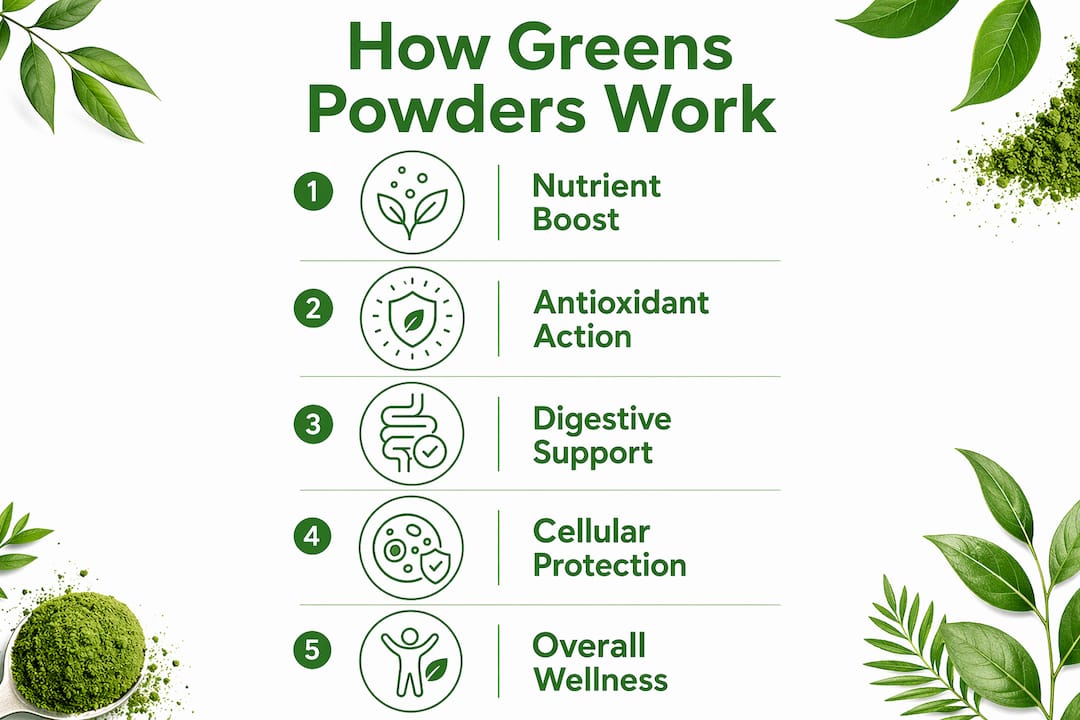
Greens powders work by delivering a concentrated dose of micronutrients your diet may be missing. The primary mechanism is straightforward: each serving supplies vitamins A, C, E, K, and folate in amounts that help you meet your Estimated Average Requirements (EARs). These are the daily intake levels established by nutrition science to prevent deficiency in most healthy adults.
The antioxidant compounds in these blends do real work at the cellular level. Ingredients like turmeric and ginger contribute anti-inflammatory polyphenols that neutralize free radicals. Spirulina and chlorella add phycocyanin and chlorophyll, both studied for their antioxidant activity. These compounds do not work overnight, but consistent daily use builds a cumulative effect.

Digestive support is another key function, though the source may surprise you. Prebiotic fibers and digestive enzymes added to the powder, not the greens themselves, are responsible for reducing bloating and improving regularity. Probiotics included in some formulas add a layer of gut support by introducing beneficial bacteria alongside the fiber that feeds them.
Absorption is where things get more nuanced. Fat-soluble vitamins A, E, and K require dietary fat to cross the intestinal wall into your bloodstream. Taking your greens powder with water alone means you absorb far less of these nutrients than the label suggests. Vitamin C presents a different problem: it degrades quickly with heat and oxygen, so processing and storage can significantly reduce potency before the product even reaches you.
Here is a breakdown of the core mechanisms:
- Micronutrient delivery: Concentrated vitamins and minerals fill gaps left by an incomplete diet
- Antioxidant activity: Polyphenols from turmeric, ginger, and algae reduce oxidative stress
- Digestive support: Added prebiotic fibers and enzymes improve gut comfort and regularity
- Probiotic contribution: Select strains support beneficial gut bacteria populations
- Phytonutrient exposure: Chlorophyll and carotenoids from greens provide plant-based compounds
Pro Tip: Mix your greens powder into a smoothie with avocado, nut butter, or a splash of olive oil. The dietary fat significantly improves your absorption of fat-soluble vitamins A, E, and K.
What does current research say about the effectiveness of greens powders?
The clinical evidence for greens powders is real but measured. A 90-day clinical study found that daily supplementation reduced systolic blood pressure by 12 mmHg and diastolic blood pressure by 7 mmHg. Those are meaningful reductions, comparable to what some lifestyle interventions achieve, and worth noting for anyone managing cardiovascular health.
Micronutrient adequacy shows similarly encouraging results. A randomized, double-blind study found that daily greens supplementation increased the number of micronutrient EARs met by 2.8 over just 14 days. That means participants were meeting the requirements for nearly three additional nutrients after two weeks of consistent use.
Specific ingredients carry their own evidence base. A meta-analysis on chlorella found reductions in LDL cholesterol of 6.20 mg/dL and body weight of 1.28 kg, though the researchers flagged the evidence certainty as very low. That distinction matters. Statistically significant does not always mean clinically meaningful, especially when study quality is limited.
“Two weeks of greens supplementation selectively enriches beneficial gut bacteria related to gut health without disrupting overall microbial diversity.” This finding from a Frontiers in Nutrition study suggests targeted microbiome support is possible, even if the effect is modest and product-specific.
The table below summarizes what current research supports and where the evidence is weaker:
| Benefit | Evidence Level | Key Finding |
|---|---|---|
| Blood pressure reduction | Moderate | 12 mmHg systolic drop over 90 days |
| Micronutrient adequacy | Moderate | 2.8 additional EARs met in 14 days |
| LDL cholesterol reduction | Very low | 6.20 mg/dL decrease with chlorella |
| Gut microbiome support | Low to moderate | Selective enrichment without diversity disruption |
| Microbiome diversity changes | Not supported | No significant changes after 30 days |
Understanding the different supplement forms available helps you evaluate which delivery method best matches your health goals and lifestyle.
What are the limitations and common misconceptions about greens powders?
Greens powders cannot replace whole vegetables. This is the most important limitation to understand. Whole foods contain intact fiber, water content, and a full phytonutrient matrix that powders simply cannot replicate. Processing strips away much of what makes vegetables so valuable in the first place.
Nutrient degradation is a real and underappreciated problem. Vitamin C is highly susceptible to heat and oxidation, meaning the amount listed on the label often does not reflect what you actually consume. Products stored improperly or sitting on shelves for months may deliver a fraction of their stated potency. Label claims frequently overstate actual nutrient content at the time of consumption.
Common misconceptions worth addressing directly:
- Anti-aging claims: Marketing language around reversing aging or profound cellular repair is not supported by clinical evidence
- Immune system “boosting”: Claims about immune boosting are often overstated and lack robust clinical backing
- Microbiome transformation: Greens powders do not dramatically reshape your gut ecosystem in 30 days
- Whole food equivalence: One scoop does not equal five servings of vegetables, regardless of what the packaging implies
- Universal digestive comfort: Some people experience bloating and nausea, especially when starting at full serving sizes
Vitamin K interactions are worth flagging for anyone on blood thinners like warfarin. Greens powders often contain meaningful amounts of vitamin K, which directly affects clotting. Quality control is another concern: without third-party testing, products may contain contaminants or fail to meet their label claims.
Pro Tip: If you are new to greens powders, start with half a serving for the first week. This gradual introduction gives your digestive system time to adjust and reduces the likelihood of bloating or nausea.
How to effectively use greens powder supplements to enhance wellness?
Getting real benefits from greens powders requires more than just mixing a scoop into water each morning. How you use them matters as much as which product you choose.
-
Take them with dietary fat. Fat-soluble vitamins A, E, and K need fat to absorb properly. Add your powder to a smoothie with nut butter, blend it into a yogurt bowl, or drink it alongside a meal that contains healthy fats. This single step can meaningfully improve what your body actually absorbs.
-
Choose third-party tested products. Look for NSF International certification or USP verification on the label. These independent testing standards confirm that what is on the label is actually in the bottle, and that the product is free from harmful contaminants.
-
Time your serving strategically. Morning use works well for most people because it sets a nutritional baseline for the day. Pre-workout timing is popular for the energy-supporting B vitamins and antioxidants in many formulas. Post-workout use can support recovery when the formula includes anti-inflammatory ingredients like turmeric or ginger.
-
Identify your specific nutrient gaps first. A basic blood panel from your doctor can reveal deficiencies in vitamin D, B12, iron, or magnesium. Knowing your gaps helps you select a formulation that actually addresses your needs rather than one that duplicates nutrients you already get enough of.
-
Treat them as a complement, not a replacement. Continue eating whole fruits and vegetables daily. Greens powders fill gaps; they do not substitute for the fiber, water content, and intact phytonutrients that whole foods provide. Research on blood pressure and beet-based supplements shows how targeted plant-based nutrition can work alongside a whole food diet for specific health goals.
-
Introduce gradually to manage digestive effects. Start with half a serving for the first one to two weeks. Full servings of prebiotic fiber can cause gas and bloating in people whose gut microbiome is not accustomed to the load.
Key Takeaways
Greens powder supplements work best as a targeted nutritional tool, not a shortcut, and their effectiveness depends entirely on formulation quality, consumption habits, and realistic expectations.
| Point | Details |
|---|---|
| Core mechanism | Greens powders fill micronutrient gaps by delivering concentrated vitamins, minerals, and antioxidants. |
| Fat-soluble absorption | Always consume with dietary fat to absorb vitamins A, E, and K effectively. |
| Evidence-based benefits | Clinical trials support blood pressure reduction and improved micronutrient adequacy with consistent use. |
| Key limitation | Greens powders cannot replace whole vegetables due to missing fiber, water content, and intact phytonutrients. |
| Quality matters | Choose products with NSF or USP third-party certification to verify label accuracy and purity. |
What I have learned after years of watching people use greens powders
Most people who start using greens powders do so because they feel like their diet has gaps. They are right. The problem is that many of them then stop trying to close those gaps through food. That is where greens powders go from being a useful tool to becoming a crutch.
The honest truth is that these products work best as nutritional insurance. They are not a substitute for a diet built around whole vegetables, legumes, and diverse plant foods. The research confirms real benefits, particularly around micronutrient adequacy and blood pressure, but those benefits show up most clearly in people who are already eating reasonably well and using the powder to fill specific gaps.
What I find most telling is the quality gap between products. Two greens powders can look identical on paper and deliver completely different results because of how they are processed, stored, and formulated. Third-party testing is not optional if you want to know what you are actually consuming. The marketing on most labels is aspirational, not clinical.
My practical advice: get a blood panel, identify your actual deficiencies, and then choose a formulation that addresses them. Use the powder consistently, take it with fat, and keep eating your vegetables. That combination produces results. The powder alone, without the dietary foundation, rarely does.
— SuperNatural
Shopnaturescraft supplements that support your wellness goals
Shopnaturescraft has been crafting clean, quality-tested supplements since 2013, and several products pair naturally with an informed greens powder routine.
If anti-inflammatory support is a priority, the Turmeric Gummies from Shopnaturescraft deliver the same active compound found in many greens powder blends, in a convenient, precisely dosed gummy form. For digestive support, the Fiber Gummies complement greens powders by adding the prebiotic fiber that many formulas underdose. Every Shopnaturescraft product is made with transparent labeling and a commitment to ingredient quality, so you know exactly what you are getting. Browse the full premium supplement range to find products that match your specific health goals.
FAQ
What is greens powder made of?
Greens powder is a blend of dried and powdered leafy greens, algae like spirulina and chlorella, digestive enzymes, prebiotic fibers, and sometimes probiotics. Formulations vary widely between products, so checking the label for specific ingredients and third-party testing is always worth doing.
How long does it take for greens powder to work?
Micronutrient improvements can appear within 14 days based on randomized study data, while blood pressure benefits have been documented over 90-day periods. Consistent daily use is required to see measurable results.
Can greens powder replace vegetables?
Greens powder cannot replace whole vegetables because it lacks the intact fiber, water content, and full phytonutrient matrix that whole foods provide. Use it to fill nutritional gaps alongside, not instead of, a diet rich in whole fruits and vegetables.
Are there side effects from greens powder supplements?
Some people experience bloating, nausea, or digestive discomfort, particularly when starting at full serving sizes. People taking blood thinners like warfarin should consult a doctor before use, as many greens powders contain significant amounts of vitamin K.
Does greens powder actually improve gut health?
Research shows that greens powders can selectively enrich beneficial gut bacteria without disrupting overall microbial diversity, but they do not produce dramatic microbiome changes. The digestive benefits come primarily from added prebiotic fibers and enzymes, not from the greens themselves.

