


The supplement aisle, whether online or in-store, can feel like a maze. With thousands of products and bold health claims everywhere, knowing how to find reputable supplement brands USA consumers can actually trust takes more than a quick Google search. Many products carry flashy labels but lack the third-party testing that separates real quality from clever marketing. This guide cuts through the noise. You will learn exactly what certifications mean, how to research brands like a pro, which mistakes to avoid, and what to realistically expect once you start buying from brands that genuinely stand behind their products.
Table of Contents
- Key takeaways
- How to find reputable supplement brands USA consumers can trust
- How to research and evaluate supplement brands step by step
- Mistakes to avoid when choosing supplement brands
- What to expect and how to monitor supplement quality over time
- My honest take on navigating the supplement market
- Why Shopnaturescraft makes it easier to choose with confidence
- FAQ
Key takeaways
| Point | Details |
|---|---|
| Third-party certifications matter most | Look for USP, NSF, or Informed Sport seals to confirm potency, purity, and safety. |
| “Made in USA” is not the full story | A domestic manufacturing label does not confirm where ingredients were originally sourced. |
| Batch-specific COAs are your best friend | Reputable brands provide these documents so you can verify exactly what is in each bottle. |
| Professional advice prevents real harm | Consulting a healthcare provider before adding new supplements protects against harmful interactions. |
| Transparency outranks marketing claims | Brands that share sourcing details and testing results consistently outperform those relying on hype. |
How to find reputable supplement brands USA consumers can trust
Before you can compare products or brands, you need to understand what makes a supplement brand genuinely trustworthy. The foundation comes down to three pillars: certifications, ingredient transparency, and manufacturing standards. Get comfortable with these, and the rest of your research becomes much easier.
Understanding third-party certifications
Not all certifications are created equal. USP, NSF, and Informed Sport each test for different things, and knowing the difference helps you pick the right product for your situation. USP verification confirms that what the label says is actually in the bottle, at the right dose, and free of harmful contaminants. NSF Certified for Sport goes a step further for athletes, checking specifically for banned substances. Informed Sport operates similarly but uses a batch-testing model that many competitive athletes prefer.
When shopping for the top supplement brands USA, prioritize products that carry at least one of these seals. Nature Made carries USP Verified marks on over 100 formulas, the highest count for any brand in the program as of 2026. That kind of commitment signals consistency, not just a one-time quality check. Some brands like Thorne Research go even further, conducting at least four rounds of testing per product while also holding NSF and TGA certifications.
Here is a quick comparison to clarify what each certification body focuses on:
| Certification | Primary Focus | Best For |
|---|---|---|
| USP Verified | Ingredient accuracy, potency, purity | Everyday consumers, general wellness |
| NSF Certified for Sport | Banned substance testing, label accuracy | Athletes, competitive sports |
| Informed Sport | Batch-level testing, contamination risk | Performance and precision-focused users |
| TGA (Australia) | Good manufacturing practices | Brands operating across multiple markets |
Pro Tip: When you see a certification logo, do not just trust the label. Visit the certifying body’s website directly and search for the brand or product in their verified database. Logos can be copied; database listings cannot.
Another marker of a quality brand is full ingredient sourcing disclosure. Ritual publicly discloses supplier, city, state, and country for every ingredient, a practice the brand calls “Made Traceable.” That level of openness is rare and worth looking for. Also, do not confuse “Made in USA” with domestic ingredient sourcing. The Made in USA label refers to manufacturing location only, not where the raw ingredients originated. A reliable brand will tell you both.

How to research and evaluate supplement brands step by step
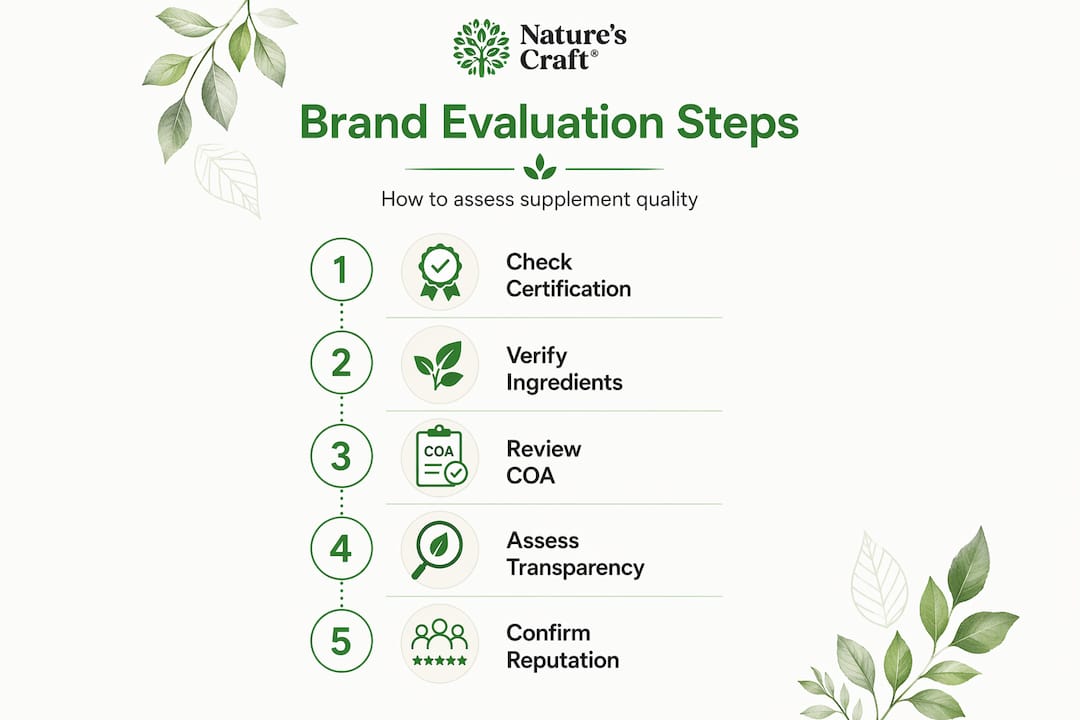
Once you know what to look for, the next step is building a research process you can repeat every time you consider a new product. Here is a numbered approach that covers the key areas and helps you find quality vitamins USA-wide with confidence.
- Start with the NIH Office of Dietary Supplements database. This free government resource provides fact sheets on specific nutrients, including safe intake levels and known interactions.
- Visit the brand’s website and look for a transparency or testing page. Reputable brands publish their manufacturing standards, certifications, and often the actual batch-specific COAs that confirm product purity.
- Check independent lab testing platforms. Sites like Labdoor publish independent reviews of supplement brands, scoring products on label accuracy, ingredient safety, and value.
- Read reviews critically, not just for star ratings. Focus on reviews that mention specific results, consistency over time, or compare the product to others. Vague five-star reviews with no detail offer little signal.
- Ask your pharmacist or healthcare provider. Pharmacists are an underused resource. They know which brands have earned consistent recommendations among trusted health supplement companies and can flag potential interactions with any medications you take.
- Compare the cost per serving, not the bottle price. A $15 bottle with 30 servings at the right dose often outperforms a $40 bottle with 60 servings at half the stated amount. Affordability and quality can coexist when you know what to measure.
- Check for any recall history. The FDA’s MedWatch and the National Institutes of Health both maintain records of recalled or flagged dietary supplements.
Understanding what natural ingredients actually mean for your health is also part of doing your homework. The relationship between natural ingredient sourcing and supplement safety is more nuanced than most product labels let on, so digging into that before you buy pays off.
Pro Tip: When evaluating reliable protein powders USA brands, specifically request a COA for the lot number on the container you are holding. This single action tells you more about quality than any marketing claim on the packaging.
Mistakes to avoid when choosing supplement brands
Even health-conscious shoppers fall into familiar traps. Knowing these pitfalls in advance saves you money and, more importantly, protects your health.
- Assuming “natural” equals safe. Natural ingredients can still interact with medications or cause side effects at the wrong dose. The word “natural” is not a certification and carries no regulatory weight on its own.
- Taking marketing claims at face value. Terms like “clinically proven,” “doctor recommended,” or “pharmaceutical grade” are not standardized. They can be used by any brand without external verification. Look for the actual certification seal, not just the language.
- Skipping professional advice when your health situation is complex. Experts consistently recommend consulting a healthcare provider before starting any new supplement, especially if you take prescription medications or manage a chronic condition. This is not a suggestion to ignore.
- Choosing the cheapest option without checking quality. Discount supplements often skip third-party testing because testing costs money. The savings you see on the price tag may come at the cost of actual product quality.
- Overlooking brands that seem less popular but test better. Some of the best vitamin brands USA health experts recommend are not the ones with the biggest advertising budgets. Independent lab results and transparent sourcing often tell a different story than brand recognition alone.
- Ignoring the certificate of analysis. Brands that make batch-specific COAs publicly available are going out of their way to earn your trust. Brands that refuse to provide them are telling you something important.
Reviews of supplement brands can help, but cross-reference any review source with testing data. A high rating on a retailer’s website does not mean the product passed independent quality testing.
What to expect and how to monitor supplement quality over time
Buying from reputable brands is not a one-time decision. Your job does not end at checkout. Here is what smart, ongoing supplement use actually looks like.
- Understand the timeline for results. Supplements support your body’s existing functions. They are not drugs, and most reputable brands are clear about this. Expect gradual support over weeks or months, not overnight changes.
- Track batch numbers and COAs. When you reorder a product, the new lot number may have a different COA than your last bottle. Check it. A brand’s quality at launch does not guarantee consistency across every batch.
- Monitor FDA recall announcements. The FDA posts dietary supplement recalls publicly. Setting up a Google Alert for a brand you use regularly is a simple way to stay current.
- Revisit your supplement regimen with a healthcare provider annually. Your health needs change. What made sense last year may not be the best fit today, and new products from popular supplement brands USA may offer better options.
- Watch for changes in formula or certification status. Brands occasionally reformulate products or lose certification. If a product you relied on suddenly drops its third-party seal, ask why before reordering.
Staying consistent with your daily supplement routine is important, but staying informed about the products you use is just as critical. Quality verification is an ongoing practice, not a one-time check.
My honest take on navigating the supplement market
I have spent years paying attention to how the supplement industry operates, and the single thing that surprises most people is how little the price or popularity of a brand predicts its actual quality. I have seen widely advertised products fail independent lab tests and smaller, quieter brands consistently earn top marks.
What I find genuinely underappreciated is the value of batch-specific COAs. Most consumers have never asked for one. But when I recommend a brand, that is one of the first things I check. A company willing to publish that document for every production run is a company that knows its product will hold up to scrutiny.
My honest advice: do not let perfect be the enemy of good. You do not need to find the single “best” supplement brand on the market. You need to find one that tests well, communicates transparently, and fits your actual health needs. Balancing affordability with rigorous verification is doable. Nature Made is a solid example of a brand that keeps costs accessible without abandoning quality standards. Start there if you want something credible and easy to find.
The supplement market rewards patience and skepticism in equal measure. Go slow, ask questions, and trust the documentation more than the packaging.
— SuperNatural
Why Shopnaturescraft makes it easier to choose with confidence
If all of this research sounds like a lot of work, that is exactly the problem Shopnaturescraft set out to solve. Founded in 2013, Nature’s Craft built its entire catalog around the principle that every supplement should be pure, clean, and clearly worth your trust. From biotin for hair and skin support to targeted heart health formulas, each product reflects the same commitment to ingredient quality and transparent manufacturing that this guide has asked you to look for in any brand. You can browse the full Nature’s Craft supplement range knowing the groundwork has already been done. As always, check in with your healthcare provider before starting any new supplement regimen.
FAQ
What certifications should I look for in supplement brands?
Look for USP Verified, NSF Certified for Sport, or Informed Sport seals. These third-party certifications confirm that a product contains what the label states, at the correct dose, and free of harmful contaminants.
Does “Made in USA” mean the ingredients are sourced domestically?
No. The Made in USA label refers only to where the product was manufactured, not where the raw ingredients originated. Look for brands that explicitly disclose ingredient sourcing by supplier and country.
What is a Certificate of Analysis and why does it matter?
A Certificate of Analysis (COA) is a document from a third-party lab confirming the identity, potency, and purity of a specific product batch. Batch-specific COAs are the most reliable way to verify that what is in your bottle matches what is on the label.
Should I consult a doctor before taking supplements?
Yes. Experts recommend consulting a healthcare provider before starting new supplements, particularly if you take medications or have existing health conditions. Some supplements interact with prescription drugs in ways that can cause real harm.
How do I spot a low-quality supplement brand?
Watch for vague ingredient labels, no third-party certification seal, refusal to provide a COA, and claims that sound too strong to be legal. These are consistent markers of brands that prioritize marketing over verifiable product quality.

