


Buying supplements online has never been easier, but that convenience comes with a real risk. Counterfeit dietary supplements, the industry term is “adulterated dietary supplements,” flood popular marketplaces every year, and the consequences go far beyond wasting money. The FDA has warned about at least 29 products labeled as tejocote root that actually contained toxic yellow oleander. That is not a minor labeling error. That is a health hazard sitting on a virtual shelf. If you want to avoid counterfeit supplements online and shop with real confidence, this guide gives you exactly what you need.
Table of Contents
- Key takeaways
- What you need to know before buying supplements online
- How to verify supplement authenticity step by step
- How to spot deceptive supplement marketing tactics
- Common mistakes when trying to buy genuine supplements
- What to do after purchase
- My take on counterfeit supplements and consumer vigilance
- Shop authentic supplements with confidence at Shopnaturescraft
- FAQ
Key takeaways
| Point | Details |
|---|---|
| FDA does not approve supplements | Scammers exploit this gap by printing fake “FDA certified” claims on labels and product pages. |
| Verify before you buy | Always confirm sellers are authorized through the official brand website before completing a purchase. |
| Fake reviews are widespread | Up to 30 to 40% of online reviews on e-commerce platforms are inauthentic, making independent verification critical. |
| Report suspicious products | Submit concerns to the FDA and the selling platform to protect yourself and other shoppers. |
| Stick to trusted sources | Buying directly from a brand’s official website or verified retailers is the most reliable protection. |
What you need to know before buying supplements online
The single biggest misconception working against you as a shopper is this: people assume the FDA approves dietary supplements the way it approves prescription drugs. It does not. The FDA regulates supplements under the Dietary Supplement Health and Education Act, which means manufacturers are responsible for safety, not pre-market approval. Scammers know this, and they exploit fake FDA certifications as a shortcut to credibility.
Understanding this gap changes how you read every product page. A supplement claiming to be “FDA certified” is already a red flag. Real brands note that their products are “manufactured in an FDA-registered facility,” which is a very different statement. Learning that distinction alone will save you from dozens of misleading listings.
Here are the most common counterfeit supplement warning signs you will encounter while shopping online:
- “FDA Certified” or “FDA Approved” labeling on dietary supplements (this claim is always false)
- Urgent “limited supply” timers that reset every time you visit the page
- Prices far below the brand’s official retail price, especially on third-party storefronts
- No physical address or contact information for the manufacturer
- Vague or inconsistent ingredient lists that do not match the official product
- Celebrity endorsements without any verifiable source linking the celebrity to the brand
| Red flag | What it signals |
|---|---|
| “FDA Approved” supplement claim | Regulatory misrepresentation; FDA does not approve supplements |
| Countdown scarcity timers | Scripted urgency tactics with no real inventory basis |
| Price drastically below retail | Possible counterfeit or diluted product |
| Missing lot number or expiration date | Likely unregulated or repackaged product |
| No manufacturer address on label | Non-compliant product; untraceable source |
Pro Tip: Before purchasing any supplement, check the brand’s official website for an authorized retailer list. If the seller you found is not on that list, treat it as unauthorized until proven otherwise.
How to verify supplement authenticity step by step
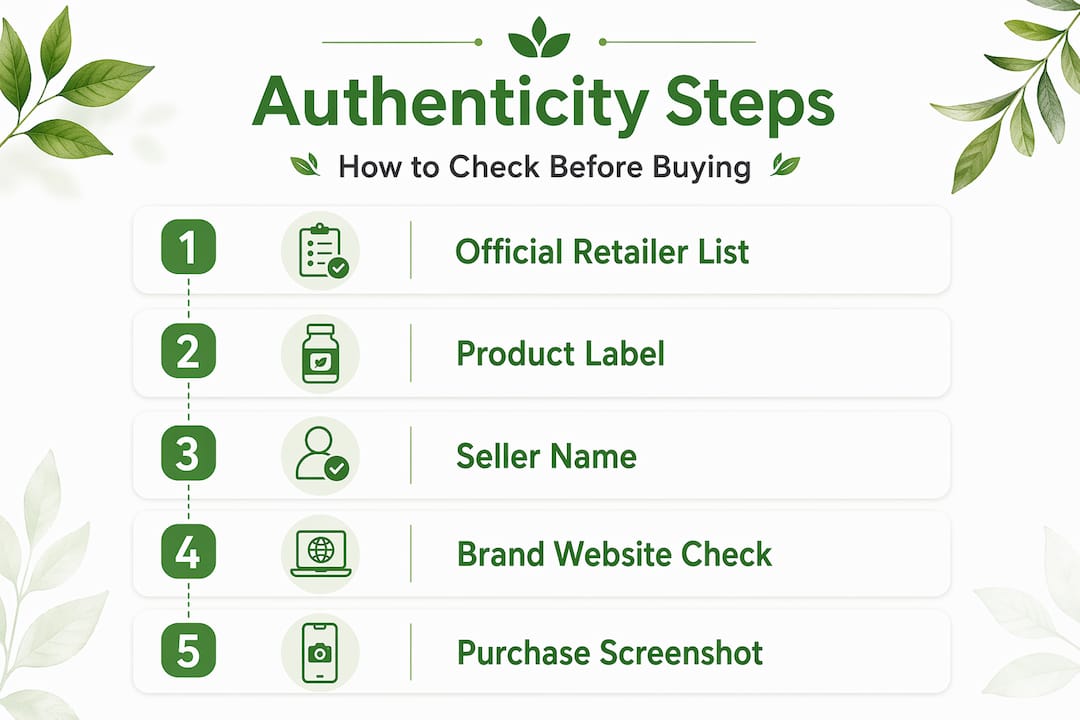
Authentic supplement verification does not have to take long. A focused five-minute check before checkout can protect your health and your wallet. Here is a reliable process you can use every time.
- Start at the brand’s official website. Look for an authorized retailer page or a “where to buy” section. If your seller is not listed, stop there.
- Check the seller’s authorization on the platform. On Amazon, look for “Ships from and sold by [brand name]” or check if the brand operates its own storefront. Unauthorized third-party sellers have been caught flooding marketplaces with counterfeit versions of popular products, complete with erratic pricing and packaging discrepancies.
- Search the brand name on Reddit. Consumer threads are hard to fake at scale and often surface real complaints about counterfeit or diluted products long before official warnings appear.
- Look up patent or trademark claims. If a product advertises a patented formula, you can verify that patent number through the USPTO database. A 60-second verification routine checking legal entity names and patent numbers can confirm whether a brand’s claims are legitimate.
- Inspect the product listing photos carefully. Compare label fonts, logo placement, and seal designs against photos on the official brand site. Small inconsistencies in design are a reliable signal of a counterfeit.
- Contact the brand directly if you are still unsure. A legitimate company will confirm whether a specific seller is authorized and may even offer a direct purchase option.
| Verification step | What to look for |
|---|---|
| Official retailer list | Seller appears on brand’s authorized list |
| Platform seller name | Sold directly by brand or verified partner |
| Reddit and consumer forums | No significant complaints about fakes or quality issues |
| Product label comparison | Fonts, logos, and ingredient lists match official images |
| Brand customer service | Confirms seller authorization or offers direct purchase |
Pro Tip: Screenshot the product listing, including the seller name and price, before you buy. If something goes wrong later, that record is your best evidence for a refund or dispute.
For a broader look at what separates authentic products from questionable ones, the high-quality supplement guide from Shopnaturescraft covers ingredient transparency and label standards in practical detail.
How to spot deceptive supplement marketing tactics
This is where things get more subtle. The most dangerous scams do not look like scams. They look like premium wellness brands with polished websites, glowing reviews, and scientific-sounding language. Knowing the specific tactics they use makes you far harder to fool.
Fake reviews and review manipulation are more widespread than most shoppers realize. Research shows 30 to 40% of e-commerce reviews are inauthentic. Signs of manipulated reviews include a sudden surge of five-star ratings in a short window, extremely similar phrasing across reviews, and no verified purchase badges.

Sciencewashing is the practice of using clinical language to imply research backing that does not exist. Phrases like “clinically proven formula” or “shown in studies” are meaningless without a linked, peer-reviewed citation. If you cannot find the actual study, assume the claim is fabricated.
Here are the deceptive tactics most commonly used by fraudulent supplement sellers:
- False scarcity timers scripted to reset on every visit, creating artificial urgency with no real inventory constraint
- Fake celebrity endorsements using edited photos or quotes taken out of context
- Buried subscription terms that enroll you in monthly billing during what looks like a one-time purchase
- Refund guarantees with hidden conditions that are practically impossible to meet, such as returning an opened product within 14 days
- Vague “proprietary blend” labels that hide actual ingredient doses so you cannot compare them to real products
- Coordinated pressure reviews where sellers push high review volume quickly to overwhelm authentic negative feedback
Criminal networks operating fake supplement businesses are not small-time operations. Authorities across 15 countries coordinated a takedown of one such network that used fake doctors and professional-looking websites to defraud victims across multiple continents. The sophistication is real.
Pro Tip: When you see a countdown timer on a supplement page, open the same page in a private browser window. If the timer resets, the scarcity is scripted. Walk away.
Common mistakes when trying to buy genuine supplements
Even careful shoppers make these errors. Knowing what they are helps you avoid them.
- Buying from the lowest-priced third-party listing. Price is the most exploited variable. Counterfeits need to undercut the real product to move volume. If a deal looks too good, it usually is.
- Skipping the packaging check after delivery. When your order arrives, compare the seal, lot number placement, and label design against what the brand shows on its official site. Physical inspection catches what digital listings cannot.
- Trusting website claims without cross-checking. A professional-looking website does not mean a legitimate business. Many fraudulent supplement operations use fake doctors and polished storefronts to appear credible.
- Missing the subscription fine print. BBB reports document many buyers being charged for recurring subscriptions they did not intentionally start, with refund requests denied based on buried terms.
- Not saving purchase documentation. Order confirmations, screenshots, and tracking numbers are your safety net for disputes, refunds, or reporting to authorities.
If you realize after the fact that a product may be counterfeit, contact the platform’s buyer protection service immediately. Do not discard the product, because you may need it as physical evidence.
What to do after purchase
Receiving a product is not the finish line. A few post-purchase steps confirm you got what you paid for.
- Compare the physical product to official brand information. Check the ingredient list, serving size, and manufacturer details against the brand’s official website or the listing you purchased from.
- Watch for any unusual effects. If you notice unexpected symptoms after starting a new supplement, stop taking it and contact your healthcare provider. The FDA’s warning about toxic yellow oleander in mislabeled products is a reminder that the risk is not hypothetical.
- Report suspected fakes to the FDA. Submit a complaint through the FDA’s MedWatch program or Safety Reporting Portal. This is how regulators build cases against counterfeit operations.
- Report to the selling platform. Amazon, eBay, and similar platforms have counterfeit reporting tools. Your report can get a listing removed and protect future buyers.
- Keep all records. Save receipts, product photos, and correspondence in case you pursue a refund or need documentation for a formal complaint.
Your report genuinely helps. Regulatory action against counterfeit supplement networks almost always begins with consumer-submitted complaints.
My take on counterfeit supplements and consumer vigilance
I have been watching the supplement industry for years, and the one thing that strikes me most is how much more sophisticated scam operations have become. The cheap knockoff in a slightly wrong-colored bottle is the old version of this problem. Today, fraudulent sellers have polished branding, fake credentials, and scripted review systems that can fool even experienced shoppers.
What I find most frustrating is the FDA approval misconception. I have seen countless consumers dismiss red flags because they assumed “the government would have stopped it” if something were truly wrong. That assumption is exactly what scammers count on. The regulatory gap for dietary supplements is not a flaw people should feel ashamed of not knowing. It is a gap that bad actors actively exploit, and knowing it exists is genuinely protective.
My honest recommendation: be skeptical by default, not by exception. Do not save your scrutiny for listings that look suspicious. Apply your verification routine to every supplement purchase until it becomes second nature. The brands that are actually doing things right, with real third-party testing, traceable ingredients, and transparent labeling, will hold up under that scrutiny easily. The ones that do not hold up are telling you something important. You can also use safe supplement shopping tips to build that verification habit into your regular routine.
— SuperNatural
Shop authentic supplements with confidence at Shopnaturescraft
When you want to skip the verification anxiety entirely, the most direct path is buying from a brand that makes transparency a core part of its operations. Shopnaturescraft carries Nature’s Craft products, a brand founded in 2013 with a clear mission: pure, clean ingredients and no shortcuts in quality.
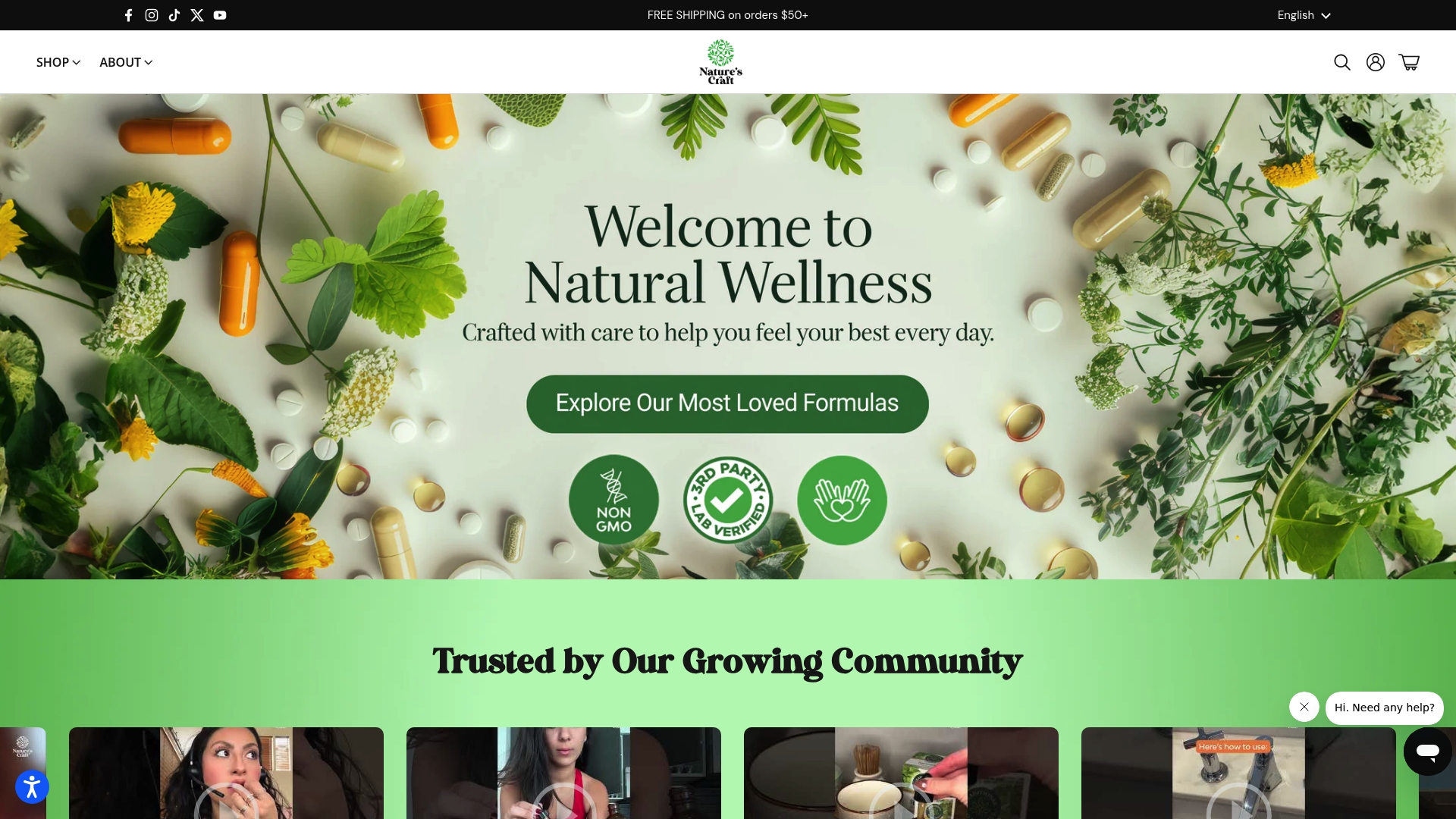
Every product is manufactured in an FDA-registered facility, with clear labeling, traceable ingredients, and no hidden subscription traps. You can browse popular options like DHEA 25mg, Turmeric Gummies, and Fiber Gummies knowing exactly what you are getting. Whether you prefer capsules, gummies, or drops, every product ships directly from a verified source. That is the kind of supplement safety guide that works in practice, not just on paper. Start with confidence at Shopnaturescraft.
FAQ
What makes a supplement listing a counterfeit warning sign?
Key counterfeit supplement warning signs include fake “FDA Approved” claims, prices well below retail, no manufacturer address, and packaging that does not match the brand’s official photos. Unauthorized third-party sellers on major marketplaces are a common source of adulterated products.
How do I know if an online supplement seller is legitimate?
Check the brand’s official website for an authorized retailer list, confirm the seller name on the platform matches a verified partner, and search consumer forums like Reddit for independent feedback. Legitimate supplement retailers will be easy to confirm through the brand directly.
Does the FDA approve dietary supplements before they are sold?
No. The FDA does not approve dietary supplements before they reach consumers. Scammers exploit this misunderstanding by printing fake FDA certification claims, which is always a red flag.
What should I do if I think I bought a fake supplement?
Stop using the product, document everything with photos and receipts, report the seller to the platform, and file a complaint with the FDA’s MedWatch program. If you experience any adverse effects, contact your healthcare provider right away.
Are subscription traps common with counterfeit supplement sellers?
Yes. BBB reports confirm that many buyers are unknowingly enrolled in recurring billing when purchasing supplements from fraudulent sellers, with refunds frequently denied. Always read the checkout page’s full terms before completing any supplement purchase.

