

A multivitamin designed for an adult woman may contain many of the same essential nutrients found in products marketed for teenagers.
Vitamin D, folate, zinc, vitamin C, and several B vitamins can appear in both categories.
The difference isn't necessarily which nutrients are present. It's whether their amounts, combinations, and serving directions are appropriate for the intended age group.
At Nature's Craft, we believe understanding those distinctions is important when choosing a supplement for women's wellness or exploring nutritional options for older teenagers.
Adolescence Is an Important Nutritional Stage
The teenage years involve considerable physical development.
Bone growth, hormonal changes, and increased nutritional requirements make adequate nutrition particularly important.
For adolescent girls, iron, calcium, vitamin D, and other essential nutrients deserve attention.
But nutritional needs depend on more than age alone.
Dietary patterns, physical activity, menstruation, and individual health circumstances can influence whether supplementation is appropriate.
A balanced diet remains the foundation of healthy development.
Three Nutrients That Deserve Special Attention
Although multivitamins contain many ingredients, several nutrients illustrate why age-specific comparisons matter.
Iron and Menstrual Health
Iron contributes to normal red blood cell formation and oxygen transport.
Menstruation can increase iron requirements, making adequate intake particularly relevant for many teenage girls and adult women.
However, iron supplements aren't automatically appropriate for everyone.
A multivitamin may contain iron, provide a limited amount, or omit it entirely.
For anyone with suspected iron deficiency, appropriate medical evaluation is more useful than guessing based on symptoms.
Calcium and Vitamin D
Calcium supports normal bone development and maintenance.
Vitamin D helps the body absorb calcium.
Adolescence is a particularly important period for bone mineral accumulation, but both nutrients remain relevant throughout adulthood.
A multivitamin may contribute to daily intake without providing the full recommended amount.
Calcium-rich foods, fortified products, and overall dietary adequacy remain important considerations.
Folate and Reproductive Health
Folate participates in normal cell division and other essential processes.
For women who could become pregnant, obtaining adequate folic acid is especially important because of its established role in reducing the risk of neural tube defects.
This nutritional consideration differs from general claims about hormonal balance or fertility enhancement.
A standard multivitamin should not automatically be treated as a prenatal formula, and anyone planning pregnancy should review their specific nutritional needs with a healthcare professional.
Where Nature's Craft Women's Multivitamin Gummies Fit
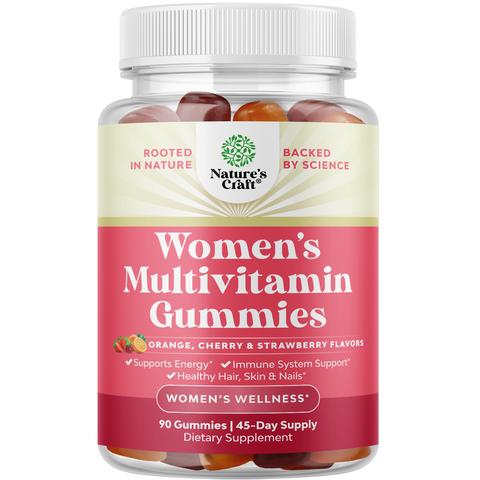
Nature's Craft Women's Multivitamin Gummies provide a combination of vitamins and minerals in a chewable supplement developed for adult women's wellness.
The formula is intended to contribute to everyday nutritional intake through nutrients involved in normal physiological functions, including energy metabolism and immune health.
Its gummy format offers an alternative for adults who prefer chewable supplements to conventional tablets or capsules.
However, the format doesn't determine whether the product is appropriate for an individual.
The important considerations remain the nutrients, amounts per serving, age directions, and overall dietary intake.
Our Women's Multivitamin Gummies are an adult-oriented product and should not automatically be used as a substitute for a multivitamin specifically formulated for teenagers.
Why a Teen Formula Isn't Necessarily an Adult Formula
Teenagers and adults may require different amounts of certain nutrients.
For example, calcium recommendations are higher during adolescence than during much of adulthood because of the importance of bone development.
Iron requirements can also differ by age and life stage.
Other nutrients may have similar recommended amounts across certain age groups.
That variation is why a supplement's complete nutritional profile deserves attention.
A product marketed for teenagers isn't necessarily better for every teenager, just as an adult women's formula isn't automatically more comprehensive.
The appropriate choice depends on individual needs rather than the perceived sophistication of the product category.
Can a Multivitamin Replace Nutrient-Rich Meals?
Multivitamins are designed to supplement dietary intake, not replace food.
A varied diet supplies essential nutrients alongside fiber, protein, healthy fats, and other dietary components.
For teenage girls and adult women, foods such as leafy vegetables, legumes, whole grains, dairy products or fortified alternatives, fruits, and appropriate protein sources contribute to overall nutritional adequacy.
Supplements may be considered when dietary intake is insufficient or when specific circumstances create additional nutritional requirements.
But taking a multivitamin doesn't eliminate the importance of eating well.
When Is It Time to Consider an Adult Women's Formula?
There isn't one universal birthday that determines when a teenager should begin using an adult multivitamin.
Age recommendations on supplement labels provide important guidance, but individual nutritional circumstances still matter.
Parents and caregivers should avoid giving adult formulas to younger teenagers without appropriate professional advice.
For older teenagers transitioning into adulthood, the product's intended age range and nutrient amounts should be reviewed carefully.
For a separate perspective on this transition, read When Does a Girl Need a Women's Multivitamin Instead of a Teen Formula?
The comparison is most useful when it focuses on actual nutritional requirements rather than product categories alone.
Choosing a Women's Multivitamin With Greater Confidence
When evaluating women's health supplement brands, the most useful information often appears in the Supplement Facts panel.
Check the amounts of individual nutrients and consider whether the formula contains ingredients already supplied by other supplements.
Pay particular attention to iron, vitamin D, folate, and other nutrients relevant to the person's age and circumstances.
For those who are pregnant, planning pregnancy, taking medications, or managing a medical condition, professional guidance may be especially important.
At Nature's Craft, our Women's Multivitamin Gummies offer one option for adult women considering a convenient multivitamin format.
The goal isn't to assume that every woman or older teenager needs the same supplement.
It's to understand how nutritional requirements vary and choose accordingly.
A multivitamin should complement a person's nutritional needs, not define them.
