


Every second of every day, your cells are using energy.
Your heart contracts. Muscles move. The brain processes information. Cells maintain themselves and carry out thousands of microscopic tasks that happen without conscious thought.
Behind much of this activity is ATP, often described as the body's cellular energy currency.
And inside the process used to produce ATP sits a naturally occurring compound that has become one of the most recognizable ingredients in cardiovascular supplements:
Coenzyme Q10, better known as CoQ10.
Understanding what happens inside the body helps explain why Nature’s Craft CoQ10 200mg per serving is associated with cellular energy and heart wellness—and why CoQ10 shouldn't be thought of as simply another type of stimulant.
First Stop: Your Cells
The journey begins at a scale far smaller than we can see.
The human body contains trillions of cells, and those cells require energy to perform their normal functions.
Different tissues have different energy demands.
Skin cells need energy.
Brain cells need energy.
Skeletal muscles need energy.
The heart, which contracts continuously throughout life, has particularly substantial energy requirements.
But food doesn't arrive inside a cell as ready-to-use energy.
The nutrients we eat need to move through a complex series of biological processes before cells can use their energy efficiently.
That's where mitochondria enter the story.
Inside the Mitochondria
Mitochondria are often called the powerhouses of the cell.
The phrase is familiar from biology class, but what does it actually mean?
Mitochondria help transform energy derived from nutrients into ATP—adenosine triphosphate.
ATP can then be used to power numerous cellular processes.
Think of nutrients as containing potential energy.
Mitochondria help convert that potential into a form cells can actually spend.
CoQ10 participates within this mitochondrial energy-production system.
Where CoQ10 Enters the Process
CoQ10 isn't simply floating around the body waiting to provide an instant burst of energy.
It participates in something much more fundamental.
Within mitochondria is a series of protein complexes known collectively as the electron transport chain.
Electrons move through this system as part of the process ultimately used to generate ATP.
CoQ10 helps transfer electrons between components of that chain.
A simplified view looks something like this:
Food → nutrients → cellular metabolism → mitochondria → electron transport → ATP
CoQ10 participates within that mitochondrial process.
This is the biological reason CoQ10 is so often associated with cellular energy.
Cellular Energy Is Not the Same as Stimulation
This distinction matters.
When consumers hear energy support, they may picture the sensation associated with coffee or an energy drink.
That's not what CoQ10 means by energy.
Caffeine primarily affects the nervous system and can create a noticeable stimulant effect.
CoQ10's relationship with energy involves its normal biological role within mitochondrial ATP production.
So taking CoQ10 shouldn't be understood as pressing an instant "energy button."
The better mental picture is supporting machinery that's already operating inside your cells.
Why the Heart Keeps Appearing in the CoQ10 Conversation
Now follow the story from individual cells to one particularly hardworking organ.
Your heart.
The heart contracts roughly continuously throughout life, pumping blood through the circulatory system.
That requires energy.
Heart muscle contains large numbers of mitochondria because of those continuous energy demands.
This helps explain why CoQ10 has attracted so much interest in cardiovascular nutrition and why Nature’s Craft places its CoQ10 supplement within its Heart Health collection.
Nature’s Craft positions CoQ10 200mg per serving around both heart wellness and cellular energy support.
That connection isn't arbitrary.
It follows directly from CoQ10's biological role.
CoQ10 Has Another Job: Antioxidant Activity
Energy metabolism isn't the whole story.
CoQ10 also functions as an antioxidant.
Oxidation is a normal part of biology, but excessive oxidative stress can damage cellular components.
Antioxidants participate in systems that help protect cells against oxidative damage.
CoQ10's combination of mitochondrial involvement and antioxidant properties is one reason the compound has remained such an active area of nutritional research.
It also explains why CoQ10 appears in wellness conversations extending beyond energy alone.
Your Body Already Makes CoQ10
Another useful fact:
CoQ10 isn't foreign to the human body.
We naturally produce it.
It is found throughout tissues and is particularly concentrated in organs with substantial energy requirements.
CoQ10 levels can vary with factors such as age and individual health circumstances, which is one reason supplementation has attracted continued scientific and consumer interest.
Small amounts can also be obtained from foods, including:
- Organ meats
- Meat
- Fatty fish
- Nuts and seeds
- Certain vegetables
A CoQ10 supplement provides a concentrated source without replacing the broader nutritional value of those foods.
Another Way to Approach the CoQ10 Aisle
Understanding the biology answers one question:
Why does CoQ10 matter inside the body?
Shopping introduces another:
How do you choose among different CoQ10 supplements?
Writer jhedr approaches the topic from that consumer perspective, describing how an apparently straightforward CoQ10 purchase became more nuanced after looking more carefully at the available formulas.
I Almost Bought the Wrong CoQ10 Supplement Until I Looked Closer
That article focuses on the purchasing decision. Here, the emphasis stays on understanding the biology behind the exact Nature’s Craft CoQ10 formula.
Where Nature’s Craft CoQ10 200mg Fits Into the Story
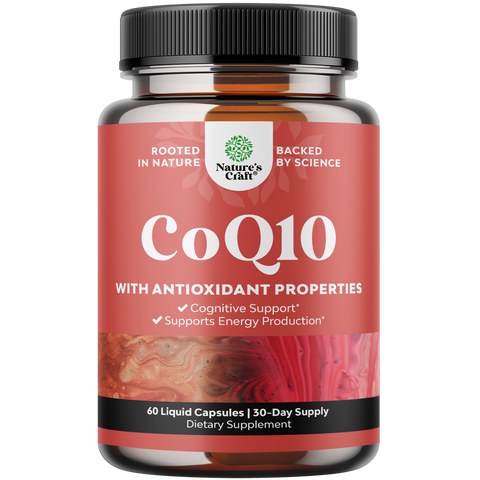
Nature’s Craft provides 200 mg of CoQ10 per serving in a liquid-capsule format. The current bottle contains 60 liquid capsules, and the official directions specify:
Take 2 liquid capsules daily, preferably with a meal, or as directed by a healthcare professional.
That serving information is worth understanding clearly.
The product provides 200 mg per serving, and the serving consists of two liquid capsules.
What Nature’s Craft CoQ10 Is Designed to Support
Once CoQ10's role inside the body is understood, the product's positioning makes much more sense.
Cellular Energy Support
CoQ10 participates in the mitochondrial processes involved in ATP production.
Nature’s Craft therefore positions its CoQ10 around everyday energy and exercise-related wellness without treating it as a stimulant.
Cardiovascular Wellness
Because the heart has continuous energy requirements and abundant mitochondria, CoQ10 has become strongly associated with cardiovascular nutrition.
Nature’s Craft specifically positions this product for heart-health support.
Antioxidant Support
CoQ10 also has antioxidant properties, giving it a role beyond mitochondrial energy metabolism.
Active-Lifestyle Support
Nature’s Craft includes exercise and energy among the wellness areas associated with its CoQ10 formula, making it relevant for adults looking to complement an active lifestyle.

Convenient Daily Supplementation
The liquid-capsule format provides a straightforward way to include 200 mg of CoQ10 per serving within an established supplement routine.
Why “With a Meal” Makes Sense
Nature’s Craft recommends taking its CoQ10 preferably with a meal.
There's a useful nutritional reason behind this type of direction.
CoQ10 is a fat-soluble compound.
Taking fat-soluble compounds alongside food—particularly a meal containing some dietary fat—can support their absorption.
That means the product directions aren't merely an arbitrary schedule.
They fit the characteristics of the compound itself.
What Happens After the Capsule Is Swallowed?
Now we can connect the supplement back to the biological story.
You take the labeled serving with a meal.
The capsules move through the digestive system.
CoQ10 becomes available for absorption.
After absorption, CoQ10 can circulate and become available to tissues throughout the body.
At the cellular level, CoQ10 participates in mitochondrial processes associated with ATP production while also functioning within antioxidant systems.
It doesn't create a new biological system.
It supplements a compound already naturally present in the body.
That distinction is important.
What CoQ10 Cannot Replace
Understanding what happens inside the body also helps establish realistic boundaries.
CoQ10 doesn't replace:
Nutritious food.
Cells still require carbohydrates, fats, proteins, vitamins, minerals, and other nutrients.
Exercise.
A supplement cannot reproduce the cardiovascular and metabolic adaptations created by regular physical activity.
Sleep.
Cellular energy metabolism doesn't eliminate the body's need for recovery.
Medical care.
CoQ10 is a dietary supplement, not a replacement for cardiovascular medications or professional medical treatment.
People taking medications or managing health conditions should discuss supplementation with an appropriate healthcare professional.
The Journey Ends Where It Started: Inside the Cell
CoQ10 sounds like a heart supplement when you see it on a store shelf.
Look inside the body and the story becomes much more interesting.
The connection begins at the cellular level.
Cells need ATP.
Mitochondria help produce it.
The electron transport chain participates in that process.
And CoQ10 helps transfer electrons within that mitochondrial system.
That biological role helps explain the ingredient's relationship with cellular energy, active lifestyles, antioxidant support, and the energy-intensive heart.
Nature’s Craft CoQ10 200mg per serving provides this naturally occurring compound in a 60-liquid-capsule format, with a two-capsule daily serving recommended preferably alongside a meal.
Instead of thinking of CoQ10 as something that simply gives you "energy," it's more accurate—and considerably more interesting—to understand it as part of the microscopic energy system that's already operating inside your cells every moment of the day.

