


Magnesium, L-theanine, and ashwagandha appear frequently in conversations about mood and stress support.
But they don't belong to the same ingredient category.
Magnesium is an essential mineral. L-theanine is an amino acid found naturally in tea. Ashwagandha is a botanical ingredient with a history of traditional use and growing scientific interest.
At Nature's Craft, our wellness collection includes supplements featuring each of these ingredients.
Understanding their differences can help shoppers evaluate stress-support products with more realistic expectations.
Magnesium: An Essential Mineral for Normal Nervous-System Function
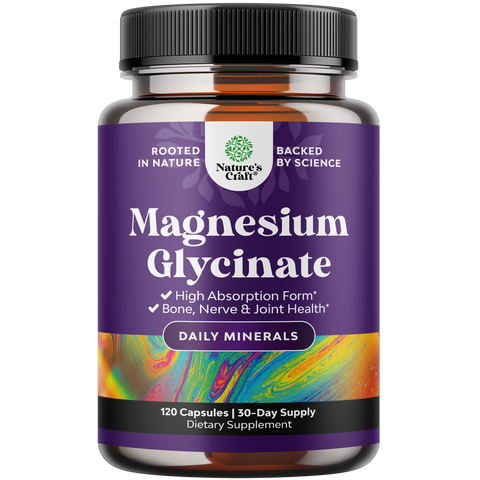
Magnesium participates in hundreds of biochemical processes throughout the body.
It contributes to normal nerve signaling, muscle function, and cellular energy production.
These are established nutritional roles.
Magnesium is naturally found in foods such as pumpkin seeds, almonds, beans, whole grains, and leafy vegetables.
Supplementation may be considered when dietary intake is insufficient or when a healthcare professional identifies a specific need.
Nature's Craft Magnesium Glycinate provides magnesium in a form combined with the amino acid glycine.
This formulation is often considered by adults interested in a magnesium supplement that may be relatively well tolerated.
However, magnesium supplementation should not be viewed as a guaranteed treatment for stress, anxiety, or sleep disorders.
L-Theanine: A Tea-Derived Amino Acid

L-theanine is an amino acid associated with tea leaves.
It has attracted scientific interest because of its potential effects on relaxation, attention, and perceived stress.
Some small human studies have reported promising results, but the evidence remains limited.
Nature's Craft L-Theanine Drops offer this ingredient in a liquid supplement format.
The product provides an alternative for adults who prefer liquid supplementation rather than capsules.
Unlike magnesium, L-theanine is not considered an essential dietary nutrient.
Its role in supplements is therefore different from that of a mineral used to meet established nutritional requirements.
Shoppers should review the amount per serving, other ingredients, and directions before use.
Ashwagandha: A Botanical Approach

Ashwagandha is an herb traditionally used in several wellness practices.
Modern clinical research has investigated particular ashwagandha extracts for their potential effects on perceived stress and related measurements.
Some studies have reported improvements, although larger and longer-term research is needed.
Nature's Craft Ashwagandha supplements provide a botanical option within our broader wellness collection.
However, botanical ingredients aren't automatically appropriate for everyone.
Ashwagandha may interact with medications, affect thyroid hormone levels, and has been associated with rare cases of liver injury.
It is generally avoided during pregnancy and should be discussed with a healthcare professional by people with relevant medical conditions.
How the Three Ingredients Compare
These ingredients can be considered through different nutritional and research perspectives.
| Ingredient | Category | Main consideration |
|---|---|---|
| Magnesium | Essential mineral | Normal muscle and nerve function |
| L-Theanine | Amino acid | Preliminary research on relaxation and perceived stress |
| Ashwagandha | Botanical ingredient | Clinical research on perceived stress, with additional safety considerations |
This comparison doesn't establish that one ingredient is universally more effective than another.
The appropriate choice depends on the person's nutritional circumstances, intended use, medical history, and other supplements or medications.
Why Ingredient Amounts Matter

A supplement label may prominently display an ingredient name without explaining its amount or form.
For magnesium, the elemental magnesium content is especially important.
For L-theanine, the amount supplied per serving and the composition of the finished formula deserve attention.
For ashwagandha, extract characteristics and dosage can influence how research findings are interpreted.
Different preparations shouldn't automatically be treated as equivalent.
When evaluating multi-ingredient formulas, shoppers should also consider overlapping ingredients and potential interactions.
Stress Support Doesn't Replace Stress Management
Stress can arise from work demands, caregiving responsibilities, disrupted sleep, health concerns, and many other circumstances.
A supplement doesn't eliminate those causes.
Regular physical activity, adequate sleep, social support, and appropriate professional care can all contribute to managing stress.
For persistent anxiety, depression, or significant changes in daily functioning, professional evaluation is more appropriate than relying on dietary supplements.
For another perspective on why stress-related supplements have different purposes, read Not Every Stress Supplement Is Supposed to Make You Feel Calm.
Understanding those differences helps prevent unrelated ingredients from being evaluated as though they promise identical outcomes.
Choosing a Stress-Support Supplement With Greater Clarity
At Nature's Craft, our Magnesium Glycinate, L-Theanine Drops, and Ashwagandha supplements represent different approaches to wellness supplementation.
Magnesium contributes an essential nutrient.
L-theanine offers an amino acid that has attracted interest in relaxation research.
Ashwagandha provides a botanical ingredient studied for perceived stress, alongside additional safety considerations.
These differences are more useful than assuming every product labeled for stress support serves the same purpose.
A thoughtful supplement decision begins with the ingredient, the available evidence, and the needs of the person considering it.
Stress support is not one formula—and it shouldn't be treated as one.
