


Stress-related wellness products often appear together in the same supplement category.
Yet the ingredients behind them can have very different nutritional roles, research histories, and safety considerations.
Nature's Craft offers several products relevant to this conversation, including Ashwagandha with Black Pepper, L-Theanine Drops, and Magnesium Glycinate.
These formulations are not interchangeable, and they shouldn't be evaluated as though they promise identical results.
Rather than beginning with a ranking, it is more useful to consider the different reasons an adult might explore each ingredient.
The Demands of a Mentally Busy Day
A demanding day doesn't always involve physical exhaustion.
Sometimes the challenge is sustained attention, competing responsibilities, or difficulty mentally disengaging from work.
L-theanine has attracted scientific interest in this context.
The amino acid occurs naturally in tea leaves and has been investigated for its potential effects on relaxation, attention, and perceived stress.
Nature's Craft L-Theanine Drops provide a liquid supplement option for adults interested in this ingredient.

The format offers an alternative to conventional capsules, but the liquid delivery method doesn't establish that the supplement produces better results.
Clinical evidence for L-theanine remains limited, and findings from individual studies should not be interpreted as guarantees of improved concentration or emotional well-being.
When Botanical Ingredients Enter the Conversation
Ashwagandha belongs to a different ingredient category.
It is a botanical traditionally used in wellness practices and has become a subject of modern research involving perceived stress and related measurements.
Some clinical trials have reported promising findings for particular ashwagandha preparations.
However, study duration, extract composition, and participant characteristics vary.
Nature's Craft Ashwagandha with Black Pepper combines ashwagandha with black pepper in a capsule supplement.
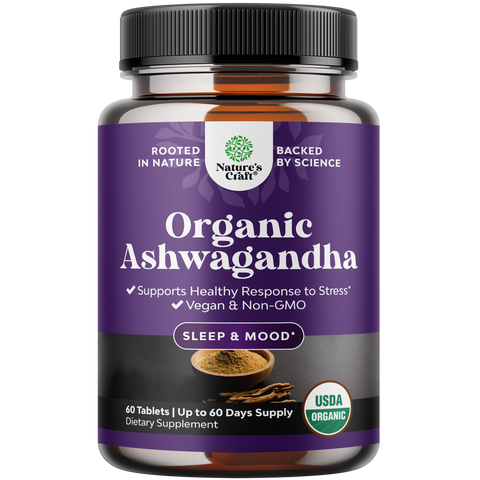
The formula represents a botanical approach rather than a conventional vitamin or mineral supplement.
That difference matters when considering safety.
Ashwagandha may affect thyroid hormone levels, interact with medications, and has been associated with rare cases of liver injury.
It is generally avoided during pregnancy.
Black pepper extracts can also influence how certain substances are processed by the body, depending on their composition and amount.
These considerations make it important to review the full formula rather than focusing only on the featured herb.
The Nutritional Foundation Behind Normal Nerve Function
Magnesium introduces a third perspective.
The body requires magnesium for normal muscle contraction, nerve signaling, energy production, and many other biochemical processes.
Unlike L-theanine and ashwagandha, magnesium is an essential dietary mineral.
Nature's Craft Magnesium Glycinate supplies magnesium in a form combined with the amino acid glycine.
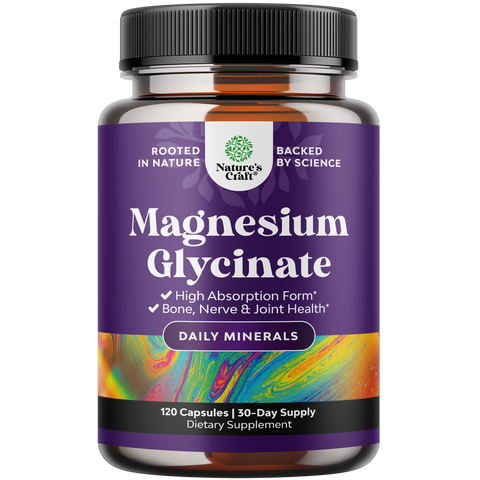
For adults whose magnesium intake is insufficient, supplementation may be considered as part of addressing nutritional needs.
However, the established role of magnesium in normal nervous-system function doesn't automatically mean that taking additional magnesium reduces anxiety or improves sleep.
Individual intake, serving amounts, medications, and kidney function are relevant considerations.
Three Ingredients That Shouldn't Be Treated as Equivalents
The differences between these products can be summarized through their primary characteristics.
| Product | Ingredient category | Main consideration |
|---|---|---|
| L-Theanine Drops | Amino acid | Preliminary research involving relaxation and attention |
| Ashwagandha with Black Pepper | Botanical formula | Research involving perceived stress, with additional safety considerations |
| Magnesium Glycinate | Essential mineral | Established roles in normal nerve and muscle function |
This comparison describes ingredient categories and research interests.
It does not establish that one product is more effective than another for stress relief.
The appropriate choice depends on the individual's nutritional circumstances, intended use, medications, and health history.
What the Label Can't Tell You About Your Stress
A supplement label can identify ingredients, amounts, and serving directions.
It cannot determine why someone feels overwhelmed.
Work demands, insufficient sleep, caregiving responsibilities, medical conditions, and mental health concerns can all contribute to stress-related experiences.
A supplement doesn't remove those underlying circumstances.
For this reason, stress management should not be reduced to selecting a capsule or liquid formula.
Sleep habits, physical activity, supportive relationships, and appropriate professional care remain important.
For an independent examination of how stress-related supplement research is interpreted, read When a Supplement Promises Stress Relief, What Is It Actually Measuring?
A More Careful Approach to Mood and Stress Support
Before considering a supplement, adults should review their current medications, other supplements, and relevant health conditions.
Combining several products can introduce overlapping ingredients or potential interactions.
People who are pregnant, breastfeeding, or managing medical conditions should seek professional guidance before using botanical stress-support supplements.
Persistent anxiety, depression, or significant changes in sleep and daily functioning deserve appropriate medical evaluation.
At Nature's Craft, Ashwagandha with Black Pepper, L-Theanine Drops, and Magnesium Glycinate offer different ingredient formulations within our broader wellness collection.
One features a botanical preparation.
Another provides an amino acid investigated for relaxation-related outcomes.
The third supplies an essential mineral involved in normal physiological functions.
These distinctions help shoppers evaluate products according to their actual ingredients rather than assuming that everything marketed for stress support works in the same way.
The purpose of a supplement comparison should be to clarify those differences, not to promise that a single formula can resolve every kind of stress.
