


Omega-3 supplementation is defined as the daily intake of EPA (eicosapentaenoic acid) and DHA (docosahexaenoic acid) to support cardiovascular, hormonal, and inflammatory health. Knowing how to choose omega supplements for women goes beyond picking any bottle off the shelf. The right product depends on the form of the oil, the certified purity, and the EPA and DHA amounts per serving. For women managing PMS, PCOS, endometriosis, or simply looking to support long-term wellness, these details are not optional. They are the difference between a supplement that works and one that does not.
What are the essential omega-3 fatty acids women should look for?
EPA and DHA are the two active omega-3 fatty acids that drive real results. Your body cannot produce adequate amounts on its own, so supplementation fills that gap directly.
EPA is the anti-inflammatory powerhouse. It reduces prostaglandins, the compounds that trigger painful cramps and PMS symptoms. DHA is the structural fatty acid. It builds brain cell membranes and supports mood regulation, which matters for women dealing with hormonal fluctuations. Together, they form the foundation of effective omega fatty acids for women’s health.

The ratio of EPA to DHA shapes what you get from your supplement. A 2:1 EPA to DHA ratio is preferred for managing inflammation and PMS symptoms. A 1:1 ratio works better for general maintenance and brain health. Matching the ratio to your health goal is one of the most overlooked steps women skip when selecting a supplement.
Key benefits of EPA and DHA for women include:
- PMS and menstrual pain: EPA reduces inflammatory prostaglandins that cause cramping.
- PCOS support: Omega-3s improve insulin sensitivity and lower CRP and IL-6 inflammatory markers.
- Endometriosis: Clinical data shows omega-3 supplementation reduces pain scores and systemic inflammation.
- Heart health: DHA supports healthy triglyceride levels and arterial flexibility.
- Brain and mood: DHA maintains the structural integrity of neurons, supporting focus and emotional balance.
Plant-based women are not left out. Algal oil delivers both EPA and DHA directly from the marine algae that fish eat. It skips the fish entirely and provides the same active fatty acids without any seafood concerns.
Pro Tip: If you follow a vegetarian or vegan diet, look for algal oil supplements that list both EPA and DHA on the label. Some algal products only contain DHA, which limits the anti-inflammatory benefit.
How do you read an omega-3 supplement label correctly?
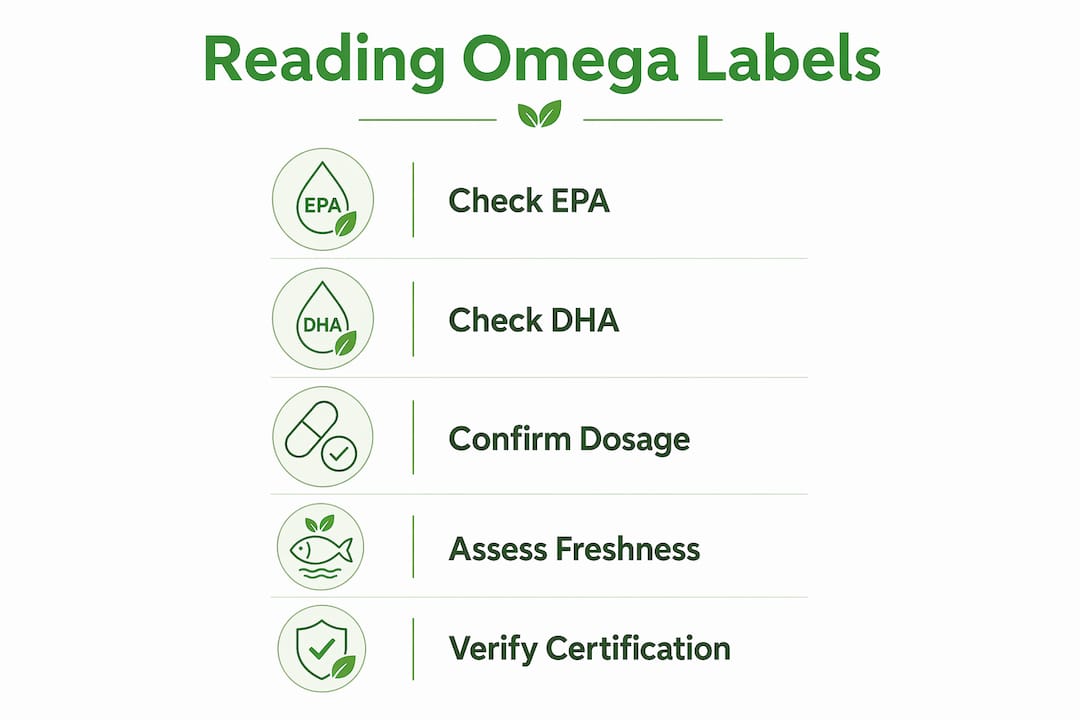
Label reading is the single most important skill for picking a quality omega-3 product. Most women read “1,000 mg fish oil” and assume they are getting 1,000 mg of active omega-3. They are not. Fish oil labels can mislead because the total fish oil weight includes inactive fats and fillers. The Supplement Facts panel is where the real numbers live. Always check the listed EPA and DHA milligrams per serving, not the total fish oil amount.
Understanding supplement form: rTG versus EE
The molecular form of your omega-3 determines how much your body actually absorbs. Natural triglyceride form (rTG) is absorbed 50–70% better than ethyl ester (EE) form. Ethyl esters require a conversion step in the gut before absorption, which reduces bioavailability and often causes more digestive discomfort. The label will say “natural triglycerides” or “re-esterified triglycerides” if the product uses the superior form. If it says “ethyl ester” or nothing at all, treat that as a red flag.
| Feature | Natural Triglyceride (rTG) | Ethyl Ester (EE) |
|---|---|---|
| Absorption rate | 50–70% higher | Lower baseline |
| Digestive comfort | Generally better | More GI upset reported |
| Gut conversion needed | No | Yes |
| Label indicator | “Natural triglycerides” | “Ethyl ester” or unlisted |
| Capsule count needed | Fewer | More for same effect |
Certifications and freshness scores
Third-party testing seals are non-negotiable for quality assurance. Look for IFOS (International Fish Oil Standards), NSF International, or USP verification on the label. Some brands deliver EPA and DHA at only 83–85% of what the label claims. That gap matters when you are targeting a specific therapeutic dose. Certified products are independently verified for potency, purity, and the absence of heavy metals.
Freshness is measured by the TOTOX index, which combines peroxide and anisidine values to assess oxidation. A TOTOX score below 12 indicates fresh, non-rancid oil. Rancid omega-3s do not just smell bad. They actively negate the health benefits you are paying for. If a brand does not publish its TOTOX score, that is worth noting before you buy.
Pro Tip: Squeeze a capsule open and smell it. Fresh omega-3 oil smells mildly oceanic. A strong fishy or paint-like odor signals oxidation, regardless of what the label says.
To evaluate supplement quality criteria before purchasing, check for molecular distillation, which removes heavy metals and environmental contaminants. High-quality manufacturers list this process on their packaging or website.
What omega-3 dosage do women need for their specific health goals?
Dosage is where most women either underdo or overdo their supplementation. The right amount depends on what you are trying to achieve.
General wellness dosages fall in the range of 1,000–2,000 mg of combined EPA and DHA per day. This range supports cardiovascular health, brain function, and baseline inflammation control. For women managing active conditions, the target shifts upward.
| Health Goal | Recommended EPA+DHA Daily | Notes |
|---|---|---|
| General wellness | 1,000–2,000 mg | Maintenance and prevention |
| PMS and menstrual pain | 2,000–3,000 mg | EPA-dominant ratio preferred |
| PCOS and metabolic support | 2,000–3,000 mg | Supports insulin sensitivity |
| Endometriosis | ~900 mg median studied | Clinical improvement at 12 weeks |
| Pregnancy and postpartum | 2,000+ mg | DHA priority for fetal brain |
A 12-week clinical study found that a median 900 mg EPA+DHA daily reduced pain scores and lowered CRP and IL-6 levels in women with endometriosis. That is a meaningful outcome from a relatively moderate dose. Women with PCOS saw significant reductions in inflammatory markers and improved HOMA-IR scores in a study of 120 participants, confirming that omega-3s address both inflammation and metabolic function simultaneously.
Practical dosing tips to follow:
- Split your daily dose across two meals to reduce fishy aftertaste and GI upset.
- Never take omega-3s on an empty stomach. Fat-containing meals improve absorption significantly.
- Start at the lower end of your target range and increase gradually over two weeks.
- If you take blood thinners, consult your doctor before exceeding 2,000 mg daily, as high doses affect clotting.
How do you build omega-3 supplementation into your daily routine?
Consistency matters more than perfection with omega-3 supplementation. Taking omega-3s with meals that contain dietary fat improves absorption and reduces the likelihood of digestive discomfort. A salmon dinner or avocado-based lunch works well as a pairing.
Capsules suit most women because they are portable, pre-measured, and tasteless. Liquid omega-3 oils offer higher doses per serving and work well for women who dislike swallowing capsules, but they require refrigeration and have a shorter shelf life once opened. Enteric-coated capsules dissolve in the small intestine rather than the stomach, which nearly eliminates fishy burps.
Storage directly affects product quality. Keep omega-3 supplements away from heat, light, and air. A cool, dark cabinet works. The refrigerator is even better for liquid forms. Never leave a bottle in a car or on a sunny windowsill.
“Splitting omega-3 doses across two meals each day reduces fishy aftertaste and gastrointestinal upset, supporting better long-term compliance without sacrificing therapeutic benefit.”
Women on anticoagulant medications like warfarin should speak with their physician before taking high-dose omega-3 supplements. At doses above 2,000–3,000 mg daily, omega-3s have a mild blood-thinning effect that can interact with prescription medications. This is not a reason to avoid omega-3s. It is a reason to coordinate with your healthcare provider.
Key Takeaways
Choosing the right omega supplement for women requires matching EPA and DHA dosage, supplement form, and third-party certification to your specific health goals.
| Point | Details |
|---|---|
| Check EPA and DHA directly | Read the Supplement Facts panel for active milligrams, not total fish oil weight. |
| Prioritize rTG form | Natural triglyceride form absorbs 50–70% better than ethyl ester form. |
| Match dosage to your goal | Use 1,000–2,000 mg for general wellness; 2,000–3,000 mg for PMS, PCOS, or inflammation. |
| Verify third-party testing | Look for IFOS, NSF, or USP seals to confirm potency and purity claims. |
| Take with fat-containing meals | Pairing omega-3s with dietary fat improves absorption and reduces side effects. |
What I have learned from years of watching women choose omega supplements
Most women I talk to make the same mistake: they buy the cheapest fish oil they can find and wonder why they see no results after three months. The problem is almost never omega-3s as a category. The problem is the product.
Ethyl ester supplements at bargain prices are the biggest trap in this space. They look identical to high-quality rTG products on the outside. Inside, the absorption difference is dramatic. Women who switch from an EE product to a verified rTG formula often report noticeable changes in energy, skin clarity, and menstrual comfort within six to eight weeks. That is not a placebo effect. That is bioavailability doing its job.
The second mistake is ignoring the EPA to DHA ratio. Women focused on hormonal balance and reducing inflammation need EPA-dominant formulas. Buying a DHA-heavy product designed for brain development during pregnancy will not address PMS or PCOS the same way. The ratio is not a minor detail. It is the mechanism.
My honest advice: spend the extra few dollars on a certified rTG product with a published TOTOX score. Take it with your fattiest meal of the day. Give it 8–12 weeks before evaluating. That combination outperforms any bargain-bin approach every time.
— SuperNatural
Quality omega supplements worth adding to your wellness routine
Shopnaturescraft has been crafting pure, clean supplements since 2013, and the commitment to quality shows in every product. If you are ready to move from confusion to confidence in your supplement choices, the Shopnaturescraft supplement collection is a strong place to start.

For women focused on heart health and inflammation support, the heart health collection at Shopnaturescraft includes formulations designed with cardiovascular and anti-inflammatory goals in mind. Every product goes through quality verification to meet the purity standards that actually matter. Whether you prefer capsules or gummies, Shopnaturescraft offers formats that fit your lifestyle without compromise.
FAQ
What is the best daily omega-3 dose for women?
The general wellness range is 1,000–2,000 mg of combined EPA and DHA per day. Women managing PMS, PCOS, or endometriosis benefit from 2,000–3,000 mg daily, ideally with a higher EPA ratio.
What does rTG mean on an omega-3 label?
rTG stands for re-esterified triglyceride, the natural molecular form of fish oil. It absorbs 50–70% better than ethyl ester form and causes less digestive discomfort.
Can vegans take omega-3 supplements?
Yes. Algal oil supplements provide both EPA and DHA directly from marine algae. They deliver the same active fatty acids as fish oil without any animal-derived ingredients.
How do I know if my omega-3 supplement is fresh?
Look for a TOTOX index score below 12 on the product label or manufacturer website. You can also open a capsule and smell the oil. Fresh omega-3 has a mild oceanic scent, not a strong fishy or rancid odor.
Are omega-3 supplements safe to take with medications?
Most women tolerate omega-3s well at standard doses. Women taking blood thinners like warfarin should consult their doctor before exceeding 2,000 mg daily, as high doses have a mild anticoagulant effect.

