


Adrenal fatigue supplements are defined as products marketed to restore energy and reduce stress by supporting adrenal gland function. The term “adrenal fatigue” itself is not a recognized medical diagnosis. The Endocrine Society and a 2016 systematic review of 58 studies found no scientific evidence that adrenal glands fail due to routine stress. Understanding how adrenal fatigue supplements work requires separating the marketing language from the actual biology of adaptogens, cortisol regulation, and stress response. Some ingredients, particularly ashwagandha and rhodiola, carry real clinical evidence for stress and fatigue relief. Others carry real risks.
What is adrenal fatigue and why is it not medically recognized?
Adrenal fatigue is a popular term used to describe persistent tiredness, brain fog, and difficulty coping with stress. Proponents claim that chronic stress depletes the adrenal glands, causing them to produce too little cortisol. The medical community does not support this claim.
A 2016 systematic review of 58 studies found no scientific basis for adrenal fatigue as a medical condition. Stressed adrenal glands actually produce more cortisol, not less. That finding flips the core premise of most adrenal fatigue marketing on its head.
True adrenal insufficiency is a separate and serious condition. Addison’s disease, for example, involves documented adrenal gland failure and requires medical management. Diagnosing it requires the ACTH stimulation test, a validated 30-minute blood test. No supplement replaces that process.
The risks of the adrenal fatigue label go beyond semantics:
- Fatigue is a symptom of thyroid disease, anemia, depression, and sleep disorders. All of these are treatable.
- Labeling symptoms as adrenal fatigue can delay diagnosis of those real conditions.
- Online salivary cortisol panels, often sold alongside adrenal supplements, lack reproducibility and cannot reliably diagnose adrenal function.
- Pursuing supplement-based “treatment” without medical evaluation is a meaningful health risk.
If you are experiencing persistent fatigue, a proper clinical workup is the right first step, not a supplement purchase.
How do adrenal fatigue supplements work biologically?
Most supplements marketed for adrenal support contain one or more of four main ingredient categories: adaptogens, minerals, herbal cortisol modulators, and glandular extracts. Each works through a different biological pathway, and the evidence behind them varies considerably.
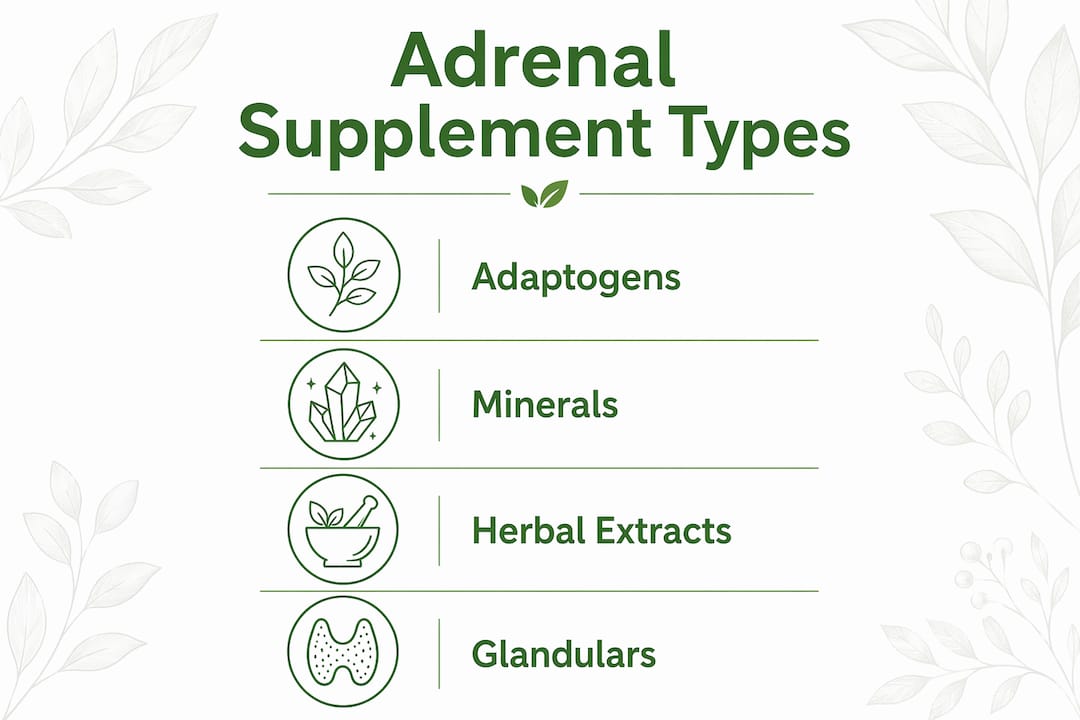
Adaptogens: ashwagandha and rhodiola
Adaptogens are plant-based compounds that help the body regulate its stress response. Ashwagandha works primarily by modulating the hypothalamic-pituitary-adrenal (HPA) axis, the system that controls cortisol release. Clinical studies show it reduces cortisol levels and lowers self-reported stress. Rhodiola rosea acts on serotonin and dopamine pathways, improving mental stamina and reducing fatigue under stress. Both are reasonable adjuncts for stress management, though neither treats an adrenal disorder.
Magnesium and HPA axis support
Magnesium reduces cortisol release and supports the HPA axis, helping calm the body’s stress response. A small study showed daily magnesium supplementation lowered cortisol levels and improved sleep quality. That matters because poor sleep amplifies stress symptoms, creating a cycle that magnesium may help interrupt. The Shopnaturescraft Magnesium + Ashwagandha formula combines both mechanisms in one product.

Licorice root: mechanism and caution
Licorice root inhibits the enzyme 11β-hydroxysteroid dehydrogenase, which normally breaks down cortisol. Blocking this enzyme raises the effective cortisol level in tissues. The theory is that this compensates for low cortisol in adrenal fatigue. The problem is that licorice root at typical doses can cause hypertension, hypokalemia (low potassium), and sodium retention. These are serious mineralocorticoid excess effects, not minor side effects.
Adrenal glandular extracts
Glandular extracts are derived from animal adrenal tissue and contain unmeasured corticosteroids. Glandular supplements deliver uncontrolled hormone doses, which risks suppressing the body’s own adrenal hormone production. Cortisol content varies by batch, making dosing unpredictable. Stopping them abruptly can trigger withdrawal-like effects.
Pro Tip: If a supplement label lists “adrenal cortex” or “bovine adrenal” as an ingredient, ask your doctor before taking it. These are glandular extracts, not herbal adaptogens, and carry a different risk profile entirely.
| Ingredient | Mechanism | Evidence Level | Key Risk |
|---|---|---|---|
| Ashwagandha | Modulates HPA axis, lowers cortisol | Strong (multiple RCTs) | Mild GI upset at high doses |
| Rhodiola rosea | Supports serotonin and dopamine pathways | Moderate (promising trials) | Dizziness, dry mouth |
| Magnesium | Reduces cortisol, calms HPA axis | Moderate (small studies) | Loose stools at high doses |
| Licorice root | Inhibits cortisol breakdown enzyme | Limited, high risk | Hypertension, low potassium |
| Glandular extracts | Delivers exogenous corticosteroids | No clinical support | HPA suppression, withdrawal |
What does the science say about these supplements’ effectiveness?
The evidence for adrenal support supplements is uneven. Adaptogens have the strongest clinical backing. Glandular extracts have none.
Ashwagandha is the most studied ingredient in this category. A 2026 clinical study of 186 participants showed significant reductions in self-reported stress, fatigue, and anxiety after 60 days of supplementation. That is a meaningful result from a well-sized trial. Meta-analyses also confirm that ashwagandha lowers cortisol effectively across multiple study designs.
The evidence for rhodiola and magnesium is promising but less consistent:
- Rhodiola trials show reduced mental fatigue and improved performance under stress, but study designs vary widely.
- Magnesium studies show cortisol-lowering effects, particularly in people who are deficient, which is common in adults with high stress loads.
- Neither ingredient has been tested specifically as a treatment for “adrenal fatigue” because that condition is not medically defined.
- Adaptogens like ashwagandha and rhodiola are best understood as stress management tools, not adrenal disease treatments.
The bottom line on effectiveness: supplements can reduce stress symptoms and support energy. They cannot correct a medical adrenal disorder, and no clinical trial has tested them against a validated adrenal fatigue diagnosis, because no such diagnosis exists.
What are the risks of using adrenal fatigue supplements?
Not all adrenal support products carry the same risk. Adaptogens like ashwagandha and magnesium are generally well tolerated. Licorice root and glandular extracts are a different story.
Licorice root’s inhibition of 11β-hydroxysteroid dehydrogenase can cause mineralocorticoid excess. The practical effects include elevated blood pressure, low potassium, and fluid retention. For people with cardiovascular conditions or those on blood pressure medications, this is a serious concern, not a theoretical one.
Glandular extracts carry a compounding risk. Cortisol content varies by batch, making dosing unpredictable. Sustained exogenous steroid exposure can suppress the HPA axis. Stopping the supplement abruptly may then trigger a withdrawal response because the body’s own production has been reduced.
The diagnostic risk is equally serious:
- Salivary cortisol panels lack standardization and are affected by timing, food intake, and oral hygiene, making results unreliable.
- Purchasing these panels online and self-diagnosing adrenal fatigue can delay evaluation for thyroid disease, depression, or anemia.
- Supplements marketed as adrenal support can mask underlying health conditions, particularly when people feel temporarily better from placebo or mild adaptogen effects.
The risk is not that supplements are universally dangerous. The risk is that the wrong supplement, taken for the wrong reason, without medical guidance, can delay real care.
How to approach fatigue and stress safely while considering supplements
Fatigue has many causes. The right approach starts with ruling out the treatable ones before adding any supplement to your routine.
A comprehensive fatigue workup includes thyroid function tests, a complete blood count for anemia, a mental health screen, and a sleep assessment. These tests identify conditions that respond well to targeted treatment. Skipping this step and going straight to supplements is the most common mistake people make.
Once medical causes are ruled out, a practical approach to managing stress-related fatigue looks like this:
- Prioritize sleep hygiene. Consistent sleep and wake times regulate cortisol naturally. Poor sleep is both a cause and a consequence of elevated stress hormones.
- Add regular physical activity. Moderate exercise lowers baseline cortisol and improves HPA axis regulation over time. Thirty minutes of walking five days a week produces measurable effects.
- Review your diet. Blood sugar instability worsens fatigue and stress sensitivity. Protein at each meal and reduced refined carbohydrates stabilize energy throughout the day.
- Address mental health directly. Anxiety and depression are leading causes of fatigue. Therapy, medication, or both often resolve symptoms that supplements cannot touch.
- Consider adaptogens as adjuncts. Ashwagandha and rhodiola can support stress resilience as part of a broader plan. They work best alongside lifestyle changes, not instead of them.
Pro Tip: Tell your doctor about every supplement you take, including “natural” ones. Licorice root and glandular extracts interact with medications and lab results in ways that matter clinically.
Natural remedies for stress and anxiety work best when they complement a solid foundation of sleep, movement, and nutrition. Supplements fill gaps. They do not replace the foundation.
Key Takeaways
Adrenal fatigue supplements work by supporting stress resilience through adaptogenic and mineral mechanisms, not by correcting a medically recognized adrenal disorder.
| Point | Details |
|---|---|
| Adrenal fatigue is not a diagnosis | No clinical evidence supports adrenal gland failure from routine stress; symptoms need proper medical evaluation. |
| Adaptogens have real evidence | Ashwagandha reduces cortisol and stress symptoms in clinical trials; rhodiola supports mental stamina. |
| Glandular extracts carry serious risks | Uncontrolled steroid doses can suppress your own adrenal function and cause withdrawal effects. |
| Licorice root requires caution | It raises effective cortisol levels but can cause hypertension and low potassium at typical supplement doses. |
| Supplements work best as adjuncts | Pair adaptogens with sleep, exercise, and medical evaluation for the most reliable results. |
My honest assessment of adrenal supplement marketing
The adrenal fatigue label is one of the most effective pieces of wellness marketing in the past two decades. It gives a name to a real experience: exhaustion, brain fog, and stress that will not quit. The problem is that naming something does not explain it, and it certainly does not treat it.
What I have found, reading through the clinical literature and watching how people respond to these supplements, is that the adaptogens genuinely help some people. Ashwagandha in particular has enough trial data that dismissing it entirely would be wrong. But the relief people feel is not because their adrenal glands were failing and are now fixed. It is because cortisol regulation improved, sleep quality went up, and the stress response became less reactive.
The marketing, though, often goes much further than the science. Products containing glandular extracts or high-dose licorice root are sold alongside language that implies they are correcting a hormonal deficiency. That framing is misleading and, in some cases, genuinely dangerous. If you are drawn to adrenal support supplements, the adaptogens are worth a conversation with your doctor. The glandulars and licorice-heavy formulas deserve much more scrutiny before you commit to them.
The most useful thing you can do is treat supplements as one tool among many, not as the answer to a diagnosis that does not exist.
— SuperNatural
Quality stress support from Shopnaturescraft
Shopnaturescraft has formulated stress and energy supplements around ingredients with real clinical backing since 2013. Every product is built on the principle that clean, well-sourced ingredients at effective doses produce results you can actually feel.

If you are looking for adaptogen-based support, the premium supplement collection at Shopnaturescraft includes ashwagandha, magnesium, and other evidence-backed options in capsule and gummy formats. Each formula is designed to fit into a real wellness plan, not replace one. For a convenient combination of two of the most clinically supported stress ingredients, the Magnesium + Ashwagandha capsules are a practical starting point. Quality matters when you are putting something in your body every day, and that is exactly what Shopnaturescraft is built around.
FAQ
What does “adrenal fatigue” actually mean?
Adrenal fatigue is a non-medical term used to describe persistent tiredness and stress sensitivity. The Endocrine Society does not recognize it as a diagnosis, and a 2016 systematic review of 58 studies found no evidence supporting it as a medical condition.
Do adrenal supplements work for energy and stress?
Adaptogens like ashwagandha and rhodiola have clinical evidence supporting reduced stress and improved energy. A 2026 study of 186 participants showed significant symptom improvement with ashwagandha over 60 days. They support stress resilience but do not treat adrenal disease.
Are adrenal supplements safe to take?
Adaptogen-based supplements like ashwagandha and magnesium are generally well tolerated. Licorice root and glandular extracts carry higher risks, including blood pressure changes and HPA axis suppression, and should only be used under medical supervision.
How is true adrenal insufficiency diagnosed?
True adrenal insufficiency is diagnosed with the ACTH stimulation test, a validated 30-minute blood test. This is a serious medical condition, distinct from adrenal fatigue, and requires professional management rather than supplementation.
Can I test my cortisol at home to check adrenal function?
Salivary cortisol panels sold online lack standardization and reproducibility. Results are affected by timing, food, and oral hygiene, making them unreliable for diagnosing adrenal function. A physician-ordered blood test is the appropriate method.

