


Menopause supplements are defined as dietary compounds used to reduce symptoms caused by declining estrogen levels, including hot flashes, mood swings, sleep disruption, and bone loss. The best supplements for menopause relief are those with clinical evidence behind them, not just marketing claims. Black Cohosh, Ashwagandha, Vitamin D with calcium, and Pycnogenol stand out as the most researched options in this category. Each targets a different cluster of symptoms, which means the right choice depends on what you are experiencing most. This guide covers what works, why it works, and how to use it correctly.
What are the top evidence-based supplements for menopause symptoms?
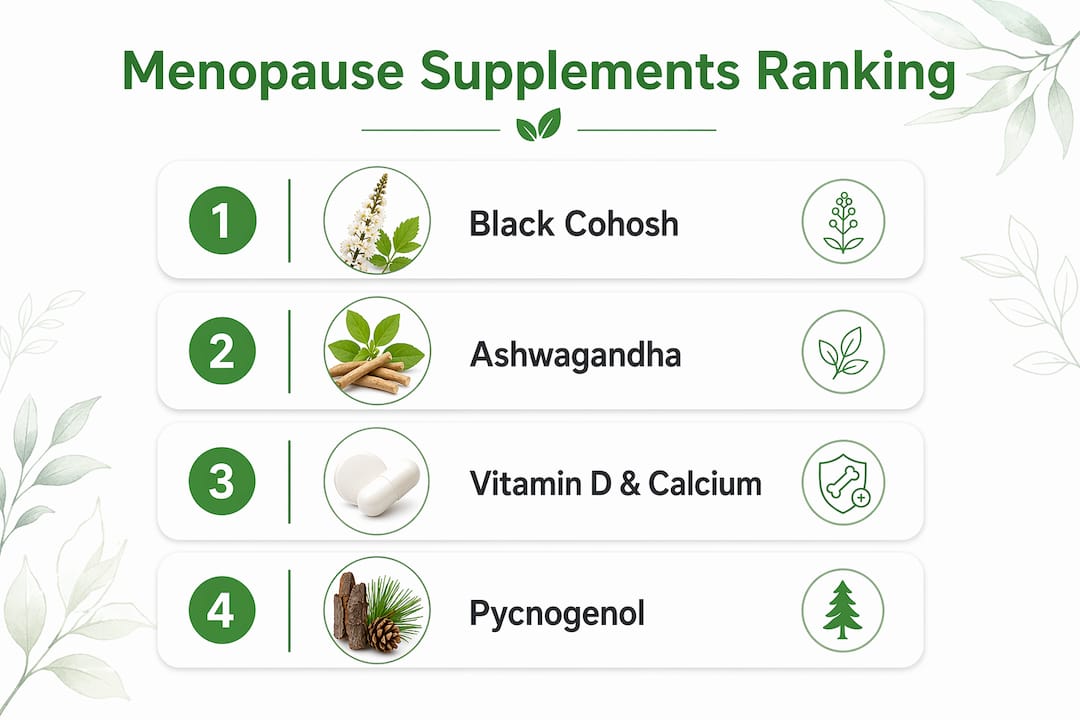
The four supplements with the strongest clinical backing for menopause symptom relief are Black Cohosh, Ashwagandha, Vitamin D with calcium, and Pycnogenol. Each addresses a distinct set of symptoms, so understanding their individual strengths helps you choose the right starting point.
Black Cohosh for hot flashes
Black Cohosh is the most studied herb for vasomotor symptoms like hot flashes and night sweats. Studies report a 23–26% reduction in hot flash frequency after 8–12 weeks of standardized use. That level of reduction is clinically meaningful for women whose daily routines are disrupted by frequent episodes.

Ashwagandha for multi-symptom support
Ashwagandha root extracts target a broader range of symptoms, including anxiety, fatigue, and sleep disturbances. A 56-day clinical study showed significant reduction in Menopause Rating Scale scores (p < 0.0001). That result means Ashwagandha works across both psychological and physical symptom categories, not just one. Shopnaturescraft offers Organic Ashwagandha Drops formulated for consistent daily use.
Vitamin D and calcium for bone health
Vitamin D paired with calcium is FDA-recognized for reducing bone loss after estrogen decline. This combination supports bone remodeling, which slows significantly during and after menopause. Women who skip this pairing face a higher fracture risk as bone density decreases over time.
Pycnogenol for broader symptom clusters
Pycnogenol, a pine bark extract, shows early evidence for relieving hot flashes, mood changes, vaginal dryness, and libido concerns. It works through antioxidant and vascular pathways rather than hormonal ones. That makes it a useful option for women who cannot or prefer not to use phytoestrogen-based supplements.
| Supplement | Primary symptoms targeted | Evidence strength |
|---|---|---|
| Black Cohosh | Hot flashes, night sweats | Strong (8–12 week trials) |
| Ashwagandha | Mood, sleep, fatigue, stress | Strong (56-day RCT) |
| Vitamin D + Calcium | Bone density, fracture risk | Strong (FDA-recognized) |
| Pycnogenol | Vascular, dryness, mood, libido | Moderate (early studies) |
Pro Tip: If hot flashes are your primary concern, start with Black Cohosh. If anxiety and poor sleep are your biggest issues, Ashwagandha is a better first choice. You do not need to take all four at once.
How do these supplements work in the body?
Understanding the biology behind these supplements helps you set realistic expectations and stick with the right one long enough to see results.
Phytoestrogens and vasomotor relief
Black Cohosh contains phytoestrogens that bind to estrogen receptors in the body. Its exact mechanism for reducing hot flashes is not fully understood, but researchers believe it also involves neurotransmitter modulation, particularly serotonin pathways. That dual action may explain why it helps with both temperature regulation and mood.
Soy Isoflavones work similarly. They mimic estrogen weakly and reduce vasomotor symptom intensity in some women. Results vary based on individual gut bacteria that convert isoflavones into their active form.
Ashwagandha and the stress-hormone connection
Ashwagandha’s adaptogenic properties modulate the hypothalamic-pituitary-adrenal axis, which controls the body’s stress response. During menopause, hormonal shifts amplify the stress response, worsening anxiety, sleep problems, and fatigue. Ashwagandha reduces cortisol output, which directly lowers psychological symptom burden.
Vitamin D, calcium, and bone remodeling
Vitamin D and calcium act through bone remodeling processes that require consistent use over months to show measurable effects. Estrogen normally slows bone breakdown. When estrogen drops, bone loss accelerates. Vitamin D improves calcium absorption, and calcium provides the raw material for bone maintenance.
Here is a quick breakdown of what each supplement targets:
- Vasomotor symptoms (hot flashes, night sweats): Black Cohosh, Soy Isoflavones, Pycnogenol
- Mood and sleep (anxiety, irritability, insomnia): Ashwagandha, Black Cohosh
- Bone health (density loss, fracture risk): Vitamin D, Calcium
- Vaginal and vascular symptoms (dryness, circulation): Pycnogenol
Pro Tip: Supplements that target bone health work slowly. Do not judge their effectiveness after four weeks. Bone remodeling cycles take three to six months to show measurable changes on a DEXA scan.
How to choose and use menopause supplements safely
Choosing the right supplement starts with identifying your most disruptive symptoms. A woman dealing primarily with hot flashes needs a different approach than one whose main concern is bone health or anxiety.
Match the supplement to your symptom priority
Start with one supplement that addresses your primary symptom. Adding multiple supplements at once makes it impossible to know which one is helping. Give each supplement a fair trial before adding another. For hormonal balance support, a targeted single-ingredient approach is often more effective than a broad multi-supplement stack.
Respect the timeline
Supplements require 4–8 weeks of consistent use before you can fairly assess their effectiveness. Many women stop too early and conclude the supplement does not work. That is the single most common reason supplements “fail.” Set a calendar reminder at the four-week mark to evaluate your symptoms, not at day ten.
Common mistakes to avoid
- Starting multiple supplements simultaneously
- Skipping doses because symptoms seem mild that day
- Expecting results within the first two weeks
- Choosing supplements based on popularity rather than evidence
- Ignoring product quality and third-party testing
Safety and medical consultation
Before starting any supplement for menopause symptom relief, consult your healthcare provider. This is especially true if you take medications for thyroid conditions, blood pressure, or depression, since several herbal supplements interact with these drug classes. Your provider can also rule out underlying conditions that mimic menopause symptoms.
Hormone therapy remains the primary treatment for moderate to severe menopause symptoms. Supplements work best as complementary support, not replacements for medical care. Women with a history of hormone-sensitive cancers should discuss phytoestrogen-based supplements with their oncologist before use.
Prerequisites for safe supplement use:
- A clear list of your current medications
- A baseline symptom diary to track changes
- Third-party certified products (look for NSF or USP seals)
- A follow-up appointment scheduled 8 weeks after starting
What are the biggest myths about menopause supplements?
Several widespread beliefs about menopause supplements lead women to make poor choices or abandon effective options too soon.
Myth: Supplements work immediately. No evidence-based supplement for menopause produces noticeable results within a few days. Realistic timelines range from four to twelve weeks depending on the supplement and the symptom being targeted.
Myth: Natural means safe for everyone. Herbal supplements carry real interaction risks. Black Cohosh can affect liver enzymes in rare cases. Ashwagandha can amplify the effects of thyroid medications. Natural origin does not equal universal safety.
Myth: All menopause supplements are equally effective. Evening primrose oil, wild yam, and ginseng show no significant benefit over placebo for vasomotor symptoms in clinical trials. Popularity and price do not predict effectiveness.
Myth: Supplements replace hormone therapy. Medical guidelines position supplements as adjuncts, not alternatives. For severe symptoms, hormone therapy delivers faster and more consistent relief.
Myth: Any supplement on the shelf is quality-controlled. The supplement industry operates with limited regulation, and product quality varies widely. Third-party verification from organizations like NSF International or the U.S. Pharmacopeia (USP) is the clearest signal of a trustworthy product.
Choosing supplements based on clinical evidence rather than trends protects both your health and your wallet. The four supplements covered in this article have the research to back their use. Most others do not.
Key Takeaways
The best menopause supplements are Black Cohosh, Ashwagandha, Vitamin D with calcium, and Pycnogenol, each backed by clinical evidence and targeting distinct symptom categories.
| Point | Details |
|---|---|
| Match supplement to symptom | Choose based on your primary complaint: hot flashes, mood, bone health, or vaginal symptoms. |
| Commit to the timeline | Allow 4–8 weeks of consistent use before evaluating whether a supplement is working. |
| Avoid unproven options | Evening primrose oil, wild yam, and ginseng show no significant benefit over placebo for hot flashes. |
| Prioritize quality | Seek products with NSF or USP third-party certification to confirm ingredient accuracy. |
| Supplements complement care | Hormone therapy remains the first-line treatment for severe symptoms; supplements support, not replace, medical care. |
What I have learned from years of watching women navigate menopause supplements
The most consistent pattern I see is this: women who get results are the ones who treat supplements like a structured protocol, not a casual experiment. They pick one supplement, track their symptoms weekly, and give it a real trial period. The women who feel let down almost always tried two or three products at once, stopped after two weeks, and moved on to the next trending option.
The second thing I have noticed is that lifestyle factors amplify or undercut supplement effectiveness. Ashwagandha works noticeably better when sleep hygiene is also addressed. Vitamin D absorption improves when taken with a fat-containing meal. These are small adjustments, but they change outcomes.
Emerging research on the gut-hormone connection is worth watching. The gut microbiome influences how phytoestrogens like Soy Isoflavones are metabolized. Women with diverse gut bacteria convert isoflavones more effectively. That means a probiotic protocol alongside phytoestrogen supplementation may improve results. This area is still developing, but it points toward a more personalized approach to perimenopause and postmenopause supplement use.
My honest advice: have an open conversation with your doctor before you start, keep a symptom log, and give your chosen supplement a genuine eight-week trial. The evidence is there for the right options. You just need to use them correctly.
— SuperNatural
Shopnaturescraft supplements for menopause wellness
Shopnaturescraft has been formulating clean, clinically supported supplements since 2013, and their menopause-focused line reflects that commitment to quality.

Their Menopause Support product is formulated with ingredients aligned with the evidence reviewed here, and a soy-free version is available for women who need to avoid phytoestrogens from soy sources. For multi-symptom support, their Organic Ashwagandha Drops deliver a concentrated adaptogenic formula in an easy-to-use liquid format. Women looking for broad daily nutritional support can also explore their Women’s Multivitamin Gummies, which cover foundational micronutrient needs including Vitamin D. Every product is made with quality-sourced ingredients and designed to fit seamlessly into a daily wellness routine.
FAQ
What are the best supplements for menopause hot flashes?
Black Cohosh is the most clinically studied supplement for hot flash relief, with studies showing a 23–26% reduction in frequency after 8–12 weeks. Pycnogenol also shows early evidence for vasomotor symptom relief through antioxidant and vascular pathways.
How long do menopause supplements take to work?
Most evidence-based supplements require 4–8 weeks of consistent daily use before producing noticeable symptom changes. Stopping earlier is the most common reason women conclude a supplement is ineffective.
Are menopause supplements safe to take with medications?
Some supplements interact with common medications. Ashwagandha can amplify thyroid medication effects, and Black Cohosh may affect liver enzymes. Always consult your healthcare provider before starting any supplement alongside prescription drugs.
Do menopause supplements replace hormone therapy?
No. Medical guidelines position hormone therapy as the primary treatment for moderate to severe menopause symptoms. Supplements serve as complementary support and work best alongside, not instead of, medical care.
How do I know if a menopause supplement is high quality?
Look for products with third-party certification from NSF International or the U.S. Pharmacopeia (USP). These seals confirm that the product contains what the label states and has been tested for contaminants.

