


Fiber supplements are defined as concentrated sources of dietary fiber taken to support digestive function, metabolic health, and gut microbiome balance. Understanding how fiber supplements work means recognizing two core mechanisms: gel formation and fermentation. Viscous, gel-forming fibers like psyllium slow cholesterol and glucose absorption while improving stool consistency. Rapidly fermentable fibers like inulin feed beneficial gut bacteria but behave very differently in the digestive tract. The American diet consistently falls short of the recommended fiber intake, making supplementation a practical tool for many health-conscious people. Shopnaturescraft has supported this need since 2013 with clean, quality fiber options designed to fit real daily routines.
How fiber supplements work: soluble, insoluble, viscous, and fermentable types
Most people learn that fiber is either soluble or insoluble. That distinction is real, but it does not tell the full story. Viscosity and fermentability are the more practical criteria for choosing a fiber supplement, because they predict how a fiber actually behaves in your gut.
Soluble fiber dissolves in water and can form a gel. Insoluble fiber does not dissolve and adds bulk to stool. The problem is that not all soluble fibers form gels, and not all gel-forming fibers produce the same effects. This is where viscosity matters.

Viscous, gel-forming fibers
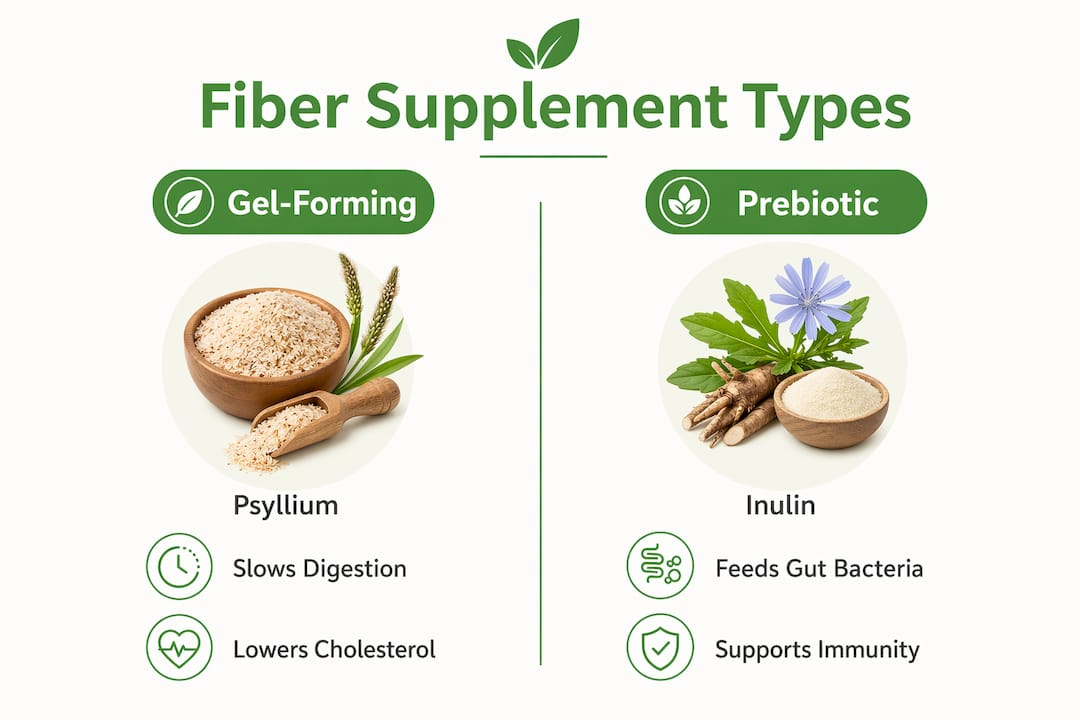
Psyllium husk is the clearest example of a viscous fiber. It absorbs water and swells into a thick gel inside the intestine. That gel slows the movement of food, traps bile acids, and buffers the rate at which glucose enters the bloodstream. Psyllium also ferments slowly, which means it delivers stool-bulking benefits without producing excessive gas. This combination makes it the most broadly effective fiber for cholesterol control, glucose regulation, and bowel regularity.
Rapidly fermentable prebiotic fibers
Inulin and fructooligosaccharides (FOS) ferment quickly in the colon. Gut bacteria consume them and produce short-chain fatty acids, which support a healthy microbiome. The trade-off is that rapid fermentation produces gas and bloating without consistent stool-bulking benefits. These fibers work best as prebiotics, not as primary tools for constipation or cholesterol management.
Pro Tip: Match your fiber type to your goal. Choose psyllium for cholesterol or bowel regularity. Choose inulin or FOS if microbiome support is your primary aim. Mixing them without a plan often leads to unnecessary side effects.
| Fiber type | Primary mechanism | Best use | Side effect risk |
|---|---|---|---|
| Psyllium | Gel formation, bile acid binding | Cholesterol, glucose, regularity | Low gas, high if under-hydrated |
| Methylcellulose | Gel formation, stool bulking | Constipation relief | Low |
| Inulin / FOS | Rapid fermentation, prebiotic | Microbiome support | Moderate to high gas |
| Resistant dextrin | Slow fermentation, microbiota shift | Gut health, glucose | Low to moderate |
| Glucomannan | High-viscosity gel | Satiety, glucose control | Low with adequate water |
How do fiber supplements affect digestion, blood sugar, and cholesterol?
Fiber supplements produce measurable effects on three key systems: bowel function, blood glucose, and blood lipids. Each effect traces back to a specific physical or chemical interaction in the gut.
Digestive regulation
Gel-forming fibers absorb water and increase stool volume. This softens stool and speeds transit time in people with constipation. In people with loose stools, the gel absorbs excess water and slows transit. Psyllium works in both directions, which is why it appears in both constipation and diarrhea protocols. Clinical research in 63 healthy adults found that 5–10 g per day of short-chain oat fiber improved abdominal pain and constipation within 1–2 weeks. That timeline is realistic for most people starting a fiber supplement.
Blood sugar control
Viscous fibers slow the rate at which food leaves the stomach and enters the small intestine. This delays glucose absorption and flattens the post-meal blood sugar spike. The same oat fiber study found that 20 g per day improved glycemic control by reducing peak glucose levels. That dose-dependent result confirms that more fiber generally produces a stronger glucose response, up to a point.
Cholesterol reduction
Psyllium binds bile acids in the small intestine. Bile acids are made from cholesterol, so when fiber traps them and carries them out of the body through stool, the liver pulls more cholesterol from the blood to make new bile. Research shows that 15 g per day of psyllium in obese individuals produces metabolic benefits comparable to bile-acid-sequestering medications. That is a significant finding. It means a well-chosen fiber supplement can deliver pharmacological-level effects on cholesterol without a prescription.
What are the common types of fiber supplements and their specific benefits?
Knowing which fiber to reach for depends on your health goal. Each type has a distinct profile of benefits, tolerability, and available forms.
-
Psyllium husk: The most studied fiber supplement. Forms a viscous gel that binds bile acids, slows glucose absorption, increases satiety, and improves bowel regularity. Available as powder, capsules, and fiber gummies. Ferments slowly, so gas production is minimal when you drink enough water.
-
Methylcellulose: A synthetic, non-fermentable fiber. It bulks stool without feeding gut bacteria, making it a good option for people who are sensitive to gas from fermentable fibers. Typically available in tablet or powder form.
-
Inulin and FOS: Naturally found in chicory root, garlic, and onions. These fibers act as prebiotics, feeding Bifidobacterium and Lactobacillus species in the colon. They do not bulk stool reliably and can cause significant gas in sensitive individuals. Best used in lower doses or combined with a slower-fermenting fiber.
-
Resistant dextrin: A partially hydrolyzed starch that ferments more slowly than inulin. A pilot study found that four weeks of resistant dextrin significantly increased beneficial Parabacteroides bacteria regardless of baseline fiber intake. This makes it a strong option for targeted microbiome support.
-
Glucomannan: Derived from konjac root. It forms one of the highest-viscosity gels of any dietary fiber, which makes it particularly effective for satiety and glucose control. Capsules are the most common form. Adequate water intake is non-negotiable with glucomannan because the gel can expand before reaching the stomach.
Fiber supplements come as powders, capsules, and gummies. Powders offer the most flexibility in dosing. Capsules and fiber gummies are easier to take consistently, which matters more than the delivery format for most people.
How to safely incorporate fiber supplements into your routine
Starting fiber supplements the right way prevents most of the side effects that cause people to quit. The two most common mistakes are increasing dose too fast and not drinking enough water.
-
Start low and go slow. Begin with half the recommended dose for the first week. Increase by one serving per week until you reach your target dose. This gives your gut microbiome time to adapt without triggering cramping or bloating.
-
Drink water with every dose. Sudden high fiber intake without sufficient fluids can worsen constipation by drawing water out of the intestines. Aim for at least 8 ounces of water per serving of fiber supplement, and increase total daily water intake as your dose rises.
-
Time your doses around meals. Taking fiber before meals can increase satiety and blunt post-meal glucose spikes. Taking it with meals works well for bowel regularity. Either approach is valid; consistency matters more than perfect timing.
-
Space fiber away from medications. Fiber supplements taken within 1–2 hours of medications can interfere with drug absorption. This applies especially to thyroid medications, blood thinners, and diabetes drugs. Take your fiber supplement at a different time of day than your prescriptions.
-
Expect a 1–2 week adjustment period. Mild bloating and changes in stool frequency are normal at the start. These symptoms typically resolve as your gut adapts. If they persist beyond two weeks, reduce your dose and increase more gradually.
Pro Tip: If you experience gas from inulin-based supplements, try combining them with psyllium. Research shows that psyllium can reduce gas production from inulin by slowing its fermentation rate in the colon.
Can fiber supplements replace dietary fiber from food?
Fiber supplements cannot replace whole food fiber. Whole foods provide vitamins, minerals, and phytochemicals that supplements do not deliver. An apple contains pectin fiber alongside quercetin, vitamin C, and potassium. A fiber capsule contains only the fiber. The combined effect of these nutrients working together in whole foods produces health benefits that no supplement fully replicates.
The right way to think about fiber supplements is as a gap-filler. Most adults fall short of the recommended daily fiber intake through diet alone. A supplement helps you reach your target on days when vegetables, legumes, and whole grains are harder to fit in. If you want to understand how supplements and whole foods differ in their nutritional delivery, the whole food supplements guide from Shopnaturescraft covers this distinction clearly.
- Whole food fiber comes packaged with antioxidants, water content, and micronutrients.
- Fiber supplements deliver a concentrated, consistent dose of one or two fiber types.
- Using both gives you the reliability of supplementation and the nutritional depth of whole foods.
Key Takeaways
Fiber supplements work best when you match the fiber type to your specific health goal, start with a low dose, and drink enough water to activate the gel-forming mechanism.
| Point | Details |
|---|---|
| Viscosity drives results | Gel-forming fibers like psyllium deliver the broadest benefits for cholesterol, glucose, and regularity. |
| Dose determines outcome | Clinical research shows 5–10 g per day improves digestion; 20 g per day improves glycemic control. |
| Fermentability predicts side effects | Rapidly fermentable fibers like inulin cause more gas with less stool-bulking effect. |
| Hydration is non-negotiable | Taking fiber without adequate water can worsen constipation rather than relieve it. |
| Supplements fill gaps, not plates | Fiber supplements complement whole food fiber but cannot replace the full nutritional package of real food. |
What I’ve learned from years of watching people use fiber supplements
Most people who struggle with fiber supplements make the same two mistakes. They choose a fiber type based on marketing rather than mechanism, and they increase the dose too fast. I have seen people write off psyllium entirely because they tried inulin first and blamed the bloating on “fiber supplements” as a category. Those are two completely different tools with different mechanisms.
The other thing I notice is that people underestimate how much water matters. Fiber without water is like a sponge with nothing to absorb. The gel never forms properly, and instead of softening stool, the fiber draws moisture from the intestinal lining and makes things worse. This is not a rare edge case. It is one of the most common and preventable causes of fiber supplement side effects.
My honest recommendation is to start with psyllium if you have no specific goal other than general digestive support. It is the most studied, the most forgiving, and the most versatile fiber available. If your goal is microbiome support, add a prebiotic fiber like resistant dextrin after you have established tolerance. And if you are managing blood sugar or cholesterol, treat your fiber supplement with the same seriousness you would give a dietary change, because the evidence shows it deserves that level of attention.
— SuperNatural
Quality fiber supplements from Shopnaturescraft
Shopnaturescraft has been formulating clean, quality supplements since 2013, and fiber is one of the areas where ingredient integrity really matters.

Whether you prefer the convenience of fiber gummies or the precision of capsule dosing, Shopnaturescraft offers options made with quality ingredients and no unnecessary fillers. Fiber plays a direct role in digestive health and cardiovascular wellness, and the heart health collection includes products designed with that connection in mind. As always, consult your healthcare provider before starting any new supplement, especially if you take prescription medications or manage a chronic condition.
FAQ
How long does it take for fiber supplements to work?
Most people notice digestive improvements within 1–2 weeks of consistent use. Clinical research on short-chain oat fiber shows measurable changes in abdominal comfort and stool consistency within that window at doses of 5–10 g per day.
What are the most common fiber supplement side effects?
Bloating, gas, and temporary changes in bowel frequency are the most common side effects. They typically resolve within two weeks as your gut adapts, and they are significantly reduced by starting with a low dose and drinking adequate water.
Do fiber pills work the same as fiber powder?
Fiber pills and powders deliver the same active fiber, but pills offer a fixed dose while powders allow more flexibility. The mechanism is identical. The main difference is convenience versus dosing control.
Can fiber supplements lower cholesterol?
Yes. Psyllium at 15 g per day has shown metabolic benefits for cholesterol comparable to bile-acid-sequestering medications in research on obese individuals. The effect works by binding bile acids in the intestine and removing them through stool.
Should I take fiber supplements every day?
Daily use is appropriate for most healthy adults who fall short of their fiber intake through diet. Consistency produces better results than occasional use, and daily supplementation is safe for long-term use when paired with adequate hydration.

