


Fiber is one of those nutrients parents know is important, yet getting enough of it into a child’s daily meals can feel surprisingly difficult.
A child may happily eat bananas but refuse vegetables. Another may enjoy oatmeal one week and suddenly decide they no longer like it. School lunches come home unfinished, busy mornings lead to rushed breakfasts, and familiar foods often win over fiber-rich options.
That is usually when parents begin looking at fiber supplements.
But once the search begins, so do the questions. Are gummies just candy? Is powder automatically better? Should children get all their fiber from food? Does every fiber product work the same way?
Before deciding which format makes sense, it helps to separate common assumptions from what actually matters.
A Parent-Friendly Comparison Worth Reading
For another perspective on how fiber gummies compare with powders, foods, and other common options, nvrgvup recently explored this topic from a family-focused point of view.
Fiber Gummies vs. Everything Else: Which One Makes More Sense for Kids?
Myth: Children Should Get Every Gram of Fiber From Food
Whole foods should remain the foundation of a child’s nutrition. Fruits, vegetables, beans, oats, and whole grains provide fiber along with vitamins, minerals, and other valuable nutrients.
Real family diets, however, are not always perfectly balanced.
Selective eating, changing preferences, travel, school schedules, and limited food variety can all make daily fiber intake inconsistent. A supplement does not replace those foods, but it may help complement them when parents are working on building a more reliable routine.
The more useful question is not whether food or supplements must win. It is how they can work together without turning mealtimes into a daily struggle.
Myth: All Fiber Is Basically the Same
The word “fiber” covers more than one type.
Some fibers dissolve in water, while others add bulk as they move through the digestive tract. Certain fibers also act as prebiotics, meaning they help nourish beneficial bacteria already living in the gut.
| Fiber Source | How Families Commonly Use It |
|---|---|
| Fruits and vegetables | Everyday meals and snacks |
| Oats and whole grains | Breakfasts and lunchbox foods |
| Beans and legumes | Soups, rice dishes, and family meals |
| Fiber powders | Mixed into drinks or soft foods |
| Fiber gummies | Measured, chewable daily servings |
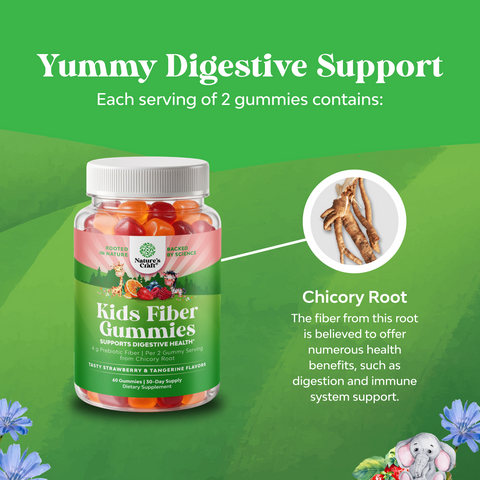
Nature’s Craft Kids Fiber Gummies use chicory root and inulin as sources of prebiotic fiber. The official product page describes them as a child-friendly option designed to support regularity and everyday digestive health.
Myth: Powder Is Always the More Practical Choice
Powders can be useful, especially for children who already enjoy smoothies, yogurt, or flavored drinks.
That does not mean powder is automatically easier.
It may need to be measured, mixed thoroughly, and served in something the child agrees to finish. Texture changes can also be noticeable, particularly for selective eaters.
Gummies remove many of those steps. The serving is already portioned, there is nothing to stir, and the bottle can fit more easily into a morning or after-school routine.
The most practical format is usually the one a family can use consistently without arguments, forgotten servings, or half-finished drinks.
Myth: A Gummy Cannot Be Part of a Serious Nutrition Routine
The shape of a supplement does not determine its purpose.
What matters is the formula, serving information, ingredient quality, and whether parents follow the directions. A gummy can be a structured part of a child’s routine in the same way a chewable tablet, liquid drop, or powder can.
Nature’s Craft Kids Fiber Gummies are described as vegan, non-GMO, and made without artificial flavors. They provide fiber from chicory root and inulin in a mixed-berry gummy format developed for children.
They should still be treated like a supplement rather than an unrestricted snack. Keeping the bottle stored safely and following the labeled serving instructions helps preserve that distinction.
Myth: More Fiber Is Always Better
Parents often assume that if some fiber is helpful, a larger amount must be even better.
That is not how a child’s digestive routine should be approached.
Introducing major dietary changes too quickly may be uncomfortable for some children. Fiber intake also works alongside fluid intake, which is one reason hydration remains important when families increase fiber-rich foods or introduce a fiber supplement.
A gradual, consistent routine is generally more sensible than making several changes at once.
Parents can begin by looking at the whole day:
- What did the child eat?
- How much water did they drink?
- Were fruits, vegetables, oats, or whole grains included?
- Is the supplement being used according to its label?
That broader view is more useful than focusing on a single number.
Myth: Fiber Gummies Make Healthy Foods Less Important
A child who takes a fiber gummy still needs balanced meals.
Supplements do not provide the full nutritional variety found in berries, apples, vegetables, beans, and whole grains. They also do not teach children to explore new foods or build lasting eating habits.
A better approach is to let the supplement support the routine while food continues to lead it.
For example, a family might pair a labeled serving with:
- Oatmeal and fruit at breakfast
- An apple or pear in the lunchbox
- Vegetables offered without pressure at dinner
- Water throughout the day
- Regular physical activity
This keeps the focus on overall nutrition rather than expecting one product to carry the entire responsibility.
What Nature’s Craft Kids Fiber Gummies Add to the Routine
Some families need a fiber option that does not require mixing, measuring, or persuading a child to finish a particular drink.
Nature’s Craft Kids Fiber Gummies are made to fill that practical role.
Their benefits include:
- Prebiotic fiber support: Chicory root and inulin help provide fiber while also supporting the beneficial bacteria already present in the digestive system.
- Everyday digestive wellness: The formula is designed to support regularity and comfortable digestion as part of a balanced lifestyle.
- A child-friendly format: The chewable gummy format can be easier to include in busy mornings, packed schedules, and travel.
- Simple portioning: Parents can follow the labeled serving without scooping or mixing powders.
- Support for selective eaters: The gummy provides another way to complement fiber intake while families continue introducing fiber-rich foods.
The product is listed within Nature’s Craft’s children’s supplement collection and is specifically positioned as a kids’ fiber option rather than a general adult formula.
Myth: The Most Popular Format Is Automatically the Right One
There is no single fiber format that suits every child.
A child who dislikes gummies may prefer powder mixed into yogurt. Another may refuse altered textures but happily take a chewable supplement. Some families may not need a supplement at all because their child regularly eats a varied, fiber-rich diet.
The decision becomes easier when parents focus on fit rather than popularity.
| Your Child’s Routine | A Format That May Be Easier |
| Enjoys smoothies or yogurt | Fiber powder |
| Prefers chewable supplements | Fiber gummies |
| Eats a wide variety of plant foods | Food-first approach |
| Has a busy or frequently changing schedule | Pre-portioned gummies |
| Notices texture changes easily | Gummies or naturally fiber-rich foods |
The strongest routine is not necessarily the most elaborate one. It is the one the family can maintain while continuing to support balanced nutrition.
Keep the Goal Bigger Than the Gummy
The purpose of a kids’ fiber supplement is not to win a debate between gummies and everything else.
It is to help families build a routine that supports digestion without making food more stressful.
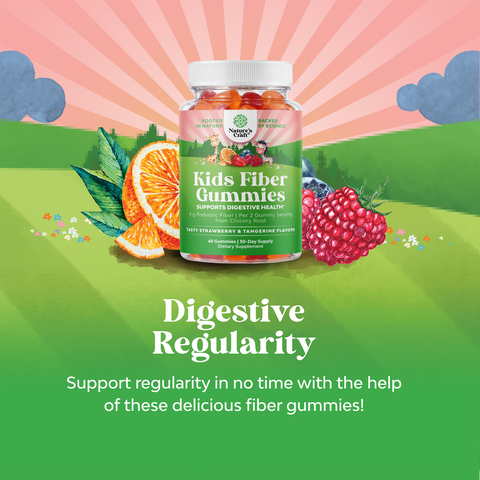
Nature’s Craft Kids Fiber Gummies offer prebiotic fiber from chicory root and inulin in a convenient format created for children. Used alongside water, active play, fruits, vegetables, whole grains, and other fiber-rich foods, they can provide practical support where real family routines sometimes need it most.
The right choice is the one that complements the child’s diet, fits the household’s schedule, and keeps healthy habits moving in the right direction.

