


The supplement market has never been bigger, and neither has the risk of buying the wrong thing. If you’ve ever stared at a product page wondering whether what’s inside actually matches what’s on the label, you’re asking exactly the right question. Buying supplements online safely requires more than trusting a star rating or a slick product photo. Counterfeit products, mislabeled bottles, and sellers with zero accountability are real problems American consumers face every day. This guide walks you through exactly what to check, what to avoid, and how to shop with confidence.
Table of Contents
- Key takeaways
- Buying supplements online safely: what the FDA does and does not do
- How to spot trustworthy online supplement sellers
- Verifying supplement quality through certifications
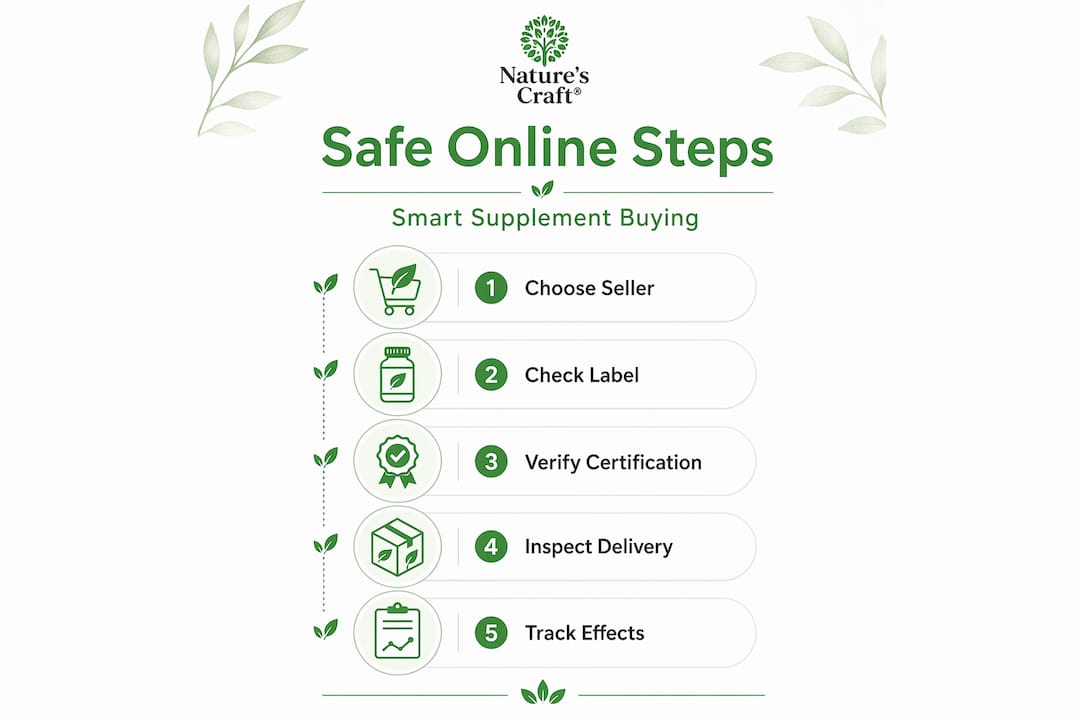
- Step-by-step guide to safe online supplement purchases
- Common mistakes that put your health at risk
- My honest take on supplement safety online
- Why Shopnaturescraft belongs on your verified sellers list
- FAQ
Key takeaways
| Point | Details |
|---|---|
| FDA does not pre-approve supplements | Under DSHEA, supplements reach shelves before the FDA reviews them for safety or effectiveness. |
| Third-party seals matter most | Look for USP, NSF, or ConsumerLab certifications to confirm purity, potency, and label accuracy. |
| Buy direct from brand websites | Purchasing from official brand sites or licensed retailers significantly reduces counterfeit risk. |
| Always consult your doctor first | Supplements can interact with medications, making healthcare provider guidance a non-negotiable step. |
| Package inspection is part of verification | Check lot numbers, expiration dates, and tamper-evident seals every time you receive an order. |
Buying supplements online safely: what the FDA does and does not do
Most people assume the FDA reviews and approves supplements the same way it does prescription drugs. It does not. Under the Dietary Supplement Health and Education Act (DSHEA), supplements reach market before the FDA ever evaluates them. The agency steps in only after a problem is reported, which means a product can sit on digital shelves for months before any regulatory action occurs.
This gap places the safety responsibility squarely on you as the consumer. Manufacturers are required to follow Good Manufacturing Practices (GMPs), but compliance varies widely, and the FDA does not inspect every facility on a regular schedule. The result is a market where product quality ranges from genuinely excellent to dangerously misleading.
Here is what the regulatory gap means in practical terms:
- Manufacturers set their own quality standards unless audited
- A label can claim a product “supports immune health” without clinical proof
- Contamination with heavy metals or undisclosed prescription compounds does happen
- Counterfeit and mislabeled products are more common online than in retail stores because third-party sellers face less scrutiny
“Because supplements are less regulated premarket than drugs, consumers must bear the burden of verifying quality and safety themselves.” — Scripps Health
Understanding this reality does not mean avoiding supplements altogether. It means knowing what verification steps to take before you buy.
How to spot trustworthy online supplement sellers
Not all online sellers carry the same level of risk. Where you buy matters as much as what you buy. Safe supplement shopping online starts with choosing the right source.
The safest option is the brand’s official website. When you buy directly from a company like Shopnaturescraft, you get exactly what the manufacturer intended, with no middleman who could swap, repackage, or dilute the product. Brand websites also tend to publish ingredient sourcing details, manufacturing locations, and certification information more openly than third-party resellers.
Third-party marketplaces are a different story. These platforms allow independent sellers to list products alongside official brand offerings, and it is genuinely difficult to tell them apart. If you do use a marketplace, always check whether the listing is “sold and fulfilled” by the actual brand.

Here is a quick comparison of common online supplement purchasing platforms:
| Platform type | Pros | Cons |
|---|---|---|
| Official brand website | Authentic products, full transparency, direct support | Limited to one brand’s catalog |
| Licensed online retailer | Wide selection, familiar checkout process | Quality depends on retailer vetting practices |
| Third-party marketplace seller | Low prices, broad availability | High counterfeit risk, inconsistent labeling |
| Social media shop | Convenient discovery | Minimal accountability, frequent unverified claims |
Additional things to watch for when evaluating a seller:
- US-based manufacturing listed clearly on the label
- Customer reviews that mention specific ingredients, effects, and realistic timelines
- Contact information and a clear return policy on the website
- No products with foreign-language labels unless you are purchasing an intentionally imported item
Pro Tip: Before you buy from any online store you haven’t used before, search the store name plus “complaints” or “fake products” to check for any pattern of consumer issues.
Verifying supplement quality through certifications
This is the step most shoppers skip, and it is the most important one. Third-party certification seals are voluntary, which is exactly why brands that pursue them deserve more trust. When a company pays for independent testing, it is telling you they are confident the product will pass.
The three most recognized certifications in the USA are:
- USP (United States Pharmacopeia): Tests for identity, potency, purity, and consistency. A USP-verified mark means what is on the label is in the bottle, in the right amount, with no harmful contaminants.
- NSF International: Offers NSF Certified for Sport, which screens for banned substance contamination in addition to standard purity checks. This matters most for athletes.
- ConsumerLab: An independent testing organization that purchases products on the open market and tests them without the manufacturer’s involvement, making it one of the most unbiased options.
Not all certification claims are legitimate. A product that says “third-party tested” without naming the certifying organization is using a marketing phrase, not providing proof. Demand the specific seal, and verify it on the certifier’s official website if needed.
When you receive your supplement order, physically inspect the packaging. Check for a valid lot number, a clearly printed expiration date, and an intact tamper-evident seal. Packaging details combined with certification form the most reliable verification system available to consumers.
Pro Tip: Search the FDA’s CAERS database, which tracks over 148,000 adverse event reports for foods, supplements, and cosmetics. If a product has a notable pattern of reported reactions, that is a signal worth paying attention to before you purchase.
Opting for single-ingredient supplements also reduces your exposure to hidden or unapproved compounds. Multi-ingredient proprietary blends make it much harder to trace problems to a specific component.
Step-by-step guide to safe online supplement purchases
Buying vitamins online securely is a process, not a one-click decision. Following these steps consistently protects you from the most common pitfalls.
- Research the ingredient. Before you consider any brand, learn what the ingredient actually does, what dosage the research supports, and whether known drug interactions exist.
- Choose a trusted vendor. Start with the official brand website or a verified licensed retailer. Avoid unknown sellers offering prices that seem too good to be true.
- Check for certification seals. Look for USP, NSF, or ConsumerLab marks on the product page and confirm them independently if possible.
- Read the full label. Review serving size, ingredient amounts, and any added fillers or allergens. Label accuracy is something many online buyers never verify before checkout.
- Avoid disease treatment claims. Supplements making disease cure claims are likely violating FDA regulations. That is a red flag, not a selling point.
- Consult your healthcare provider. Supplements can interact with medications and may create risks for people with existing health conditions. This step is non-negotiable if you take any prescriptions.
- Monitor your response and report problems. Once you start a new supplement, note any unusual symptoms. You can report adverse reactions directly to the FDA through MedWatch.
Pro Tip: When starting a new supplement, add only one at a time. If you add three at once and notice something unusual, you will have no way of knowing which product caused it.
Here is a summary of the verification steps by priority:
| Step | Action | Risk it addresses |
|---|---|---|
| Source selection | Buy direct from brand or licensed retailer | Counterfeit and mislabeled products |
| Certification check | Confirm USP, NSF, or ConsumerLab seal | Potency and purity failures |
| Label review | Check serving size, ingredients, dates | Overdose and allergen risk |
| Healthcare consultation | Discuss with your doctor or pharmacist | Drug interactions and health contraindications |
Common mistakes that put your health at risk
Even well-intentioned shoppers make errors that undermine their safety. Knowing these pitfalls helps you avoid them.
- Buying from unauthorized resellers. A third-party seller offering a major brand at 40% below retail price should raise an immediate question. Where did they source it, and how was it stored?
- Falling for miracle cure claims. “Lose 30 pounds in 30 days” or “reverse diabetes naturally” are not supplement benefits. These are misleading and often illegal claims. Any product making them should be avoided entirely.
- Ignoring absent or vague certifications. A product page that uses the phrase “quality tested” without naming a third-party certifier is saying nothing meaningful. Certification program differences matter, and vague language is not a substitute for real verification.
- Skipping the healthcare conversation. Many people treat supplements as automatically safe because they are not drugs. Supplements carry real interaction risks, especially when combined with prescriptions.
- Taking multiple products without tracking total intake. If your multivitamin, your protein powder, and your separate vitamin D supplement each contain 100% of your daily vitamin A, you are at three times your daily target. Cumulative intake from multiple products adds up quickly and creates a real overdose risk.
The most expensive supplement mistake is not buying the wrong brand. It is buying without any verification at all and discovering the problem after something goes wrong.
My honest take on supplement safety online
I’ve spent years watching consumers learn this lesson the hard way. What I’ve found is that most people understand in theory that supplements aren’t regulated the same way as drugs. But they treat that as a disclaimer rather than a real factor in their purchasing decision.
Here’s what I’ve learned from experience: the regulatory gap is not just a technical detail. It means you are essentially the last line of quality control. The government is not checking before the product ships. The marketplace platform is not testing what it sells. The manufacturer may be excellent or may be cutting corners, and you often cannot tell from a product listing alone.
The uncomfortable truth about trusted supplement websites is that a polished website does not equal a trustworthy product. I’ve seen beautifully branded supplement companies with zero third-party verification and misleading dosing information on the label. And I’ve seen less flashy brands doing everything right.
My advice: stop trusting aesthetics and start trusting certifications. A USP or NSF seal took real effort, real testing, and real accountability to earn. A professional-looking product photo took a photographer. Know the difference, and make your buying decisions accordingly.
— SuperNatural
Why Shopnaturescraft belongs on your verified sellers list
If you want to skip the guesswork and buy from a source that has already done the work for you, Shopnaturescraft is a strong starting point. Nature’s Craft has been crafting clean, quality supplements since 2013, and their focus on transparency and pure ingredients reflects exactly what safe supplement shopping online looks like in practice.
Every product on Shopnaturescraft is formulated with ingredient quality at the center, not marketing claims. Whether you’re looking for a biotin supplement for hair and nail support, or exploring their heart health collection for cardiovascular support, you will find transparent labeling and quality standards that reflect real manufacturing care. Buying directly from their official site also guarantees product authenticity. No third-party resellers, no guesswork about storage or handling.
FAQ
Does the FDA approve supplements before they are sold?
No. Under DSHEA, dietary supplements do not require FDA premarket approval. The FDA acts reactively after safety problems are reported, so consumers must verify quality independently before purchasing.
What certification seals should I look for when buying vitamins online?
Look for USP, NSF International, or ConsumerLab seals. These independent certifications confirm purity, potency, and freedom from contaminants, and they are more meaningful than vague “third-party tested” claims.
Is it safe to buy supplements from online marketplaces?
It can be, but only if the listing is sold and fulfilled directly by the official brand. Third-party sellers on marketplaces carry a higher risk of counterfeit or improperly stored products. Buying from the brand’s official website is the safer option.
Can supplements interact with my medications?
Yes. Supplements can interact with prescription drugs and may cause side effects, especially if you have existing health conditions. Always talk to your doctor or pharmacist before adding any new supplement to your routine.
How do I check if a supplement has had safety complaints?
Use the FDA’s CAERS database to search for adverse event reports linked to specific products. It contains over 148,000 reports covering supplements and can flag products with a notable pattern of safety concerns.

